Singapore, the city-state of 6 million people occupying a 728-square-kilometre island at the tip of the Malay Peninsula, provides one of the world's most consistently photogenic urban environments: the combination of rigorous urban planning, extraordinary investment in architecture and public space, and the lushness of an equatorial garden city create a photography destination of genuinely exceptional design quality. Here are the best photography spots in Singapore for 2026.
Marina Bay: MBS Skyline at Blue Hour
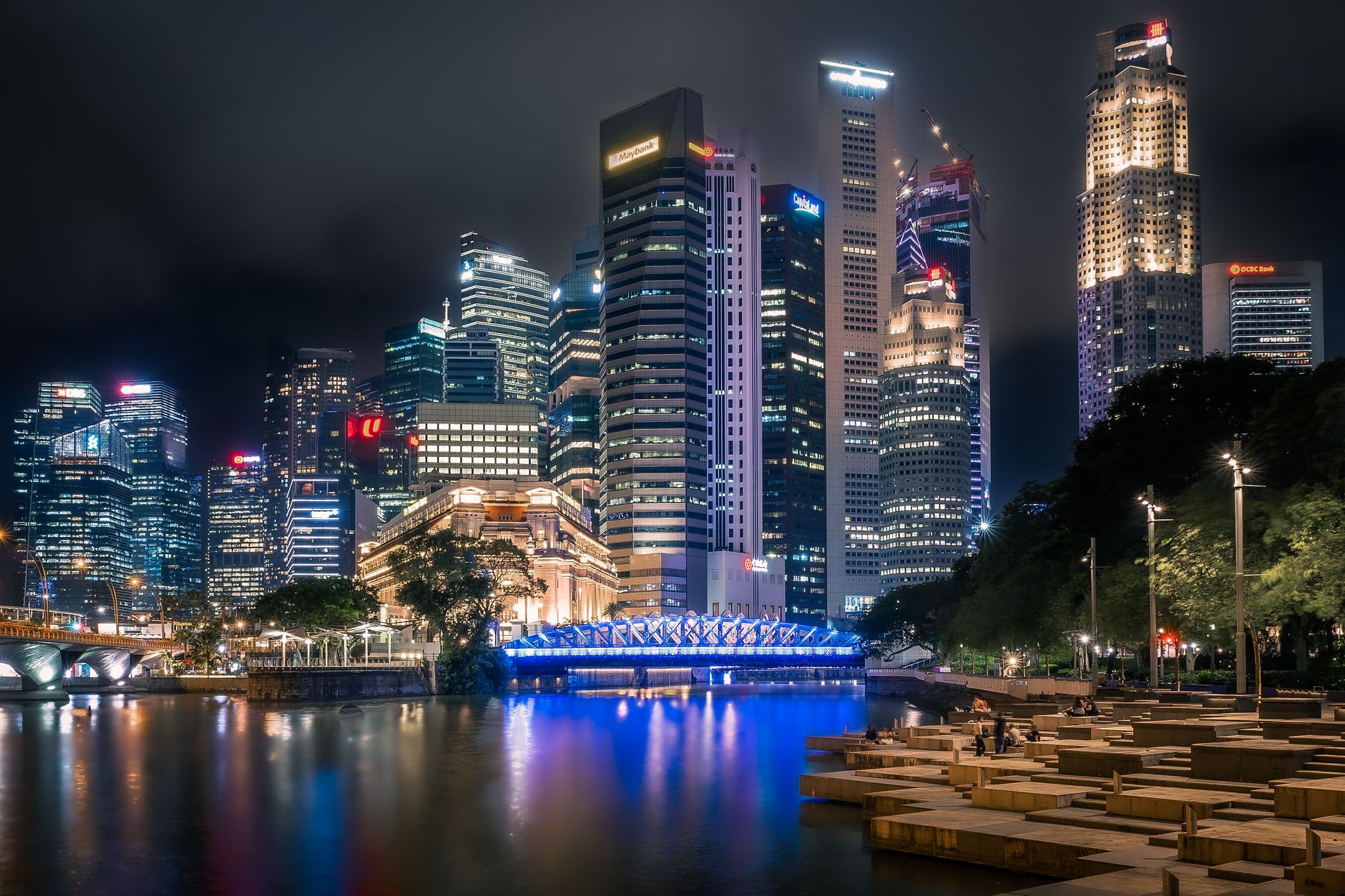
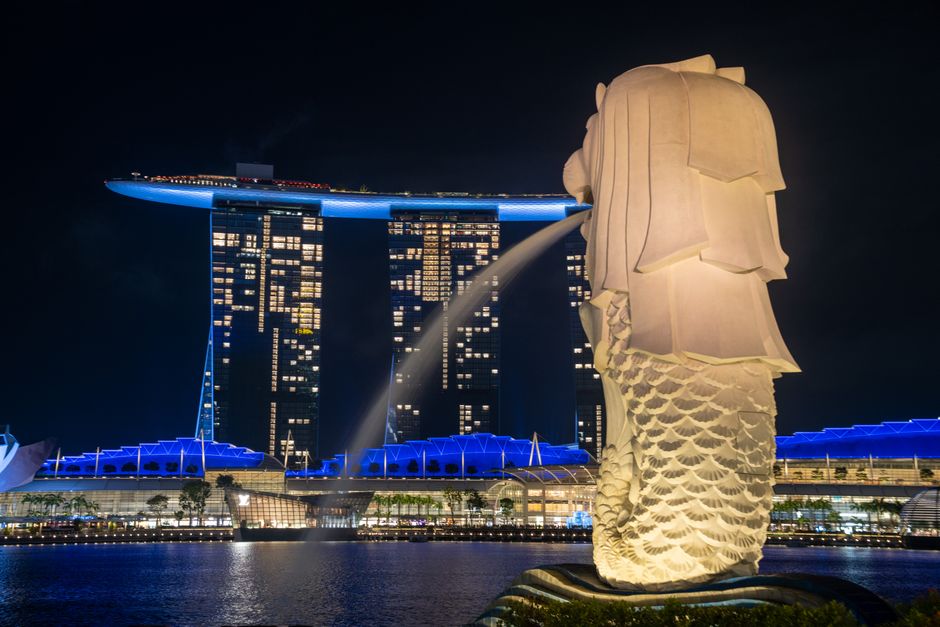
The Marina Bay waterfront, particularly the Merlion Park viewpoint (looking southeast across the bay toward the Marina Bay Sands hotel and convention complex, the ArtScience Museum, and the Singapore Flyer), provides Singapore's defining blue-hour photography position: the Marina Bay Sands' distinctive three-tower hotel (the SkyPark with its rooftop infinity pool connecting the three 57-storey towers) and the lotus-flower ArtScience Museum are reflected in the still bay water at blue hour (20-40 minutes after sunset), creating one of Asia's most frequently reproduced urban photography compositions. A 24-35mm wide-angle lens from the Merlion Park captures both the MBS and the Singapore Flyer (the observation wheel) in a single frame. The light-and-water show (SPECTRA) runs at the waterfront at 8pm and 9pm from Sunday to Thursday (and at 10pm on Fridays and Saturdays), providing a dynamic water screen projection show as a photography subject.
Gardens by the Bay: Supertrees at Night
The Gardens by the Bay Supertree Grove (the 18 steel tree-like vertical garden structures, 25-50 metres tall, planted with 162,900 plants), photographed at night during the Garden Rhapsody light show (7:45pm and 8:45pm nightly, free from outside the grove), provides Singapore's most spectacular night photography subject: the Supertrees are illuminated in continuously changing coloured light patterns during the shows, creating extraordinary artificial light photography conditions. A wide-angle 16-24mm lens placed at the base of the Supertrees during the show captures the full height of the trees with the illuminated light patterns and the Marina Bay Sands SkyPark visible between the tree canopies. The OCBC Skyway elevated walkway (ticketed, connecting two of the Supertrees at 22 metres) provides a unique photography perspective looking down at the Supertree grove from above.
Chinatown: Shophouse Conservation Row
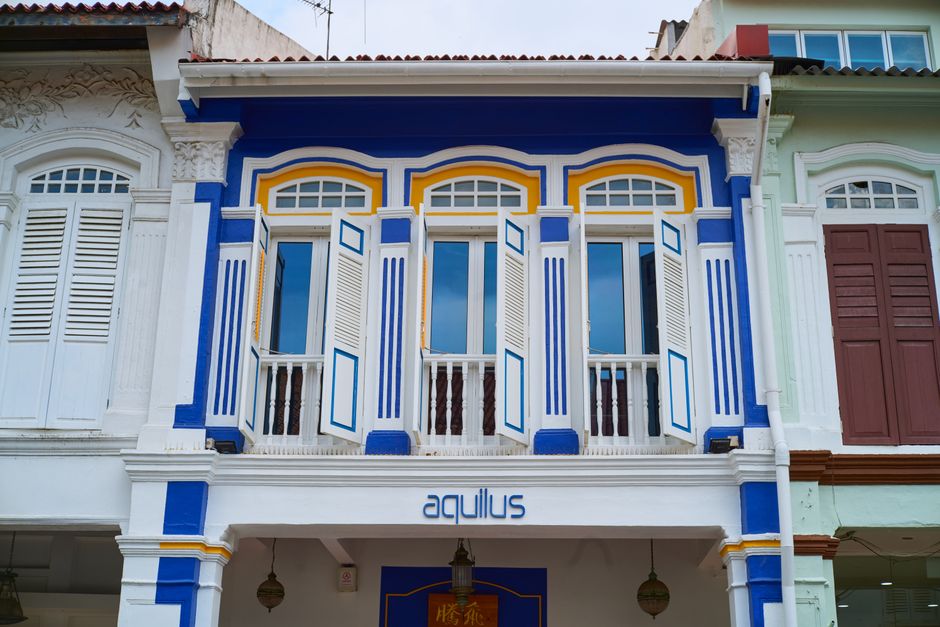
The Chinatown conservation area (the Tanjong Pagar, Kreta Ayer, Bukit Pasoh, and Keong Saik sub-districts), where the Singapore Urban Redevelopment Authority has preserved thousands of the original two-storey Chinese shophouses (with their distinctive five-foot covered walkway, the kaki lima) in restored and vibrantly painted condition, provides Singapore's finest heritage neighbourhood photography: the shophouse facade colours (mint green, cobalt blue, coral pink, and terracotta, many with ornate Peranakan decorative ceramic tile panels and carved wooden shutters) create one of the world's finest examples of heritage conservation photography. The Pagoda Street and Temple Street conservation rows are the most photogenic in the Chinatown area; early morning (before 9am) provides the emptiest streets and the most direct morning sunlight on the east-facing facades.
Joo Chiat: Peranakan Heritage Photography
The Joo Chiat neighbourhood (in the East Coast area, 15 minutes by MRT from the city centre), the centre of Singapore's Peranakan (Straits Chinese) cultural heritage, provides the finest Peranakan decorative architecture photography in Singapore: the Joo Chiat Road shophouses feature the most elaborate Peranakan decorative ceramic tile panels and plasterwork facade decoration of any Singapore neighbourhood, with pastel-coloured Art Deco and transitional shophouses from the 1930s in a long continuous row along the main street. The Katong neighbourhood adjacent to Joo Chiat provides additional Peranakan conservation shophouses and the Nonya cuisine photography of the neighbourhood's famous laksa and kueh stalls.
Southern Ridges: Canopy Walk and City View
The Southern Ridges (the 10km continuous green ridge linking Kent Ridge Park, Telok Blangah Hill Park, and Mount Faber, in the southern Singapore hills), particularly the Henderson Waves (the 36-metre-high pedestrian bridge with its wave-shaped rib structure, the highest pedestrian bridge in Singapore) and the Forest Walk elevated canopy walkway (at treetop level through the secondary tropical forest of Kent Ridge Park), provide Singapore's finest nature and landscape photography within the city: the canopy walk photography of the tropical forest from above, and the night views of the Keppel Harbour and Sentosa Island from the Mount Faber summit, provide a Singapore photography experience entirely distinct from the Marina Bay urbanscape.
Practical Photography Tips
Singapore's equatorial climate (temperature 26-32°C year-round) means photography planning is dominated by avoiding the afternoon thunderstorms (typically 2-5pm) and the midday overhead sun. The driest months (February-March and August) provide the most reliable clear mornings and evenings. Singapore's Gardens by the Bay, the Marina Bay waterfront, and the Chinatown conservation area are all accessible by MRT without a taxi; the MRT is the most efficient photography transport in this compact city. A wide-angle 16-35mm lens handles most Singapore photography; the compact city and the frequent presence of water (the Bay, Jurong Lake, the Singapore Strait) rewards wide-angle water-surface composition.
This article was compiled by AI and screened before publishing. See our editorial standards.