When Marcus Lim first purchased a dilapidated 1970s warehouse along Koon Seng Road in Joo Chiat three years ago, skeptics questioned the investment. Today, that same property houses twelve creative agencies, a management consultancy, and a venture capital firm—each paying premium rates for character-filled office spaces that command rents 15 to 20 per cent above comparable Grade A buildings in the central business district.
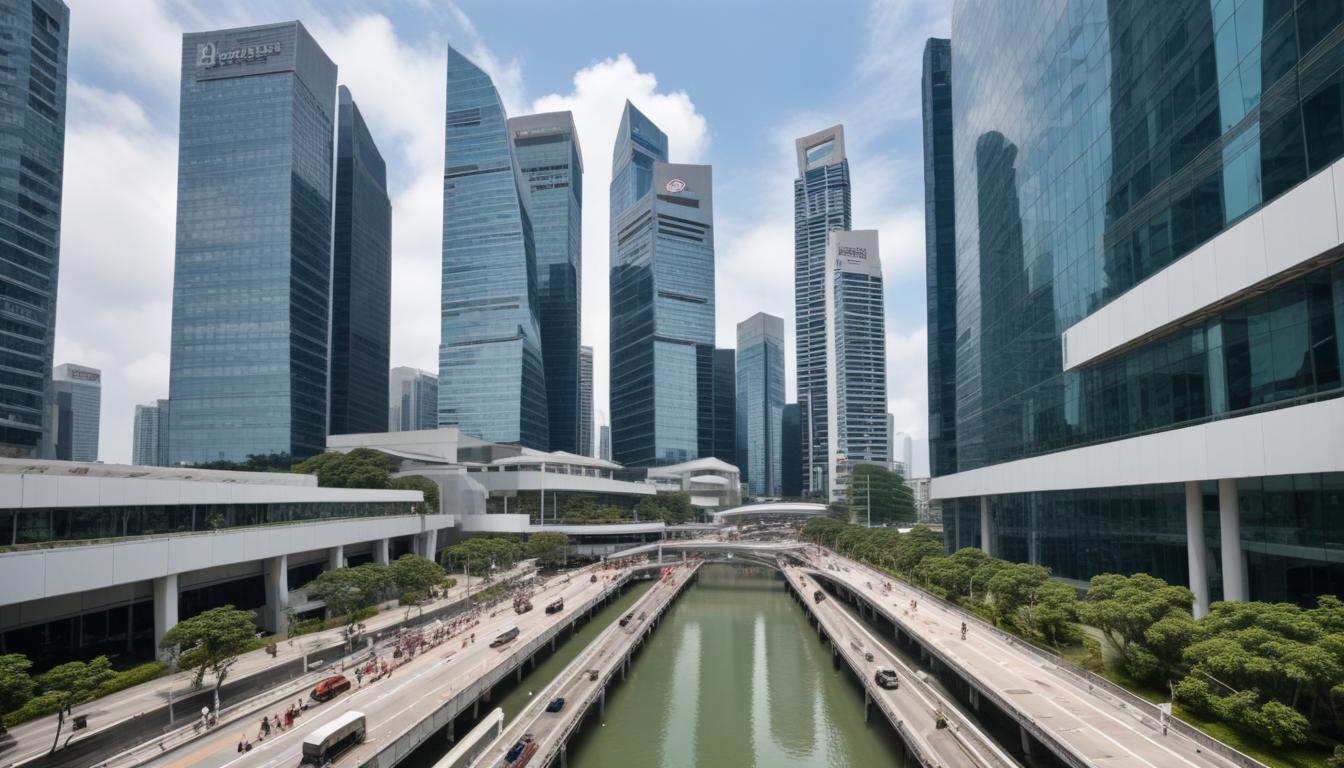
Lim's boutique firm, Heritage & Canvas Real Estate, has become a quiet disruptor in Singapore's commercial property landscape, where glass-and-steel office towers in the CBD and Marina Bay still dominate institutional capital flows. Yet his portfolio tells a different story: adaptive reuse developments in unfashionable neighbourhoods are attracting a growing cohort of businesses tired of cookie-cutter corporate towers.
"The younger, innovative firms don't want to sit in a tower with 200 other companies," Lim explained during a walking tour of his Tiong Bahru conversion—a restored 1940s shophouse complex now spanning 8,000 square metres of mixed-use office and retail space. "They want identity, community, and flexibility. Our properties offer all three."
His timing proved prescient. Singapore's office market, which saw vacancy rates climb to 6.8 per cent by end-2025 according to cushman & wakefield data, has increasingly fragmented. While prime CBD rents stagnated around $12 to $14 per square metre monthly, emerging submarkets in Joo Chiat, Tiong Bahru, and even Geylang East have attracted tenants willing to pay $10 to $11 psm for restored heritage spaces with high ceilings and natural light.
Lim's success reflects broader shifts in how Singapore's business ecosystem operates post-pandemic. With hybrid work normalised and creative industries booming, demand for flexible, community-oriented office environments has surged. His latest project—a five-storey conversion of a former printing factory on Kampong Bahru Road—already has an 87 per cent pre-leasing rate, with design studios and digital marketing firms signed on before completion.
Banking on this momentum, Heritage & Canvas plans three additional conversions across Outram and Kampong Glam over the next 18 months, targeting estimated investments of $120 million. While traditional Grade A office yields hover around 3.5 per cent, Lim's boutique properties consistently deliver 5 to 6 per cent returns—a spread that has not gone unnoticed by institutional investors. Recent signals suggest foreign capital is beginning to follow.
For Singapore's commercial property market, where geographic concentration has long driven valuations, Lim's playbook suggests the next decade may belong to entrepreneurs willing to look beyond Marina Bay.
This article was compiled by AI from the sources linked above and screened before publishing. See our editorial standards.