Business
Global Turbulence Is Reshaping Singapore's Job Market — And Employers Are Responding
From war-driven energy shocks to Europe's deadly heatwave, the world's crises are landing squarely on Singapore's hiring desks.
3 min read
Updated 10 h ago
Business
From war-driven energy shocks to Europe's deadly heatwave, the world's crises are landing squarely on Singapore's hiring desks.
3 min read
Updated 10 h ago
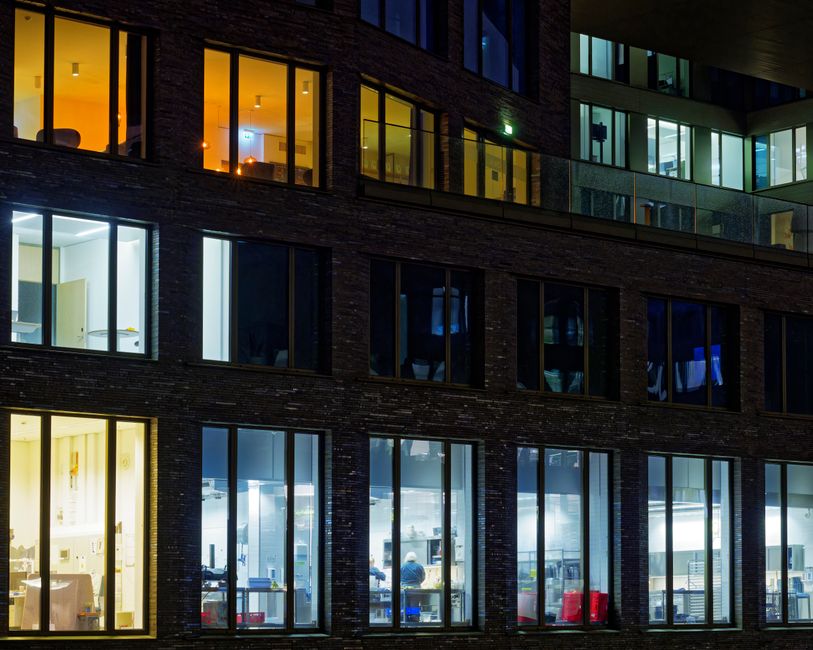
Singapore's unemployment rate held at 1.9 percent in the first quarter of 2026, but that headline figure masks a sharper, more unsettling story: employers across Raffles Place and the Marina Bay financial district are quietly freezing mid-level hires, rerouting headcount budgets, and rewriting job scopes faster than HR departments can keep up. The cause is not domestic. It is the accumulated weight of a world breaking down simultaneously in multiple directions.
The timing matters. Iran's supreme leader died this week, sending oil futures through a fresh round of volatility. Russia is rationing fuel domestically — a development that European energy traders are watching with alarm — while Poland's government has publicly warned its population of critical months ahead. Each of these ruptures costs Singapore something. The city-state imports virtually all its energy, runs one of the world's busiest container ports, and has built its prosperity on the assumption that global supply chains remain functional. When they do not, the shock travels fast.
Shipping and logistics companies clustered along Tanjong Pagar and the PSA port terminals in Pasir Panjang processed a record 40.1 million twenty-foot equivalent units last year. But operators are now telling freight forwarders to price in 15-to-20 percent surcharges on Europe-bound cargo due to rerouting costs tied to ongoing conflict risk in the Black Sea and Mediterranean corridors. That pricing pressure is compressing margins, and compressed margins mean slower hiring. Recruiters at staffing firms on Robinson Road say demand for mid-senior logistics coordinators dropped roughly 12 percent between March and June compared with the same period in 2025.
The professional services sector is seeing something different: a surge in demand for risk, compliance, and geopolitical advisory roles. The Economic Development Board has logged increased inquiries from European multinationals — particularly German and French manufacturers rattled by the summer heatwave's impact on production capacity and energy grid reliability — about shifting regional headquarters functions to Singapore. France recorded more than 2,000 excess deaths at the peak of this year's heatwave; companies with large European workforces are stress-testing their operational resilience in ways that are generating real, billable work for Singapore-based consultancies on Anson Road and Cecil Street.
The Workforce Singapore agency has accelerated placements under its Career Conversion Programmes, with particular emphasis on retooling workers from trade-finance and traditional banking roles toward green logistics and supply-chain digitisation. More than 4,200 mid-career workers enrolled in CCP tracks between January and May 2026, a 31 percent jump year-on-year. The agency has partnerships with seven polytechnics and the Singapore University of Social Sciences to deliver compressed eight-to-twelve-week reskilling modules.
The Ministry of Manpower's June labour market advisory urged job seekers to treat geopolitical literacy as a practical workplace skill — not merely an academic one. Understanding why a conflict in Crimea affects the price of wheat, which affects food-processing plant margins in Jurong, which affects shift headcount in a packing facility, is exactly the kind of systems thinking that mid-level managers will need to demonstrate to retain roles through the rest of the decade.
Salary benchmarks are diverging sharply. Data from the MOM's annual occupation wage survey, released in May, showed median monthly wages for supply-chain analysts rising 8.4 percent year-on-year to S$5,840, while administrative coordinator roles in trade and logistics fell 3.1 percent. The gap between analytically skilled workers and task-oriented ones is widening every quarter. For anyone sitting in the second category, the window to cross over is narrowing, and the global chaos providing the urgency is not going away anytime soon.

Business

Business

Business
Business
About this article
Published by The Daily Singapore
Spread the word
Daily brief
Free, in your inbox before 7am. Weekdays.
Before you go
The day's Singapore news in a 2-minute read. Free, weekday mornings.