The number that matters most right now is 18 percent. That is roughly how far median early-stage valuations in Singapore have compressed since the peak of 2021, according to figures compiled by SGInnovate in its mid-2026 market pulse released late last month. For founders heading into Series A conversations this quarter, that single data point changes the entire negotiation.
The correction has been grinding on for the better part of three years, but investors and founders interviewed this week say something has shifted in the past 90 days. Capital is moving again — selectively, cautiously, with a sharp preference for deep-tech and hard science over consumer-facing apps. The catalyst is partly global: political turbulence in the Middle East following the death of Ayatollah Khamenei has rattled sovereign wealth allocations, and renewed US trade pressure is pushing Southeast Asian supply-chain founders to accelerate their timelines. Singapore, as the regional hub that routes much of that capital and talent, feels both effects acutely.
Where the Money Is Going — and Where It Is Clustering
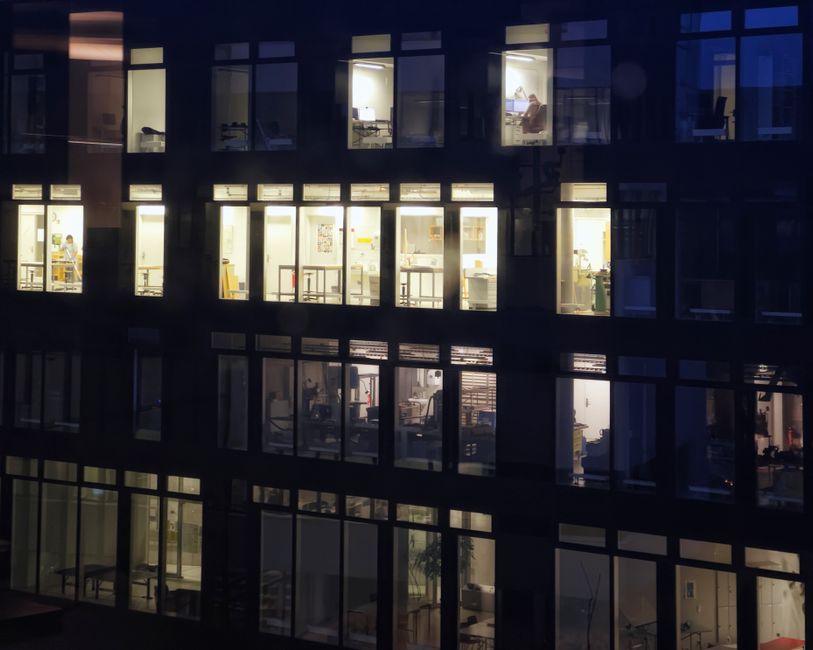
The clearest geographic signal is the accelerating density of activity around one-north, the 200-hectare research and business park straddling Buona Vista and Queenstown. Biomedical and semiconductor-adjacent startups that might once have considered offices in Raffles Place or Tanjong Pagar are signing leases in Fusionopolis and Biopolis instead, drawn by proximity to A*STAR labs and the National University of Singapore's College of Design and Engineering on Dover Road. JTC Corporation reported in May that vacancy rates at one-north dropped to 4.2 percent, the tightest since 2018.
Meanwhile, the Singapore Economic Development Board's Startup SG Equity programme — which co-invests with qualified third-party investors — disbursed S$340 million in the first half of 2026, already surpassing the full-year total for 2024. The programme has quietly raised its co-investment ceiling for deep-tech deals from S$2 million to S$4 million per company, a change that took effect on 1 April and has not received nearly as much attention as it deserves. Founders in quantum computing, advanced manufacturing and precision medicine should read the updated eligibility criteria before their next pitch.
Block71, the startup hub operated by NUS Enterprise with campuses in Ayer Rajah Crescent, remains the social and networking spine of the ecosystem, but its gravitational pull is changing. More founders describe it as a place to find co-founders and early customers, not a place to grow past Series B. That later-stage gap is what Temasek-backed Helios Investment Hub, which opened its expanded 60,000-square-foot facility in Mapletree Business City II in March, is trying to fill. Helios now houses more than 80 growth-stage companies and offers structured access to Temasek's corporate partners across 11 sectors.
Practical Moves for Founders Right Now
Three tactical realities define the next six months. First, the Singapore dollar has strengthened against the Thai baht and Indonesian rupiah through the first half of the year, which makes Singapore-based teams more expensive relative to regional peers. Founders building regionally should model their burn in multiple currencies before locking headcount plans.
Second, Enterprise Singapore has extended its Market Readiness Assistance grant through March 2028, covering up to 50 percent of eligible overseas market-entry costs, capped at S$100,000 per new market. Given that US trade policy is driving Southeast Asian manufacturers to diversify exports toward the Gulf and Central Asia, that grant is more useful now than it was when it was last reauthorised in 2023.
Third, the talent market is tighter than the headline unemployment rate of 1.9 percent suggests. Senior AI and semiconductor engineers are being poached aggressively by hyperscalers expanding their Singapore data centre footprints — Google, Microsoft and Equinix have all announced capex commitments to Singapore in 2026 totalling more than S$9 billion combined. Early-stage startups cannot match those salaries, but they can offer equity structures and visa sponsorship pathways that larger employers complicate with bureaucracy. The Employment Pass processing time has dropped to an average of three weeks since the Ministry of Manpower updated its assessment framework in January, which removes one excuse for slow hiring.
The ecosystem is not in trouble. It is recalibrating. Founders who understand which levers have moved — valuation norms, grant ceilings, geographic clustering, talent competition — will close rounds faster than those who are still pricing deals as if it were 2022.