finance
STI Climbs 1% as Singapore's Finance and Trade Pillars Hold Firm Against Global Headwinds
The Straits Times Index gained 1% on Wednesday even as Wall Street sold off sharply, reflecting Singapore's position as a resilient hub for regional capital flows.
Listen in English · 2 min
How we reported this
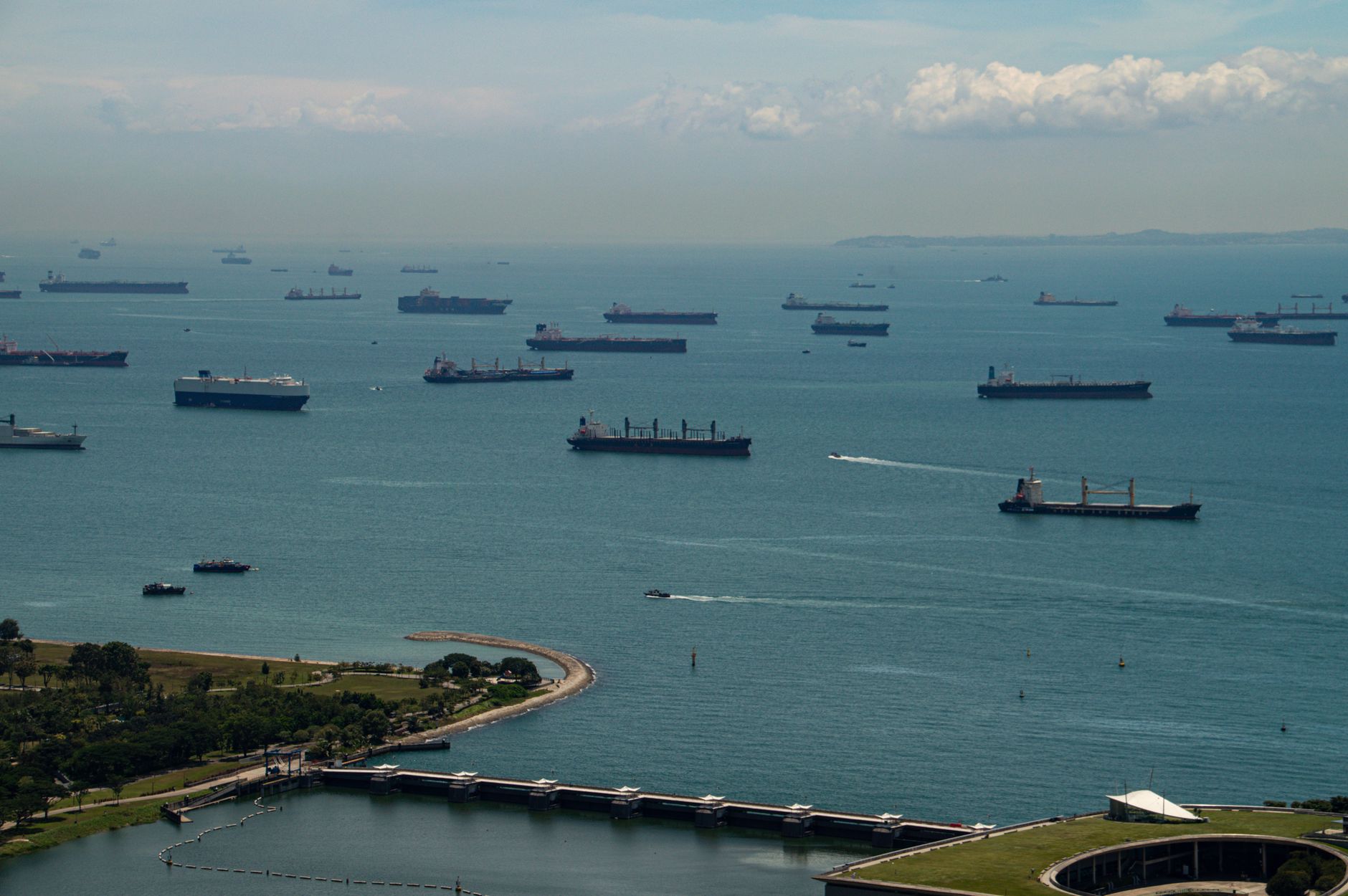
Singapore's benchmark Straits Times Index advanced 1.00% to close at 5,581.76, a notably composed performance for a market whose listed heavyweights span banking, port logistics, real estate investment trusts and regional telecoms. The gain stood in deliberate contrast to a bruising session on Wall Street, where technology-heavy selling dragged the Nasdaq down 2.71% to 25,137.69 and the S&P 500 fell 1.34% to 7,408.30. For investors whose portfolios lean on Singapore's three major local banks and the integrated property developers that dominate the STI's composition, Wednesday's session offered a measure of reassurance that domestic earnings momentum and regional demand can partly insulate the index from sentiment shocks originating in the United States.
The divergence is worth examining closely. The Dow Jones Industrial Average slipped 0.98% to 51,711.65, while Europe added to the pressure: the CAC 40 in Paris fell 1.64% to 8,299.09 and Germany's DAX shed 0.99% to 24,763.12. Against that backdrop, Singapore's outperformance aligns with a broader pattern visible elsewhere in the Asia-Pacific session. The Hang Seng in Hong Kong edged up 0.31% to 25,210.81, and Tokyo's Nikkei 225 rose 0.46% to 66,422.60, suggesting that Asian bourses, including Singapore's, were less exposed to the specific technology and growth-stock repricing that hammered US indices overnight.
Energy Surge Reshapes the Commodity Calculus for Singapore's Trade Economy
The commodity moves deserve particular attention for a city-state whose economy is deeply interwoven with global trade volumes and energy transit. Brent crude surged 6.42% to US$100.11 a barrel, while WTI crude rose 5.86% to US$91.92. For Singapore, which hosts one of the world's busiest bunkering and petroleum refining hubs, a sharp move in crude prices carries dual implications: it can lift revenues for energy-linked listings and refining-adjacent businesses while simultaneously raising input costs across shipping, aviation and manufacturing supply chains that flow through the port. Natural gas edged lower by 0.48% to US$2.911, a comparatively modest move that may temper some of the inflationary pressure on industrial consumers.
Precious metals told a more cautious story. Gold fell 2.28% to US$4,052.50 an ounce, silver dropped 3.51% to US$57.91, and platinum declined 2.39% to US$1,604. Copper, a reliable barometer of industrial activity across the region's manufacturing corridors, fell 1.89% to US$6.329. For Singapore-based wealth managers and private banking clients, the simultaneous decline in gold alongside equity market stress is a reminder that correlations between traditional safe havens and risk assets can shift in periods of rapid repricing. The London market provided a partial counterpoint, with the FTSE 100 rising 0.50% to 10,639.17, buoyed in part by its own significant energy and commodities weighting.
Digital assets extended their recent softness. Bitcoin fell 1.56% to US$65,068.89, Ethereum dropped 2.58% to US$1,883.68, and Solana declined 2.42% to US$76.02. XRP fell 2.73% to US$1.1104, while Dogecoin led losses among the major tokens with a 4.66% slide to US$0.06955. BNB was the relative outlier, down only 0.55% to US$567.61. Singapore's status as a regulated digital-asset licensing jurisdiction means that movements in crypto markets carry institutional as well as retail significance here, with licensed exchanges and custody providers watching liquidity conditions closely during risk-off sessions.
The overall picture for Singapore investors is one of selective resilience. The STI's 1% gain reflects genuine demand for the stable dividend-yielding and regionally diversified businesses that anchor the local bourse, even as global growth concerns and a sharp crude oil rally complicate the outlook for corporate margins. Investors with exposure to Singapore-listed REITs will be monitoring interest rate expectations closely, given that the trajectory of US rates, implied by the sell-off in growth stocks, feeds directly into discount rates applied to local property income streams. This article is general information only and does not constitute personal financial or investment advice. Readers should consider their individual circumstances and consult a licensed financial adviser before making any investment decisions.