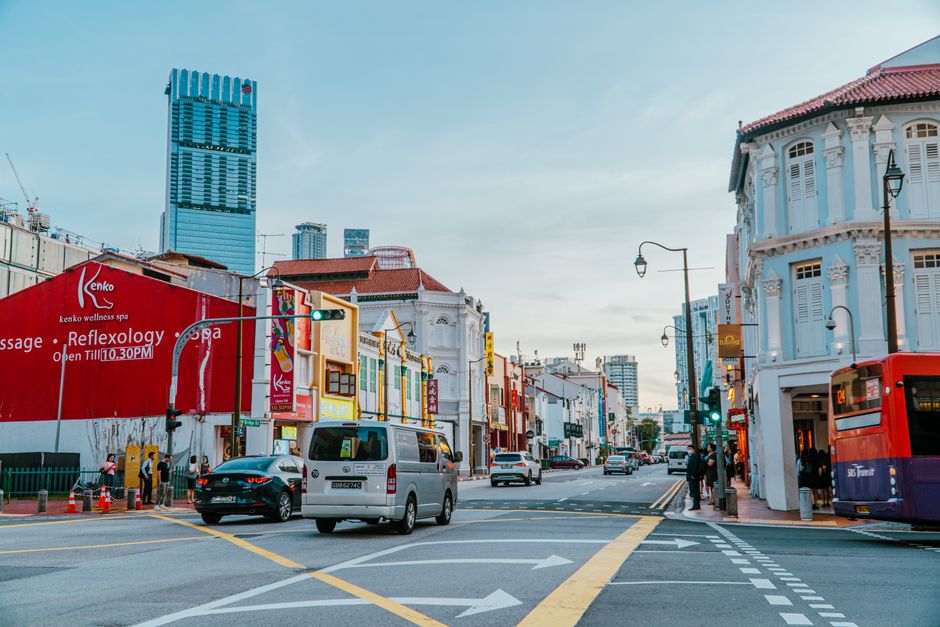
Singapore's housing and urban planning agencies are facing a quiet but consequential administrative headache: thousands of duplicate and mismatched images embedded across public-facing property databases, HDB resale portals and municipal estate directories are undermining the accuracy of records that hundreds of thousands of residents rely on each year. The problem is not new, but the urgency to fix it has sharpened as the Housing and Development Board pushes ahead with its digital infrastructure overhaul ahead of a 2027 deadline for full estate digitalisation.
The stakes are real. When a flat in Tampines or a strata unit in Toa Payoh appears online with a photograph from a different block — or worse, a photo recycled from a demolished precinct — buyers, tenants and valuers are working from faulty baselines. With HDB resale flat prices posting their highest quarterly median in recorded history as of the first quarter of 2026, the margin for error in property decisions has never been thinner.
Where the Problem Lives — and Who Owns It
The duplication issue spans at least three distinct systems. The HDB's own resale and rental portal, the Urban Redevelopment Authority's property transaction records on URA Space, and third-party aggregators licensed to draw from those government feeds have each accumulated image libraries over more than a decade without a unified deduplication protocol. A block in Bishan Street 13 may appear correctly in one system and with a photograph from an adjacent block — or from a prior en-bloc site — in another.
The Infocomm Media Development Authority has flagged data integrity across government digital platforms as a policy priority under the Digital Government Blueprint refresh, which runs through 2025 and 2026. But image metadata — unlike transaction figures or postal codes — falls into a grey zone that no single agency has claimed as its primary responsibility. That ambiguity is the core of the problem.
The Building and Construction Authority, which manages the BIM — Building Information Modelling — mandate for new developments above a certain gross floor area threshold, could in principle anchor a canonical visual record for every approved building. That would make duplicate images detectable automatically. Whether the BCA expands that mandate retroactively to the existing housing stock is the first major decision ahead.
The Decisions That Will Define the Fix
Several choices are converging between now and early 2027. First, the HDB must decide whether to run a one-time image audit internally or contract the work to a third-party data-quality firm — a call that carries both budget and sovereignty implications for a database that includes images of active residential addresses. Second, the URA must decide whether its API licensing terms, last updated in 2023, will require downstream aggregators to implement deduplication checks before publishing. Platforms operating out of offices along Cecil Street and Tanjong Pagar Road currently face no such obligation.
Third, and most consequentially for ordinary Singaporeans, the MyNiceHome portal — HDB's consumer-facing renovation and flat showcase platform — needs to determine whether its image submission pipeline for user-contributed photographs will adopt automated hash-based duplicate detection. The technology is not exotic. Similar systems have been deployed in commercial real estate platforms in Tokyo and London for several years. The cost of implementation at scale in Singapore would likely run into the low seven figures in Singapore dollars, according to procurement benchmarks for comparable government digital projects in the region.
Meanwhile, estate agents registered with the Council for Estate Agencies are watching closely. The CEA's Practice Guidelines already require agents to use accurate, property-specific marketing materials. But enforcement against duplicate imagery has been sporadic, and the CEA has not yet issued specific guidance on AI-generated or algorithmically reused visuals — a gap that is widening as generative image tools become standard in listing preparation.
The practical upshot for homeowners and buyers is this: until a deduplication standard is set and enforced, the safest approach when transacting is to cross-reference any online photograph against the HDB's official block and unit details on the My HDBPage portal, and to request a physical viewing before signing any option-to-purchase. Street-level verification, unglamorous as it sounds, remains the most reliable check available while the systems catch up.