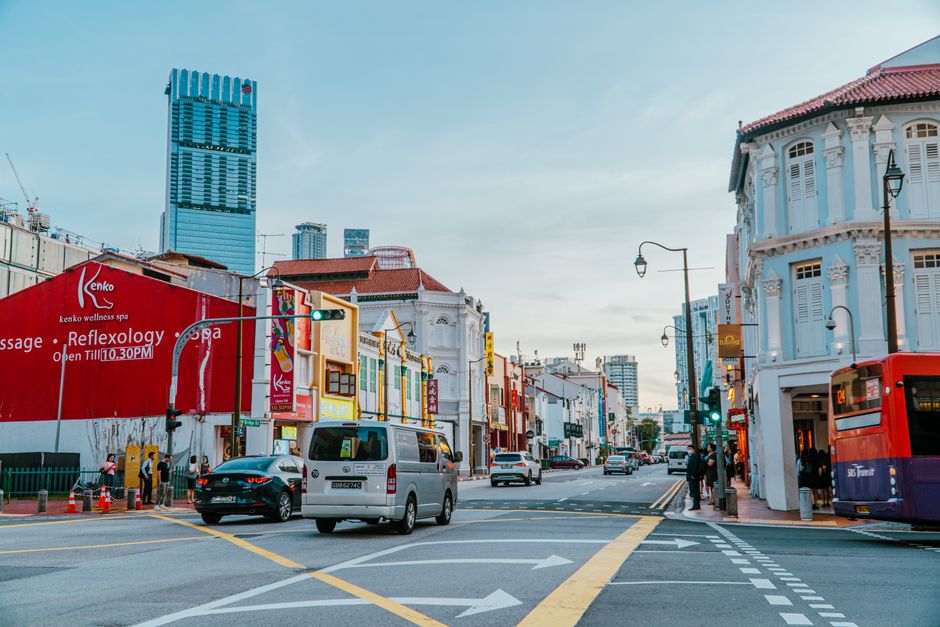
Singapore's Infocomm Media Development Authority rolled out an expanded duplicate-image detection mandate across government-linked digital platforms in January 2026, requiring all statutory boards and public agencies to audit visual assets for redundancy by the end of the third quarter. The directive covers everything from the Housing and Development Board's resale flat listing portal to the national parks database maintained by NParks — a sweep that insiders at the Smart Nation Group estimate touches well over 40 million stored image files.
The push matters now because Singapore is positioning itself as a regional data-infrastructure benchmark ahead of the ASEAN Digital Economy Framework's next compliance review, scheduled for late 2026. Bloated image libraries slow API response times, inflate cloud-storage costs, and, critically, degrade the performance of the machine-learning pipelines that Singapore's public sector has been building since the Smart Nation initiative launched. A single duplicated property photograph on a HDB listing portal is a minor nuisance; tens of thousands of them, compounding across a decade of uploads, become a structural problem for any AI model trained on that data.
What Singapore Is Actually Doing
The practical work is happening at two main nodes. The Government Technology Agency, GovTech, based at Sandcrawler Building near one-north in Buona Vista, is deploying perceptual hashing — a technique that generates a compact fingerprint for each image so near-identical files can be flagged even when they have been resized or lightly edited. A separate workstream inside the Singapore Land Authority is applying the same method to the OneMap geospatial portal, which aggregates aerial and street-level imagery across all 28 planning regions. The SLA confirmed the OneMap audit began in March 2026, though it has not publicly disclosed how many duplicate files have been removed so far.
HDB's resale portal, which recorded more than 27,000 transactions in 2024 according to HDB's own annual figures, has long struggled with sellers uploading the same flat photographs across multiple listing cycles. The January directive requires the portal's backend to reject uploads that match existing files above a defined similarity threshold — a change that property agents along Toa Payoh Lorong 1, where several major agencies cluster, say has already altered their workflow.
How Singapore Stacks Up Against Tokyo, Amsterdam and Seoul
Globally, the approaches diverge sharply. Tokyo's Digital Agency, established in September 2021, has concentrated its deduplication efforts on citizen-facing document scans rather than photographic assets, reflecting Japan's bureaucratic paper trail. Amsterdam's Datacentrum Gemeente Amsterdam published a framework in 2024 for deduplicating the city's open-data image sets, but the effort remains largely manual and voluntary for municipal departments. Seoul's Smart City platform, operated through the Seoul Digital Foundation, has gone furthest among comparable cities in automating image-level deduplication across its public real-estate and tourism portals, using a convolutional neural network pipeline that the Foundation says reduced its image-storage footprint by roughly 18 percent between 2023 and 2025.
Singapore's approach borrows technically from Seoul's model but adds a compliance layer — mandatory audits with published timelines — that Seoul's largely voluntary framework lacks. That regulatory bite is consistent with how Singapore typically operates: set a deadline, name a responsible agency, and attach accountability to the outcome.
The cost differential is real. Cloud object storage for image files is not cheap at enterprise scale. Amazon Web Services S3 standard storage in the Asia-Pacific Singapore region is priced at approximately US$0.025 per gigabyte per month as of mid-2026. For agencies holding hundreds of terabytes of redundant visual data, even a 10 percent reduction represents meaningful savings on annual IT budgets — money that, in the public sector, eventually shows up as an argument for lower operational expenditure in the next Budget statement.
For ordinary Singaporeans, the most immediate payoff should appear on the HDB resale portal and on OneMap by September 2026, when the Q3 deadline falls. Faster-loading listing pages and cleaner search results are the promised outcome. Property buyers comparing flats in Tampines or Woodlands should, in theory, stop seeing the same bathroom photograph appear under three different listing IDs — a small frustration that has persisted for years. Whether the backend work lands on time will be the first real test of whether Singapore's deduplication directive has teeth or is simply another well-intentioned policy sitting in a queue.