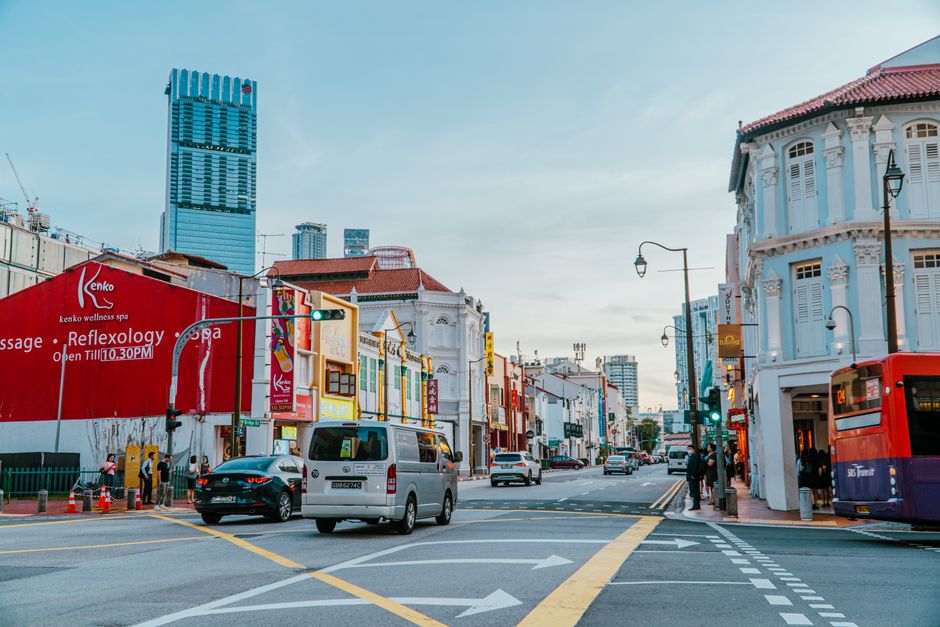
Singapore's major property and retail listing platforms moved this week to enforce tougher duplicate-image replacement policies, responding to a growing flood of recycled, AI-generated, and misrepresenting photographs that consumer advocates say have misled thousands of buyers in the first half of 2026. The push affects everything from HDB resale flat listings on PropertyGuru to product images on Lazada and Shopee's Singapore storefronts.
The timing matters. The Consumer Association of Singapore (CASE) received a marked uptick in complaints about misleading visual content in online listings during the first quarter of this year. With generative AI tools now cheap and widely accessible, bad-faith sellers have found it trivially easy to swap authentic photographs of a Toa Payoh three-room flat, for example, with a polished AI render that strips out water stains, cracked tiles, and ageing fixtures. Buyers arriving at viewings on Lorong 4 or over at Bishan Street 22 have reported properties looking nothing like their advertised images.
What Changed This Week
PropertyGuru confirmed on Wednesday that its moderation system, which already scanned for exact pixel-level duplicates, will now flag images that are perceptually similar — meaning photos that have been resized, recoloured, or lightly edited to evade detection. Listings that trigger the new filter will be automatically unpublished until the seller uploads verified replacement photographs. The platform has not publicly disclosed the precise error-rate threshold it is using, but the change takes effect across all Singapore residential listings from 7 July 2026.
Separately, the Infocomm Media Development Authority (IMDA) circulated updated guidance this week under its Digital Commerce Accountability Framework, pressing platforms operating in Singapore to implement what the authority describes as provenance-checking for uploaded images — essentially metadata verification that traces where a photograph originated. The guidance is not yet mandatory, but IMDA has indicated it is watching compliance ahead of a formal review scheduled for the fourth quarter of 2026.
On the retail side, Shopee's Singapore operations began requiring sellers in its Furniture and Home Living category to certify that product images are original or properly licensed. The certification step, added to the seller upload flow on Tuesday, follows months of complaints at the Consumers' Association's Lengkok Bahru offices about flat-pack furniture arriving in dimensions and finishes that bore little resemblance to listing photos. Lazada has not announced a parallel move but is understood to be reviewing its own policies.
Why Duplicate Images Are a Bigger Problem Than They Seem
The issue sits at the intersection of two pressures bearing down on Singapore households right now: a cost-of-living crunch that makes every purchasing decision feel high-stakes, and an ageing population increasingly transacting online for the first time. A misleading photograph of a Queenstown flat or a Jurong East furniture set is not a trivial inconvenience — for a retired couple making an HDB downgrade decision, it can translate into a costly wasted valuation or a legal dispute over a purchase that does not match its description.
CASE data published in April 2026 showed that complaints about online purchase misrepresentation rose by roughly 18 percent year-on-year in 2025, with visual misrepresentation cited as a factor in just over a third of those cases. The numbers are not broken out by image type, so the AI-generated subset is harder to isolate, but platform moderators and consumer advocates both say anecdotally that the problem accelerated sharply after mid-2025 as image-generation tools became freer and faster.
For buyers and renters navigating the market right now, the practical advice is straightforward: request a video walkthrough or a live virtual tour before committing to any viewing deposit, cross-check listing images using reverse-image search tools, and report suspect listings directly to CASE via its online portal or to the relevant platform's trust-and-safety team. PropertyGuru's new flagging system should catch many cases automatically, but it cannot substitute for due diligence on a S$400,000 resale purchase. The platforms are tightening the net — but slowly, and sellers who want to game the system will keep trying.