Singapore's sprawling network of public-sector databases is sitting on a growing crisis: thousands of duplicate images embedded across government portals, HDB property records, and national archive systems — redundant files that consume server capacity, distort search results, and increasingly complicate the Republic's ambition to position itself as a clean-data AI hub. The issue has come into sharper focus this year as agencies prepare for tighter data governance audits scheduled under Singapore's Digital Government Blueprint refresh, expected in the fourth quarter of 2026.
The timing matters. Singapore is mid-stride in a national AI strategy that depends on reliable, well-structured datasets. Duplicate images — whether property photographs recycled across multiple HDB flat listings on the Resale Flat Prices portal, or heritage photographs stored redundantly across the National Archives of Singapore and the National Library Board's digital collections — are not a cosmetic nuisance. They skew machine-learning training sets, inflate storage costs, and produce errors when automated systems attempt to cross-reference visual data with text records. Getting this right before the next wave of public-sector AI deployments is not optional.
Where the Pressure Is Concentrated
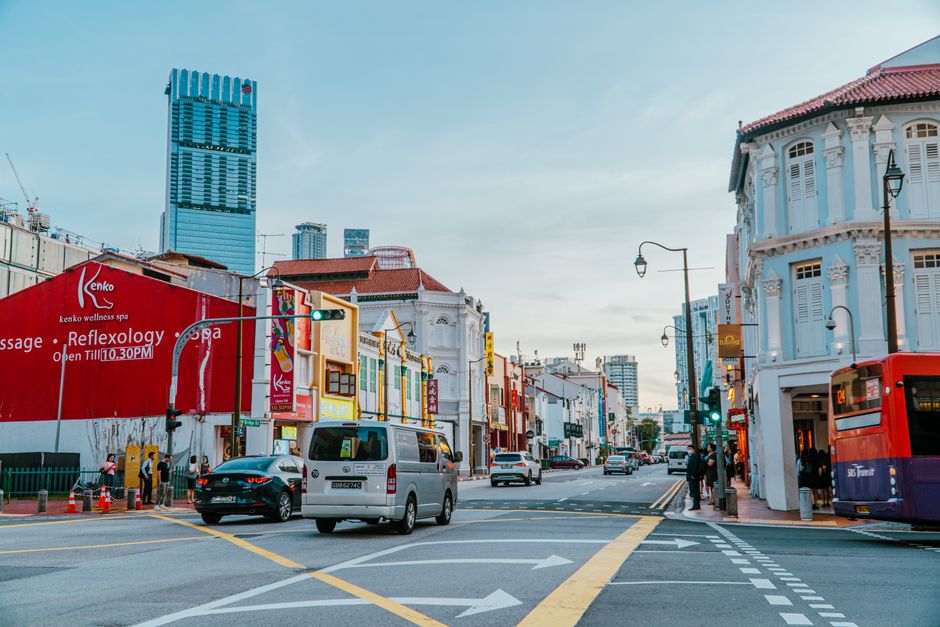
The problem is especially visible in two places. First, the HDB's online resale and rental portals, where property agents and individual sellers have historically uploaded the same flat images multiple times across separate listings — sometimes spanning units in Toa Payoh, Tampines, and Queenstown simultaneously — creating a tangle of near-identical files that automated deduplication tools struggle to resolve cleanly when image angles or lighting differ only slightly. Second, the Roots.sg platform, operated by the National Heritage Board, holds digitised photographs donated or scanned from community estates going back decades, and the volume of overlapping submissions from clan associations and community groups along Telok Ayer Street and in Chinatown has never been systematically reconciled.
The Smart Nation and Digital Government Office, which coordinates digital standards across ministries, has not publicly confirmed a single consolidated deduplication timeline, but its data architecture guidelines updated in March 2026 explicitly flag image deduplication as a prerequisite for agencies seeking to deploy generative AI tools on public datasets. That guidance has effectively set a soft deadline: agencies that want to participate in the GovTech AI Sandbox programme — which opened its second cohort in May 2026 — must demonstrate clean, deduplicated data assets before onboarding.
What the Decisions Ahead Actually Look Like
Three choices will define the outcome. The first is technical: whether agencies adopt perceptual hashing — a method that detects visually similar images even when file names or metadata differ — or rely on exact-match algorithms that miss near-duplicates. Perceptual hashing is more expensive to implement at scale but catches the cases that matter most, particularly in heritage collections where the same photograph may have been scanned at different resolutions on different dates.
The second decision is institutional. Centralised deduplication managed by GovTech would be faster and more consistent, but several statutory boards have historically guarded their data pipelines closely. A federated model — where each agency runs its own deduplication layer against a shared standard — preserves autonomy but risks inconsistent results. The National Library Board and the Infocomm Media Development Authority, both of which maintain substantial image repositories, will likely be the bellwether agencies whose approach others follow.
The third is about what to do with confirmed duplicates once found. Deletion is the obvious answer for redundant government records, but heritage images raise preservation questions. A photograph of Bugis Street from 1970 that exists in three slightly different scans may warrant keeping all three versions in archive, even if only one is surfaced to public users. Archivists and data engineers are not always the same people, and bridging that gap requires deliberate policy, not just a software script.
Private platforms are watching. Property portals such as 99.co and PropertyGuru — both active in the Singapore market — already run their own deduplication routines, but if HDB's own portal tightens its standards, agents uploading listings will face stricter validation at the point of submission, likely from early 2027 if current agency timelines hold. For residents relying on accurate flat listings in estates from Bukit Batok to Bedok, that change will be the most tangible sign that the decision-making process produced something real.