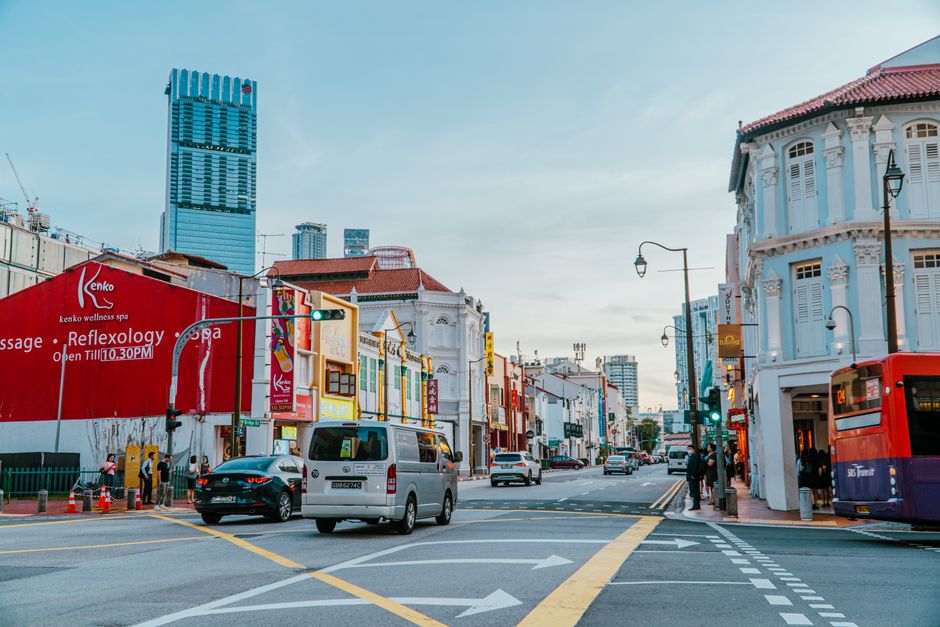
Flat-hunters browsing 99.co, PropertyGuru, and the HDB Resale Portal this year are running into a problem that is more than just an inconvenience: the same photographs — sometimes from years-old listings, sometimes from entirely different units — keep appearing under fresh listings at inflated asking prices. The practice, known in the industry as duplicate image recycling, is distorting expectations for buyers and tenants at a moment when Singapore's housing costs are already under intense scrutiny.
The timing matters. HDB resale flat prices have remained elevated through 2025 and into 2026, and the government has repeatedly signalled its commitment to housing affordability as a cornerstone of social policy. When a three-room flat in Toa Payoh is advertised with gleaming, renovated interiors that turn out to belong to a different unit three blocks away, the prospective buyer wastes time, makes wrong financial calculations, and, in some cases, commits to viewings — or worse, offers — based on false visual information.
How the Problem Plays Out on the Ground
The mechanics are straightforward. An agent closes a deal on a well-renovated flat in Queenstown or Bishan, photographs it professionally, then repurposes those images when a shabbier unit in the same block becomes available. Listing platforms rely primarily on automated checks and user-flagging to catch this. Neither is consistently effective. The Council for Estate Agencies (CEA), which licenses property agents in Singapore, has guidelines requiring that listing photographs accurately represent the specific property being marketed, but enforcement depends heavily on complaints reaching the council.
Residents in mature estates feel this most acutely. Tampines and Ang Mo Kio, where HDB stock is older and condition varies sharply from floor to floor within the same block, are frequent sites of the mismatch. A buyer expecting the sunlit kitchen in the listing photograph arrives to find a unit that has not been touched since the 1990s. The gap between expectation and reality can be several tens of thousands of dollars in renovation costs — a serious financial shock for first-time buyers already stretching to meet the median resale price of a five-room flat, which crossed S$700,000 in several central estates during 2025.
The HDB Resale Portal has added mandatory seller declarations and introduced standardised listing fields in recent years, but photograph verification remains a weak link. PropertyGuru has its own agent verification programme, and 99.co runs periodic listing audits, yet neither platform has deployed image-matching technology at scale to automatically flag when the same photograph appears across multiple active listings for different units.
What Residents and Regulators Can Do
The CEA's Public Register allows residents to check whether an agent is licensed and to file complaints, and the council has in the past taken disciplinary action against agents for misrepresentation. The more immediate practical step for buyers is to request the exact unit number before booking any viewing, then cross-reference listing photographs against street-view tools or ask the agent to share time-stamped photos taken specifically for that unit. The Consumers Association of Singapore (CASE) has fielded property-related complaints before and remains a parallel avenue for residents who feel they have been misled but do not want to go straight to a formal CEA process.
Technology is catching up, slowly. Reverse image search tools, freely available through Google and TinEye, let anyone check in seconds whether a listing photograph has appeared elsewhere online. Property researchers at the National University of Singapore's Institute of Real Estate and Urban Studies (IREUS) have examined information asymmetry in Singapore's resale market; their work suggests that visual misrepresentation compounds the already significant knowledge gap between first-time buyers and experienced agents.
The longer-term fix will require platform-level action. Both PropertyGuru and 99.co have the technical capacity to run perceptual hashing — a standard image-matching algorithm — across their databases. Requiring agents to upload photographs only through a verified, timestamped channel tied to a specific listing address would be a start. Until that happens, the burden falls on residents themselves: ask more questions, run the reverse image search, and report mismatches to the CEA. Housing is too large a financial commitment in Singapore to leave the verification to chance.