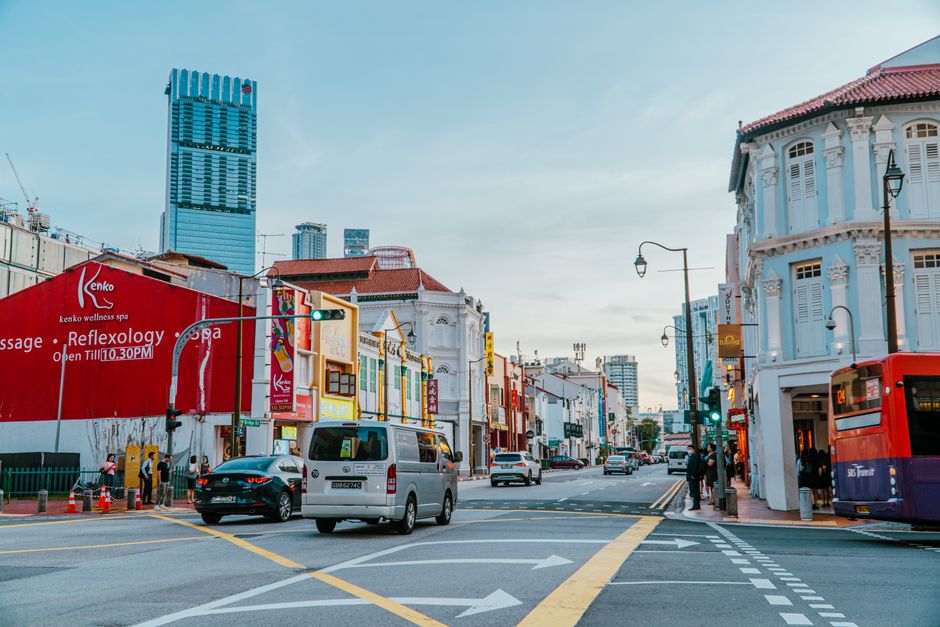
Duplicate and recycled images — photographs stripped of their original context and reshared as something else entirely — are being flagged by digital literacy advocates and government agencies in Singapore as one of the most persistent and underappreciated threats to accurate public information. The problem is not new, but the scale has accelerated sharply, and those working closest to it say the gap between image and truth is widening faster than public awareness can keep up.
The issue sits at an uncomfortable intersection of platform accountability, media literacy, and Singapore's broader push to position itself as a trusted AI and technology hub. As artificial intelligence tools make it cheaper and faster to repurpose visual content, the practical challenge of verifying what an image actually shows — and when and where it was taken — has moved from a niche concern of fact-checkers to a mainstream policy question.
Agencies and Researchers Put Numbers to the Problem
The Infocomm Media Development Authority, which regulates Singapore's digital media landscape, has included image verification as a component of its ongoing media literacy outreach under the Digital for Life movement, a national programme launched in 2021 in partnership with community and corporate stakeholders. Researchers at the Singapore Management University's Wee Kim Wee School of Communication and Information have pointed to duplicate image circulation as a distinct category of misinformation that often evades traditional fact-checking pipelines, which tend to focus on text-based claims.
Globally, the Reuters Institute for the Study of Journalism reported in its 2025 Digital News Report that visual misinformation — including images misattributed to events they did not depict — now accounts for a significant share of false content flagged by newsrooms. The problem is amplified in markets with high smartphone penetration and active WhatsApp forwarding cultures, both of which describe Singapore's media environment closely. Singapore's smartphone penetration rate sits above 90 percent, according to figures from the Infocomm Media Development Authority's annual industry survey.
At the National Library Board's Lee Kong Chian Reference Library on Victoria Street, public workshops on source verification have been part of the S.U.R.E. programme — Source, Understand, Research, Evaluate — since its expansion in 2022. Librarians running these sessions have described duplicate images as a recurring stumbling block for participants of all age groups, not just the elderly cohorts who typically dominate digital literacy conversations.
Platforms, Pressure and Practical Tools
The pressure on social media platforms to act has intensified. Meta's fact-checking partnerships in Singapore — which involve third-party reviewers assessing viral content — cover image verification, but practitioners say the turnaround time between a duplicate image going viral and a correction reaching the same audience remains far too long. By the time a recycled photograph from, say, a 2019 flood in another country gets tagged as misleading, it may already have circulated through thousands of private group chats on Telegram or WhatsApp, channels that verification labels cannot reach.
Researchers at Nanyang Technological University's Wee Kim Wee School — not to be confused with the SMU unit of the same name — have explored reverse image search as a first-line detection method. Google's reverse image tool and TinEye are the most accessible options for general users, but both require the person encountering the image to be sufficiently skeptical to check in the first place. That motivated scepticism is precisely what campaigns like Digital for Life are trying to cultivate at the community level, running engagements through grassroots organisations at community centres from Tampines to Queenstown.
For anyone encountering a suspicious image on a Singapore-facing platform, the Sunlight AfA — the Alliance for Action on Online Harms — provides a reporting channel, while the Government Technology Agency's fact-checking resources are available through the gov.sg portal. The practical advice from those working in verification is consistent: before resharing, run the image through a reverse search, check the earliest known publication date, and look for contextual clues in the image itself — signage, clothing, crowd density — that may contradict the accompanying caption. None of these steps is foolproof, but each raises the cost of a duplicate image spreading unchallenged.