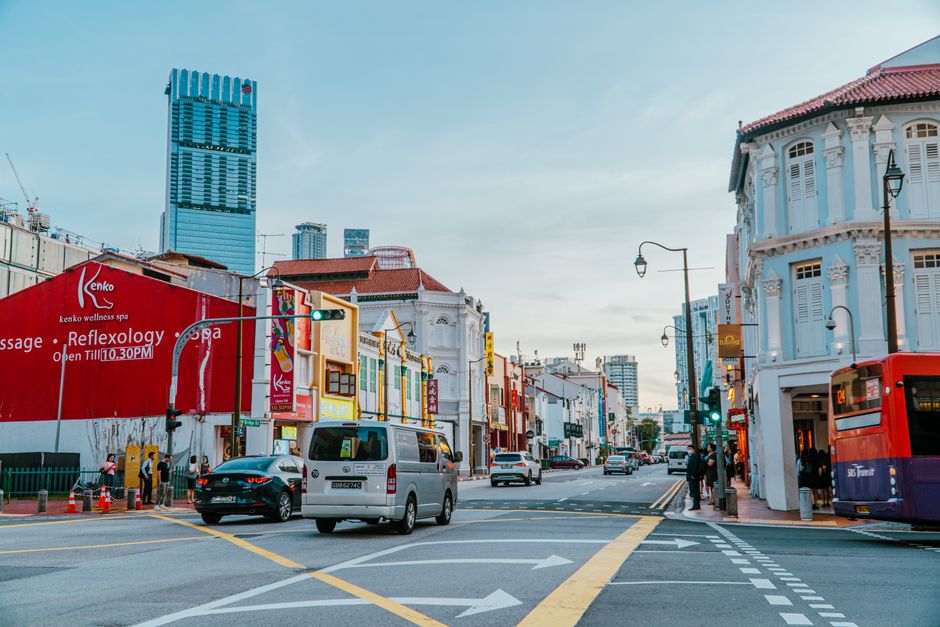
Singapore's Urban Redevelopment Authority confirmed this year that it has been running a systematic audit of duplicated imagery across its GeoSpace data platform, a repository that underpins planning decisions for everything from Tengah's new eco-town to redevelopment parcels along Orchard Road. The problem — identical or near-identical images filed multiple times under different reference codes — may sound mundane, but it costs money, slows down AI training pipelines, and in some cases has led to planning submissions being cross-referenced against the wrong site photographs.
The timing matters. Singapore has staked a significant portion of its Smart Nation 2.0 agenda on clean, machine-readable government data. Duplicate image records are one of the less glamorous obstacles to that goal. When a computer vision model trained on URA's property imagery encounters the same photograph logged under three different lot numbers, its ability to accurately classify building conditions or density patterns degrades. The National AI Strategy refresh, published in late 2023, explicitly listed data quality — including deduplication — as a prerequisite for reliable public-sector AI deployment.
How Singapore Compares to London, Seoul and Tokyo
Singapore is not the only city wrestling with this. London's Ordnance Survey ran a deduplication exercise across its MasterMap imagery layer between 2023 and 2025, reportedly removing tens of thousands of redundant image assets from its national topographic database. Seoul's Smart City data bureau launched a similar initiative under its Digital Seoul 2030 plan, focusing on rooftop imagery used for solar potential mapping — a problem the city identified after finding the same building photographed from the same angle appearing in multiple cadastral records. Tokyo's Geospatial Information Authority has had a rolling deduplication mandate since 2022, tied to its preparation of machine-learning datasets for disaster response modelling.
Where Singapore differs is in the integration point. Rather than treating image deduplication as a standalone data hygiene project, the Housing and Development Board has linked it directly to the Resale Flat Listing Service, which went live in 2023. Property photographs submitted by sellers are now run through a perceptual hashing algorithm before upload — a technique that compares image fingerprints rather than pixel-by-pixel matches — to prevent the same flat being listed with recycled photography from a previous transaction. HDB's system flags matches with a similarity score above a set threshold and routes them for human review before the listing goes public.
The practical stakes are real. A resale flat in Bishan or Buona Vista listed with a photograph from its 2019 sale — before a renovation — gives prospective buyers a materially misleading picture of the unit's current condition. Beyond consumer protection, duplicate imagery in government land records can complicate compulsory acquisition valuations, a process that already attracts scrutiny given Singapore's land scarcity.
What Comes Next for Buyers and Planners
The URA has indicated that its GeoSpace audit will extend to the OneMap platform, the government's authoritative street-level mapping service, by the end of 2026. OneMap is used by roughly 100 integrated applications across both public agencies and private developers. Cleaning its image layer is seen inside the authority as groundwork for the next phase of the Built Environment Data Hub, which is intended to serve as a single source of truth for physical Singapore.
For ordinary residents, the immediate practical effect is most visible in the HDB resale portal. Buyers searching for three-room flats in Queenstown or Tampines should find that from mid-2026 onward, listing images are more reliably current — the hash-check system has been running long enough to have cycled through the bulk of older inventory. Sellers who reuse photographs from a previous sale of the same unit will see their listing held in a review queue, typically for 48 to 72 hours, before it appears publicly.
Singapore's edge over comparable cities is less about technology — perceptual hashing is widely available — and more about the decision to embed deduplication inside a transactional workflow rather than run it as a periodic cleanup. The question for urban data managers here and elsewhere is whether the same discipline can be applied to the far messier archives that predate digital-native government systems. That audit, in Singapore's case, is still ongoing.