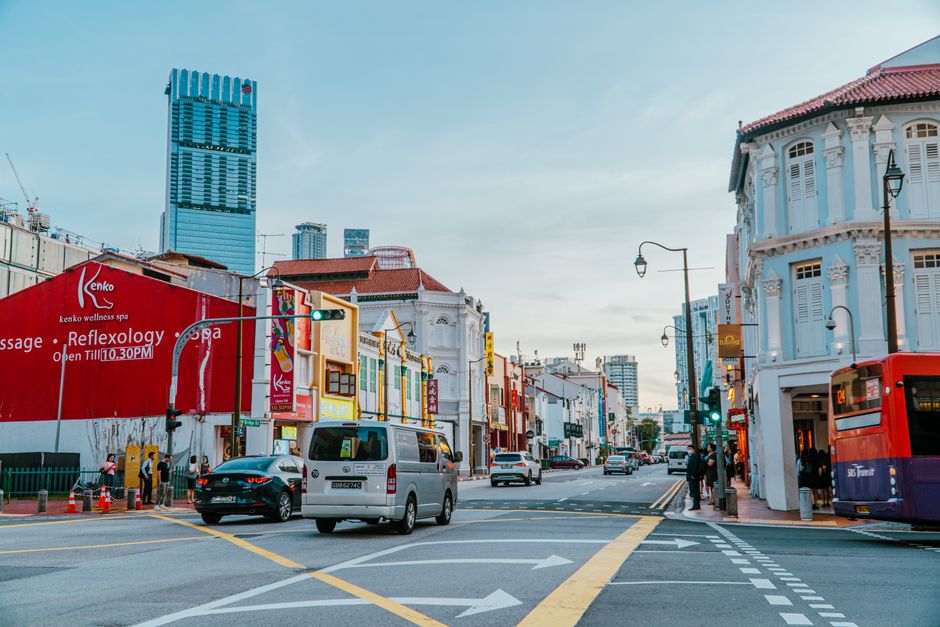
Singapore's digital content ecosystem has a duplication problem, and the people tasked with managing it are no longer staying quiet. Across property listing portals, heritage archives and e-commerce platforms, duplicate images — photographs recycled, reused or deliberately substituted to mislead — have become a pressing governance and consumer protection issue that is drawing attention from regulators, technologists and civic advocates alike.
The urgency is partly technical and partly legal. With Singapore's amended Personal Data Protection Act enforcement guidelines taking fuller effect this year, organisations handling visual data face stricter obligations around accuracy and consent. The Infocomm Media Development Authority has signalled that content integrity — not just data privacy — is part of its broadening mandate, though the agency has not yet published specific rules targeting image duplication as a standalone category of violation.
Where the Problem Is Showing Up
The property sector is ground zero. Platforms aggregating HDB resale flat listings and private condominium rentals have long been criticised by consumer groups for allowing sellers and agents to post outdated or wholly unrelated photographs alongside unit listings. A three-room flat in Toa Payoh advertised with images from a different block, or a Queenstown rental listing carrying photos from a completed renovation that does not reflect the current state of the unit, are scenarios that housing advocates say occur with regularity. The Council for Estate Agencies, which licenses and regulates property agents, has existing rules requiring accurate representation in marketing materials, though enforcement at the image level has historically been reactive rather than systematic.
The National Heritage Board faces a parallel challenge in its digitisation drive. The Board's digital archive, which houses tens of thousands of photographs from Singapore's colonial and post-independence history, has been working to eliminate duplicate entries that arose from multiple scanning rounds of the same physical collections. Duplicate records complicate search results and, more critically, can lead to incorrect attribution — a photograph from Chinatown in 1965 labelled with the wrong street name or decade because a duplicate entry carried a metadata error.
Academics at the School of Computing at the National University of Singapore have been developing image-hashing and perceptual similarity tools specifically suited to multilingual and multicultural visual datasets of the kind that characterise Singapore's archives. NUS researchers presented findings at a regional data governance forum held in March 2026 in Bras Basah, noting that off-the-shelf duplicate detection software built primarily on Western visual datasets performs measurably worse on photographs of Southeast Asian urban environments and faces.
What Needs to Change, According to Those in the Room
Consumer advocacy organisation CASE — the Consumers Association of Singapore — has received a growing volume of complaints related to misrepresented visual content in online commerce, particularly in the food delivery and home services sectors. A product photographed to appear larger or fresher than the delivered item is a routine grievance, but CASE's concern now extends to systematic reuse of stock or stolen imagery by vendors on major platforms, which it views as a form of misrepresentation under the Consumer Protection (Fair Trading) Act.
The Smart Nation Group, the government body coordinating Singapore's digital transformation programmes, has been consulting with platform operators on voluntary image integrity standards as part of its broader digital trust framework. Discussions are understood to be at an early stage, and no mandatory code has been announced.
On the practical side, GovTech — the agency that builds and maintains Singapore government digital services — has been piloting automated duplicate-detection tools within the Whole-of-Government data management infrastructure since late 2025. The pilot covers internal document repositories before any planned extension to public-facing services.
For consumers and businesses dealing with the problem today, the most actionable guidance comes from existing frameworks: file complaints with CASE for commercial misrepresentation, report inaccurate property listings directly to the Council for Estate Agencies, and use reverse-image search tools to verify visual claims before committing to a purchase or lease. The regulatory architecture for a more systematic fix is being built, but it is not yet in place.