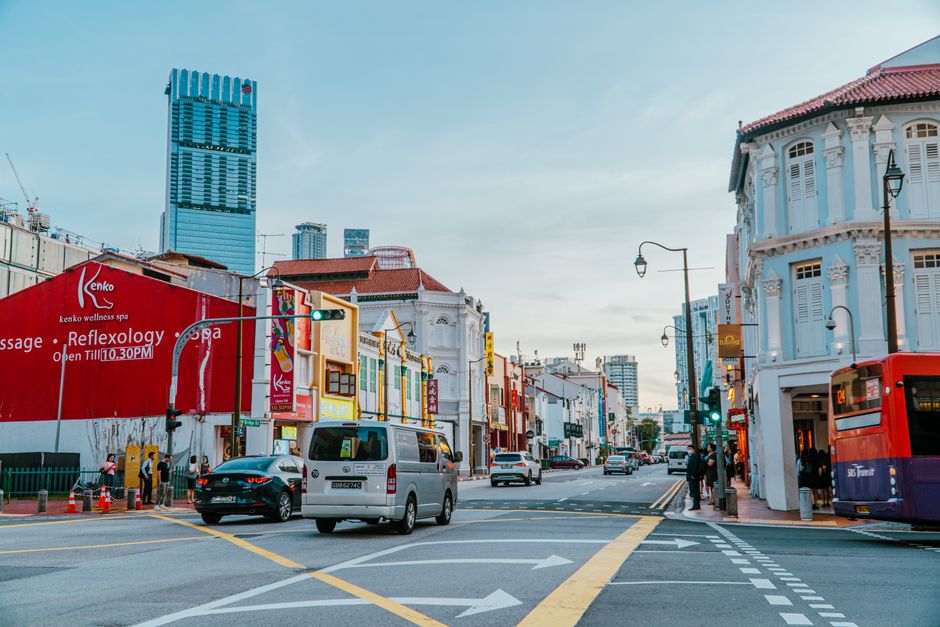
Singapore's Urban Redevelopment Authority confirmed earlier this year that its geospatial data division had flagged tens of thousands of duplicate satellite and street-level images cluttering its OneMap platform — the government's official mapping service used by agencies from HDB to the Land Transport Authority. The cleanup effort, underway since January 2026, is now being watched by city planners in Tokyo and London who face the same problem at larger scale but without a comparable coordination framework.
The issue matters more urgently now because Singapore is accelerating its Smart Nation 2.0 initiatives, which rely on clean, deduplicated visual datasets to power everything from AI-assisted building inspections in Toa Payoh to autonomous vehicle trials along one-north's Ayer Rajah Expressway corridor. Feeding a machine-learning model with duplicate or near-identical images degrades its accuracy — a fact that caught several municipal governments flat-footed as they rushed AI adoption without auditing their source data first.
What Singapore Is Actually Doing
The URA is not working alone. GovTech Singapore, which sits at 10 Pasir Panjang Road, is running the deduplication pipeline using a hashing and perceptual similarity algorithm applied to imagery ingested from multiple government sources since 2019. The programme cross-references street-view captures from the Land Transport Authority, drone footage from the Singapore Land Authority, and building facade scans commissioned by the Housing and Development Board. Where images overlap by more than 92 percent similarity — a threshold set by GovTech's data engineering team — they are flagged for human review before deletion or archival.
The practical footprint is significant. HDB estates in Bukit Batok and Woodlands were among the first neighbourhoods to have their visual records cleaned, partly because both areas saw heavy re-photographing during the post-2021 upgrading cycles. GovTech has not published a final count, but the initiative falls under the National Geospatial Master Plan, which targets a fully deduplicated national imagery dataset by the fourth quarter of 2026.
Contrast this with London. Transport for London and the Greater London Authority each maintain separate imagery databases with limited cross-agency deduplication protocols, according to a 2025 review by the UK's Central Digital and Data Office. New York City's open data portal, data.cityofnewyork.us, carries known redundancy in its aerial photography archives dating to borough-level uploads that predate any unified standard. Tokyo's municipal government has begun addressing the problem under its GovTech Tokyo office, established in 2022, but coordination across the city's 23 special wards remains inconsistent.
Why It Costs Money to Ignore
Storage is not cheap, and neither is model retraining. Cloud storage costs for large-scale geospatial imagery can run into the hundreds of thousands of dollars annually for a mid-sized city authority. Beyond the direct expense, duplicated image sets inflate training datasets, which means AI models built on them require more compute time per training cycle — a cost multiplier that compounds as Singapore scales its digital twin of the city, a project the Smart Nation and Digital Government Office has been developing since at least 2023.
Singapore's relatively small geographic footprint — 733 square kilometres — gives it a structural advantage that Tokyo, at roughly 2,194 square kilometres, simply does not have. The city-state can enforce a single data governance standard across all agencies without navigating competing regional jurisdictions. That administrative coherence is what allows GovTech to set a 92 percent similarity threshold and apply it uniformly, rather than negotiating agency by agency.
For residents, the immediate consequence is more accurate map data in consumer apps that draw from OneMap, and more reliable AI tools used in estate management. For the agencies building Singapore's next generation of public services, the deduplication work is foundational — get the data wrong at the base layer and every application built on top inherits the error. GovTech expects to publish interim findings on the cleanup's scope in the third quarter of 2026, which will give other cities a clearer benchmark to measure themselves against.