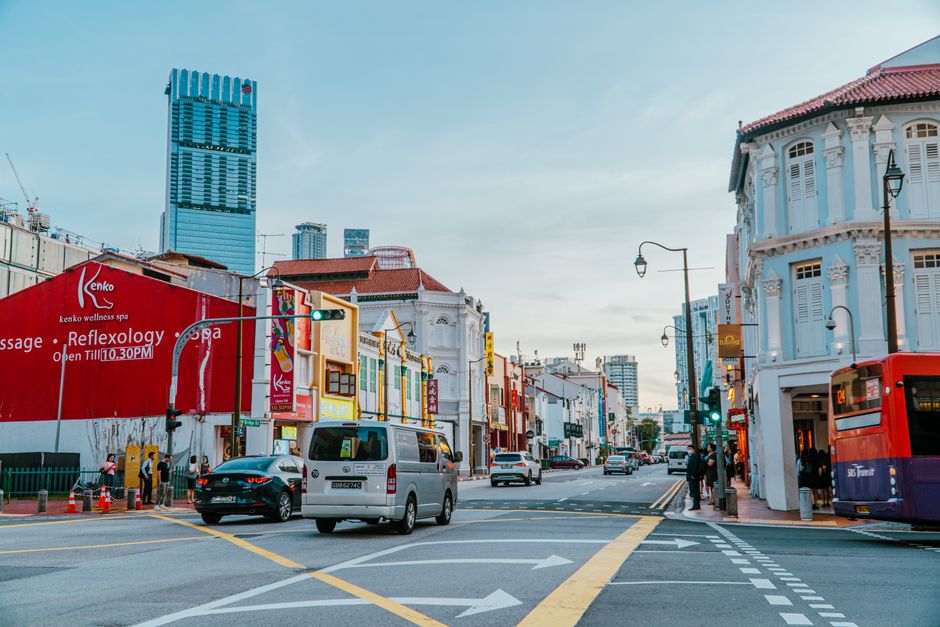
Singapore's Government Technology Agency, better known as GovTech, has been quietly running a duplicate-image-replacement programme across at least 14 government digital portals since early 2025 — and the results are beginning to show. The initiative targets redundant, outdated or algorithmically recycled images embedded in everything from HDB flat listing pages to OneService municipal feedback channels, replacing them with verified, geographically accurate visuals tied to specific estates and landmarks.
The timing is not incidental. Across the globe, cities are waking up to a largely invisible problem: as generative AI tools proliferate, public digital platforms have become cluttered with lookalike stock images, duplicated thumbnails and recycled urban photography that erodes public trust and makes official services harder to navigate. Singapore, which has staked much of its Smart Nation identity on the quality of its digital public infrastructure, has more reason than most to get this right.
What Singapore Is Actually Doing
The practical work happens at the level of individual portals. The Housing & Development Board's resale flat listings, which drew more than 1.2 million unique monthly visitors as of Q4 2025 according to government digital metrics, had accumulated hundreds of duplicated block-facade photographs — often the same Tampines or Bukit Merah block image recycled across dozens of unrelated listings. GovTech's content integrity team has been systematically flagging and replacing these with photographs linked to specific postal codes, cross-checked against the Singapore Land Authority's geospatial database.
The National Library Board ran a parallel exercise within its digital archive interface at the Lee Kong Chian Reference Library on Victoria Street, where duplicated historical photographs of Orchard Road and the Singapore River had been indexed under multiple conflicting metadata tags. Librarians there worked with a contracted image-verification vendor to deduplicate more than 4,000 entries between March and June this year.
Neither exercise is glamorous. Both required staff time, vendor contracts and editorial decisions about what counts as a true duplicate versus a legitimately similar image. The cost of the GovTech-led work has not been made public, but comparable municipal data-cleansing projects in comparable city-states — including Dubai's Smart Dubai Office initiatives in 2024 — have run into the low millions of US dollars for similar scale.
How Singapore Compares Globally
Other cities are tackling the same problem with varying degrees of urgency. Seoul's Smart City division flagged duplicate-image proliferation in its public transport app T-money's station-preview feature as a user-experience problem as far back as 2023, but a systematic replacement programme only launched in January 2026. Tokyo's metropolitan government has largely left the issue to individual ward offices, producing an uneven patchwork of image quality across its 23 special wards. London's City Hall acknowledged the problem in a 2025 digital-services audit but has not yet published a remediation timeline.
Singapore's edge, analysts who track civic technology note, is institutional coordination. GovTech sits at the centre of a web of agencies that can be directed to adopt common image standards without the kind of inter-departmental negotiation that slows equivalent work in federal systems. The Smart Nation and Digital Government Office has pushed a unified image-metadata standard — the SG Digital Asset Framework — that mandates geolocation tagging and duplication checks for any photograph uploaded to a public-facing government portal after January 1, 2026.
For ordinary residents, the immediate benefit is mundane but real. A Queenstown flat buyer searching on the HDB portal should no longer encounter a Woodlands block photograph mislabelled as Stirling Road. A tourist consulting the National Parks Board's green-corridor trail maps on the Rail Corridor route should find images that actually match the path at Buona Vista rather than a recycled shot from Pulau Ubin.
The next phase, according to GovTech's published roadmap, involves extending the framework to statutory boards and town councils before the end of 2026. Town councils in Ang Mo Kio and Toa Payoh have been named as pilot participants. If that rollout holds to schedule, Singapore will have one of the most systematically clean public-image databases of any comparably sized city in the world — a distinction that may seem minor until you consider how much of daily civic life now runs through a screen.