Singapore's public and private digital repositories now collectively store hundreds of millions of image files, and a growing share of them are exact or near-exact duplicates. That is not a minor housekeeping issue. For agencies managing large-scale digitisation programmes, duplicate images translate directly into wasted storage spend, slower retrieval times, and degraded search accuracy—problems that compound as Singapore's Smart Nation push accelerates into 2026.
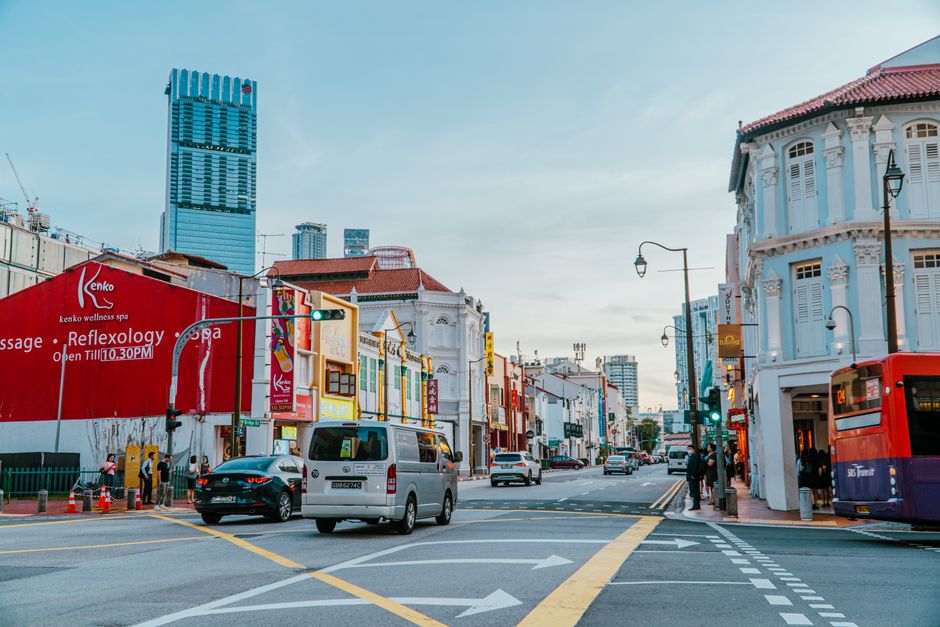
The timing matters because several major digitisation deadlines converged this year. The National Library Board's digital preservation roadmap, which covers physical collections held at the Lee Kong Chian Reference Library on Victoria Street, set internal targets for bulk ingest completion by mid-2026. Separately, HDB's resale portal, which listed more than 27,000 transactions in 2024 according to HDB's own published data, relies on user-uploaded property photographs that frequently recycle the same stock images across multiple listings. When automated indexing systems cannot distinguish original images from copies, relevance rankings break down.
What Duplication Actually Costs
The numbers are concrete. Cloud object storage on hyperscale platforms—the type used by Singaporean enterprises operating out of data centres in Jurong and Tuas—typically runs between S$0.023 and S$0.025 per gigabyte per month for standard-tier access. A repository carrying 30 percent duplicate image load on a 500-terabyte archive is, by that pricing, burning roughly S$84,000 a year on redundant files before bandwidth and compute costs are counted. Scale that to a large statutory board or a regional media company headquartered in one-north, and the figure climbs into the hundreds of thousands annually.
Detection is the first technical hurdle. Perceptual hashing—the dominant algorithmic method for identifying visually similar images even when file metadata differs—has error rates that depend heavily on image quality and preprocessing consistency. Benchmark tests published by academic computer vision groups put false-negative rates for near-duplicate detection at between two and eight percent across standard datasets, which means a significant tail of duplicates routinely escapes automated culling. For archives where image integrity is legally significant, such as court exhibit databases managed through the State Courts complex on Havelock Square, that error margin is not acceptable without a human review layer.
The Infocomm Media Development Authority's Digital Infrastructure Advisory Committee has, in publicly available guidance updated in March 2026, flagged deduplication as a priority efficiency measure for organisations seeking to qualify under the refreshed Multi-Tier Cloud Strategy framework. Organisations that can demonstrate measurable storage optimisation are eligible for enhanced co-investment support under that programme. The commercial incentive, in other words, is now explicit in policy.
Where Singapore Stands Against Its Own Benchmarks
Government technology teams under GovTech, which operates from its offices near Mapletree Business City in Pasir Panjang, have been piloting content-addressable storage models since at least 2024. These systems assign each unique image a cryptographic hash at ingest, making exact duplicates physically impossible to store twice. The challenge is retrofitting that logic onto legacy systems where images were ingested without hash verification—a category that includes a non-trivial portion of the Singapore Tourism Board's promotional asset library and the older strata of the Urban Redevelopment Authority's property image database.
Industry estimates for the cost of a full deduplication audit on a mature enterprise image archive range from S$15,000 to over S$120,000, depending on archive size and the degree of manual verification required. For smaller businesses—say, a property agency on Tanjong Pagar Road managing several thousand listing photographs—off-the-shelf deduplication tools available through the AWS Singapore region or Microsoft Azure's Southeast Asia data centres can address the problem for under S$500 a month.
Organisations that have not yet audited their image repositories should treat the IMDA's March 2026 guidance as a practical starting point. The first step is establishing a baseline count of total stored images, then running a perceptual hash scan to identify the duplicate ratio. That single figure—the percentage of redundant files—is the number that drives every subsequent budget and infrastructure decision. Without it, the spend continues invisibly.