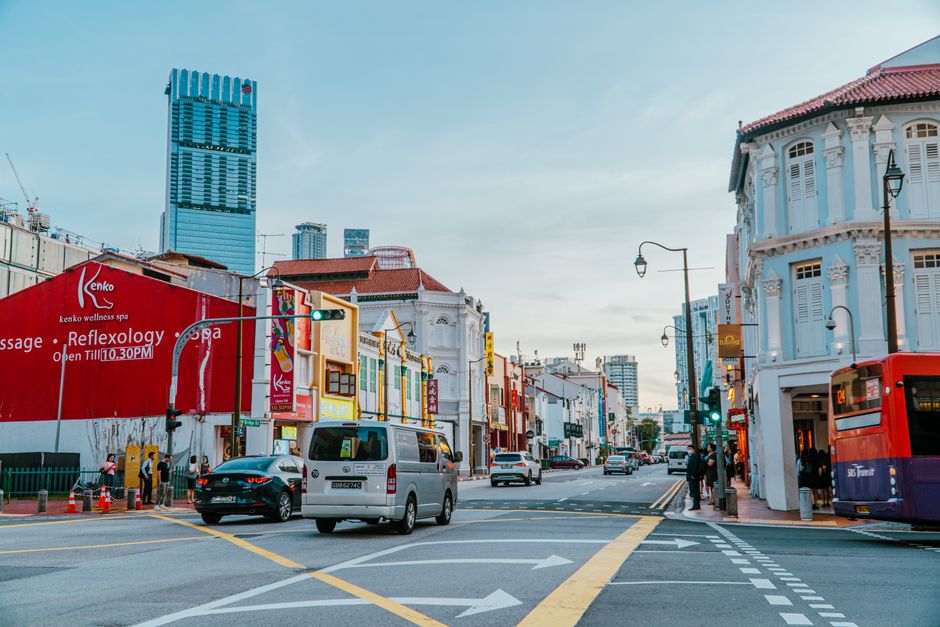
The problem lands quietly. A Tampines flat owner refreshes a property listing site and spots her own living-room photographs — the same IKEA shelf arrangement, the same afternoon light through the HDB window — attached to a unit she has never visited, advertised at a price S$40,000 below her own asking rate. She has not licensed the images. Nobody called. The photos were simply lifted and reused.
Duplicate image replacement — the practice of detecting, reporting, and substituting photographs that have been copied without authorisation — is emerging as a live concern for residents, hawker operators, and small enterprises across Singapore. The issue has sharpened as AI-assisted scraping tools have made bulk image harvesting faster and cheaper, and as more Singaporeans conduct property searches, food delivery orders, and retail purchases on platforms where visual content is the primary selling point.
A stallholder at Chinatown Complex Food Centre described discovering that her roast duck photographs — taken by a professional photographer she paid roughly S$300 to shoot — had appeared on at least four other listings across two delivery apps, two of which were not even selling duck. She filed takedown requests with both platforms. One listing was removed within 72 hours. The second remained live for more than three weeks, according to her account shared at a feedback session organised by the People's Association Hawker Centre Committee last September.
The Intellectual Property Office of Singapore, or IPOS, offers a framework for copyright protection that automatically covers original photographs from the moment of creation, with no registration required. Under the Copyright Act 2021, which came into force on 21 November 2021, copyright in a commissioned photograph now vests with the photographer rather than the person who paid for it, unless a written agreement specifies otherwise. That shift has left some HDB sellers and small-business owners uncertain about who actually owns images they thought they had purchased outright.
Platforms, Processes, and What Residents Are Doing Now
The Consumer Association of Singapore, CASE, logged a rise in image-related digital complaints as part of its broader e-commerce dispute data, though it has not published a standalone figure specific to photograph duplication. The Personal Data Protection Commission, PDPC, handles cases where duplicated images contain identifiable personal information — a scenario that arises when interior photographs inadvertently show family members or personal documents left on a table.
Practical steps are circulating through resident WhatsApp groups in Ang Mo Kio and Sengkang. Several users recommend reverse-image search tools, including Google Images and TinEye, to track unauthorised use. The Real Estate Developers' Association of Singapore has advised its members to watermark all marketing photography before publication, a precaution increasingly adopted by agents working along the Orchard Road corridor and in the Novena medical and residential belt.
IPOS maintains a free mediation service for intellectual property disputes that does not require a lawyer. For claims below S$30,000, the Small Claims Tribunals at The State Courts on Havelock Square offers another avenue, though image valuation in such cases remains contested and outcomes vary.
The advice emerging from community sessions is consistent: document everything before filing, screenshot the infringing listing with a visible timestamp, and submit takedown notices simultaneously to the platform and to IPOS if the platform is unresponsive after 14 days. For hawker operators with limited bandwidth to pursue formal channels, the PA Hawker Centre Committees in several estates have begun offering a one-stop facilitation service to help draft takedown letters — a resource that did not exist two years ago.