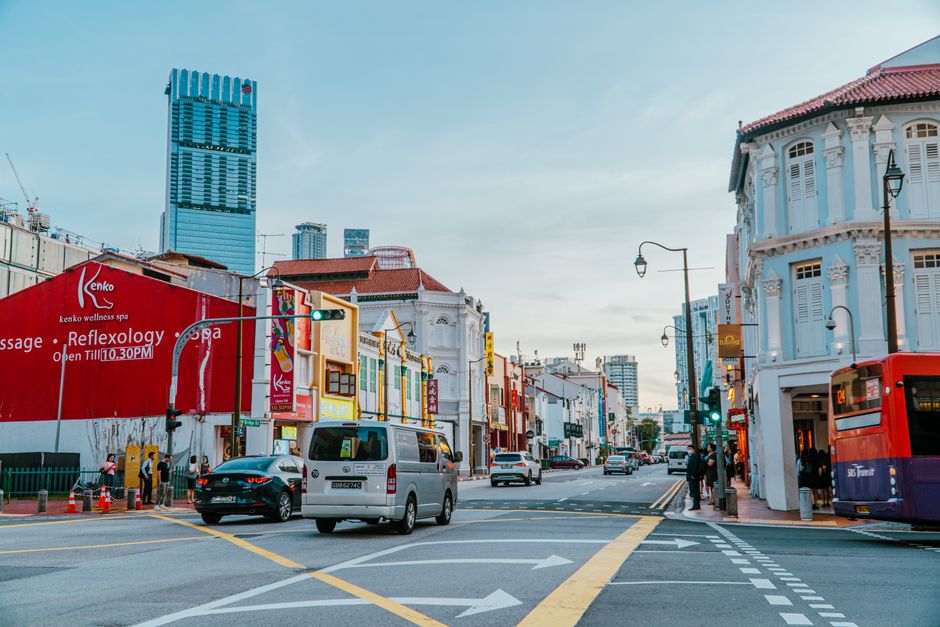
Singapore's Urban Redevelopment Authority began a quiet but consequential housekeeping exercise in January 2026: a systematic audit of duplicate images embedded across its property transaction databases, street-view planning portals, and the OneMap national geospatial platform. The goal was straightforward — remove redundant imagery that was slowing query times, distorting automated valuation tools, and, in some cases, surfacing outdated photographs of demolished buildings as if they were current structures.
The trigger was a growing problem that digital cities worldwide have underestimated. As governments digitise decades of paper records, photograph every street facade, and layer satellite imagery over civic planning tools, the same image often enters the archive multiple times through different ingestion pipelines. By mid-2025, land registry systems in cities including Seoul and Taipei had begun reporting that duplicate imagery was contributing to errors in automated property assessments — a problem that carries real financial consequences for homeowners and developers alike.
What Singapore Is Actually Doing
The URA's audit covers records stretching back to the early 2000s, when the first wave of building photographs was digitised from physical files held at the Maxwell Road offices. SLA, the Singapore Land Authority, is running a parallel exercise across its cadastral and survey datasets, with particular attention to imagery tied to HDB estates in Toa Payoh, Queenstown, and Tampines — three of the oldest and most densely photographed residential towns in the system. According to publicly available procurement notices on GeBIZ, the government's procurement portal, SLA awarded a data-cleansing contract in March 2026 to a local technology firm under an open tender process, with work scheduled for completion by the fourth quarter of this year.
The GovTech agency has developed an internal deduplication pipeline that uses perceptual hashing — a technique that fingerprints images by visual content rather than file name or metadata — to flag near-identical photographs for human review. A similar approach was deployed by the UK's HM Land Registry in 2024 after an internal review found that digitisation contractors had inadvertently uploaded tens of thousands of property images more than once, according to publicly available Land Registry annual reports. London dealt with the problem retroactively and at considerable cost. Singapore, officials say privately, is trying to get ahead of the curve before the problem compounds further.
Tokyo's Ministry of Land, Infrastructure, Transport and Tourism acknowledged in a March 2026 policy paper that duplicate imagery in its Real Estate Information Library had reached a scale requiring dedicated machine-learning tools, with the ministry allocating 1.2 billion yen to address the issue over three fiscal years. Hong Kong's Lands Department, by contrast, has not published any equivalent programme, and property technology professionals there have noted publicly on industry forums that the city's digital cadastre still contains visible duplication artefacts from pre-handover digitisation drives.
Why This Matters Beyond Bureaucratic Tidiness
The practical stakes are higher than they appear. Automated Valuation Models — the algorithms that underpin bank mortgage assessments and government stamp-duty calculations — are increasingly image-sensitive. When a model ingests 12 photographs of the same Clementi Avenue 6 void deck rather than three, it can skew its output on building condition scores. That matters in a market where HDB resale prices have remained elevated, with the Housing and Development Board reporting median resale prices above S$570,000 for four-room flats in mature estates as of the first quarter of 2026.
The problem also intersects with Singapore's Smart Nation ambitions. The Virtual Singapore 3D city model, maintained by the National Research Foundation and GovTech, pulls imagery from multiple government sources. Duplicate inputs degrade the model's accuracy and increase the computational load on servers hosted at the one-north technology district — costs that ultimately fall on public budgets.
For residents and property agents, the near-term practical implication is simpler: checks against OneMap and the URA's REALIS transaction portal should be treated as works-in-progress through the end of 2026. Anyone relying on portal imagery for due diligence on older HDB or private properties — particularly in estates that underwent major redevelopment between 2005 and 2015 — would be prudent to cross-reference with on-site visits or requests for dated photographic records directly from the relevant agency. The cleaning exercise is real and ongoing, but a national image archive built over two decades does not get tidied up in a single quarter.