Singapore's media and publishing sector is confronting a problem that has quietly metastasised over the past two years: the mass duplication and unauthorised recycling of digital images across news sites, e-commerce platforms and government communications portals. The question now is not whether the industry needs a response, but which institutions will move first and how fast they can do it.
The issue has sharpened because of converging pressures. Generative AI tools have made it trivially cheap to replicate, modify or repurpose visual assets, while Singapore's push to position itself as a regional AI and digital economy hub has brought tens of thousands of new content producers online. The Intellectual Property Office of Singapore, which sits under the Ministry of Law, is expected to issue updated guidance before the end of the third quarter of 2026, according to the office's published work plan. That guidance is now the central document the industry is watching.
Where the Problem Shows Up in Singapore
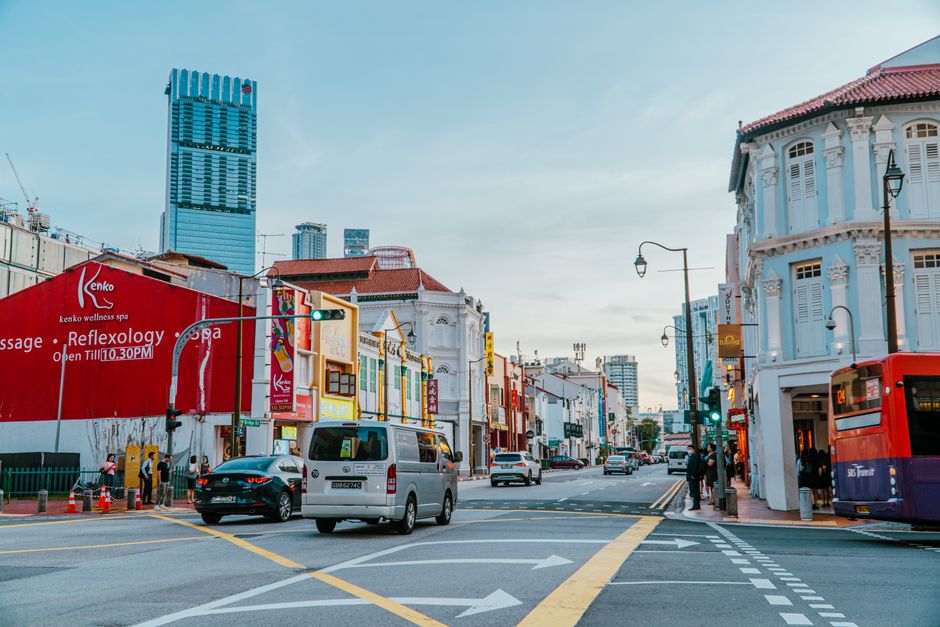
The duplication issue is most visible in two areas: hyper-local real estate and lifestyle publishing, and the government's own network of citizen-facing digital portals. Along Orchard Road, retailers running campaigns on their own websites have found identical product imagery appearing on unaffiliated reseller pages hosted outside Singapore's jurisdiction, sometimes within hours of original publication. At the same time, agencies using the Whole-of-Government image repository maintained by the Government Technology Agency have flagged instances of stock photographs being repurposed without attribution on third-party sites aggregating Singapore public-sector content.
The National Arts Council, which funds visual artists through schemes including the Arts Creation Fund, began consulting stakeholders in January 2026 on whether grant conditions should require watermarking or blockchain-based provenance tagging for all funded visual works. No final policy has been announced. The Singapore Press Holdings successor entities, which manage several legacy mastheads, have separately been developing internal image authentication workflows, though these remain proprietary.
Photographers represented by professional bodies based at the NAFA campus on Bencoolen Street have been vocal about the economic damage. Stock image licensing fees in Singapore have dropped sharply as clients substitute duplicated or AI-generated material. While precise market figures are commercially sensitive, the global stock image market contracted in revenue terms in 2024 and 2025 as AI-generated alternatives proliferated, a trend regional analysts say is acutely felt in smaller markets like Singapore where the pool of commercial buyers is limited.
The Decisions That Will Shape the Next 12 Months
Three decisions now sit on the table simultaneously, and the sequencing matters enormously.
First, the Intellectual Property Office of Singapore must decide whether to classify AI-assisted duplication as a distinct category of infringement, separate from traditional copyright breach. The distinction affects penalty thresholds and the burden of proof for complainants, which would be a significant shift from the current framework under the Copyright Act 2021.
Second, the Infocomm Media Development Authority faces a choice about whether its content standards code, which governs licensed broadcasters and digital news services operating under the Broadcasting Act, should be extended to cover image provenance requirements for digital publishers receiving platform traffic above a set threshold. A threshold-based approach would protect smaller independent creators while placing compliance obligations on the larger commercial players with resources to implement authentication systems.
Third, public procurement rules managed by the Ministry of Finance's Government Procurement function could require all vendors supplying visual content to statutory boards and ministries to certify provenance. Singapore spent over S$40 billion on government procurement in financial year 2024, and even a narrow provenance requirement applied to creative services contracts would send a strong market signal.
For photographers, designers and media companies operating out of spaces like the creative cluster around Tanjong Pagar and the media hub at one-north in Buona Vista, the practical advice is the same regardless of which regulatory path wins: begin documenting image provenance now using available metadata tools, register original works with the Copyright Registration of Singapore voluntary system, and treat any licensing agreement signed after July 2026 as one that will need to accommodate new authentication clauses within 18 months. The window for getting ahead of the rules is narrow, and closing fast.