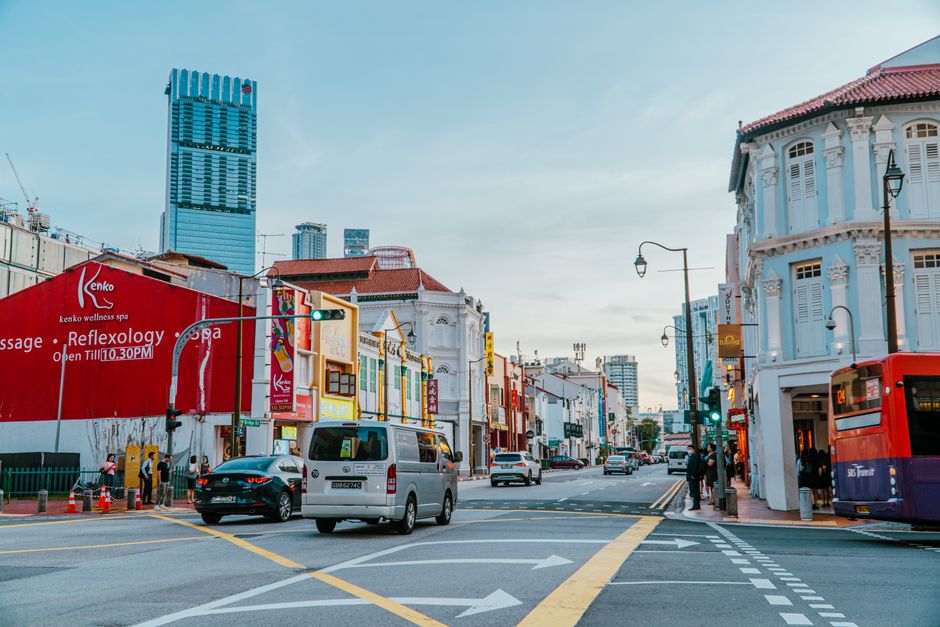
Residents in at least three Housing and Development Board towns say they discovered personal photographs and community murals removed from common corridors and void decks this year, replaced with standardised HDB-issued artwork — and many found out only after the fact. The removals, carried out under estate maintenance rules governing the display of images and materials in common areas, have drawn quiet but persistent frustration from longtime flat owners and grassroots volunteers who say they were never consulted.
The issue has gained sharper attention this mid-2026 as Singapore's broader conversation about community identity and ageing-in-place intensifies. With the government's Forward Singapore agenda emphasising social cohesion and active citizenry, residents say the gap between policy rhetoric and on-the-ground practice is particularly glaring when a decades-old neighbourhood photograph simply disappears from a lift lobby wall.
From Tampines to Toa Payoh, a Pattern Emerges
In Tampines Street 82, members of a residents' committee say a series of hand-painted tiles depicting kampung life — installed during a 2019 community bonding project supported by the People's Association — were taken down sometime in February this year. In Toa Payoh Lorong 4, a long-serving block representative described finding a corridor wall blank where a framed collage of residents' family photographs had hung for nearly a decade. Neither group received advance written notice of the removals, according to their accounts shared at a recent community feedback session at Toa Payoh Community Club.
The People's Association, which administers community clubs and grassroots networks across Singapore, has programs that actively encourage residents to contribute artwork and photographs to shared spaces as part of estate-level engagement drives. Critics argue this makes the removals especially confusing — residents invest time and resources in a project endorsed by one arm of the civic infrastructure, only to have it cleared away by estate management acting under a different set of rules.
Residents describe a specific emotional sting when the item removed is a photograph rather than a piece of generic décor. One Tampines block houses a significant number of elderly residents who moved in during the 1980s resettlement drives; for them, corridor photographs serve as anchors of continuity in a neighbourhood that has otherwise changed substantially.
Rules, Rights and the Fine Print
HDB's estate management guidelines specify that items placed in common areas without prior approval are subject to removal without notice. Residents applying for approval to display community artwork or photographs in common property must submit requests to their respective Town Councils, which manage day-to-day estate maintenance under the Town Councils Act. Singapore has 17 Town Councils as of 2025, each operating with some degree of discretion over what constitutes an approved display versus an obstruction or fire safety risk.
The approval process is not widely understood. A 2024 survey by the Institute of Policy Studies found that awareness of Town Council governance functions among HDB residents aged 50 and above was markedly lower than among younger cohorts — a finding that takes on practical relevance when older residents are disproportionately the ones placing and losing photographs in common corridors. Replacement artwork, sourced centrally, tends toward abstract or nature-themed prints that residents describe as impersonal.
Several residents have written to their Town Councils asking for photographs to be returned or for a formal appeals process. The response, where it has come, has generally pointed back to the maintenance guidelines. No Town Council has announced a policy change in response to the complaints as of publication.
For residents who want to preserve community displays, the practical path forward runs through the Town Council's estate management office — a formal application, ideally supported by the relevant Residents' Committee or Citizens' Consultative Committee, and submitted before any item is installed. The People's Association's Lively Places Fund, which has provided small grants for community art projects at the precinct level since 2021, can also provide a funding trail that lends applications more weight. Starting with the grassroots adviser for the ward is, by most accounts, the fastest way to get a sympathetic hearing before a removal order is ever issued.