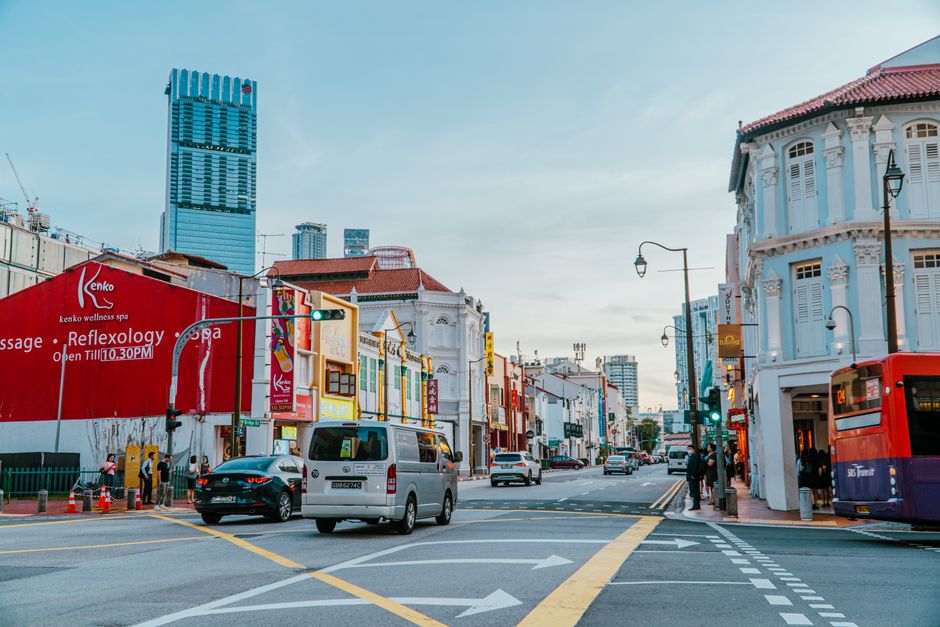
Singapore's government digital portals collectively host tens of thousands of images, many of them duplicated across agencies, outdated by years, or entirely misattributed. The problem is not dramatic. It accumulated the way most bureaucratic headaches do — gradually, then all at once. A systematic audit of public-sector digital assets, initiated by the Government Technology Agency (GovTech) under its Singapore Government Developer Portal framework, has identified duplicate image replacement as a distinct remediation workstream, and agencies across the public service are now working through backlogs that stretch back to the mid-2000s.
The urgency sharpened after Singapore committed to the Digital Government Blueprint 2.0 targets, which set benchmarks for accessibility, load time, and content accuracy across .gov.sg domains by the end of 2026. Bloated image libraries slow government websites, create accessibility failures for screen-reader users, and — critically — expose agencies to reputational risk when placeholder or stock images linger on pages long after they become irrelevant or contextually wrong.
The Slow Accumulation of a Digital Clutter Problem
The roots trace back to 2003 and 2004, when agencies including the Housing and Development Board and the Ministry of Manpower began building out their first substantive web presences without a central asset management standard. Each ministry effectively ran its own image library. Photographs of Toa Payoh Hub, the Jurong Lake District masterplan renderings, and Marine Parade community centre events were uploaded, re-uploaded in different resolutions, and sometimes duplicated across microsite after microsite. No single taxonomy governed file naming. No expiry protocol governed removal.
The National Library Board's digital infrastructure team, which manages content for the NLB portal as well as the BiblioAsia web publication, flagged the scale of the problem internally as far back as 2018. Library archives staff identified that a single photograph of the former National Library building on Stamford Road had been uploaded in at least eleven distinct versions across NLB-linked domains, each with different metadata and none correctly tagged for rights clearance. The photograph itself was public domain, but the duplication created storage redundancy and confused automated content retrieval systems.
GovTech's Whole-of-Government Application Analytics platform now tracks image asset performance across agencies. Internal benchmarking conducted in the first quarter of 2026 found that pages with unresolved duplicate image assets took, on average, 1.4 seconds longer to load than pages with rationalised libraries — a gap that sounds small but compounds across millions of monthly page views on platforms like the CPF Board portal and the LifeSG app, which logged more than 8.5 million unique users in 2025.
What the Clean-Up Involves — and What Comes Next
Duplicate image replacement is not simply deletion. Agencies are required to audit each identified duplicate against the original source, confirm rights and attribution, assign a canonical file, redirect dependent pages, and update alt-text strings simultaneously. For legacy government microsites — including several still hosted under the OneService portal framework that predate responsive design — that process requires manual intervention because automated migration tools cannot reliably parse older content management architecture.
The Smart Nation and Digital Economy Office has circulated guidance documents to agency digital leads specifying a completion timeline of Q3 2026 for Tier 1 agencies, which include ministries and statutory boards. Smaller agencies and town councils — including those managing digitalised notice systems in estates like Ang Mo Kio and Buona Vista — fall under a Tier 2 timeline with a December 2026 deadline.
For residents and daily users of government services, the most visible effect will be faster load times on mobile, fewer broken image placeholders on older pages, and more consistent photography that actually reflects current Singapore rather than urban environments from fifteen years ago. The practical advice for public officers managing content: do not wait for the audit to find the duplicates. GovTech has published a self-assessment checklist on the Singapore Government Developer Portal at developers.gov.sg, and agencies that complete their own remediation before the deadline avoid the more disruptive process of receiving a centralised correction order.