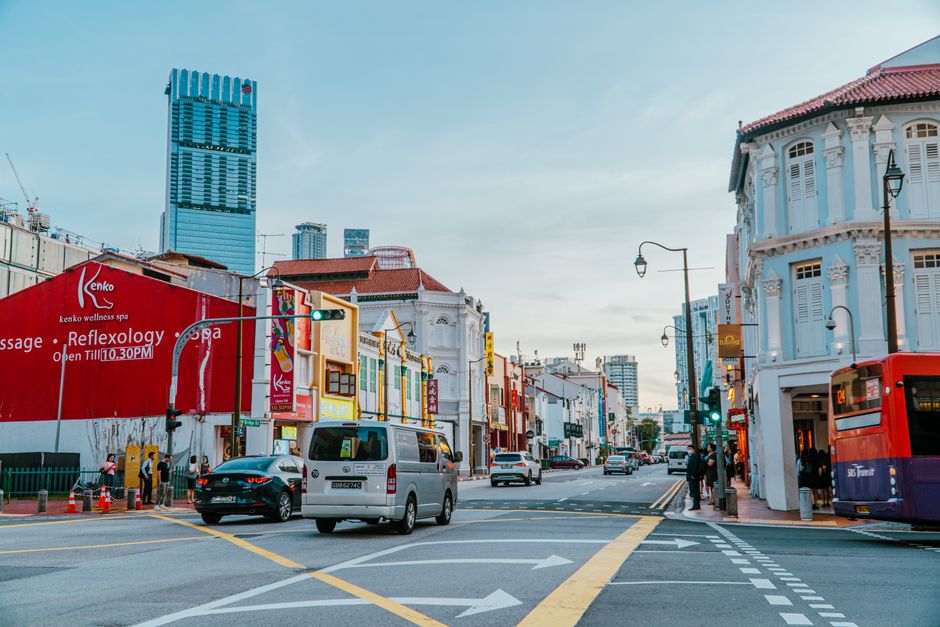
Singapore's Infocomm Media Development Authority formally expanded its digital content integrity guidelines in early 2026, requiring major platforms operating in the city-state to flag algorithmically detected duplicate images within 48 hours of a complaint being lodged. The rule, which applies to platforms with more than 100,000 monthly active users in Singapore, marks one of the sharpest regulatory bites the authority has taken since the Online Safety Act came into force in February 2023.
The timing matters. Generative AI tools have made it trivially easy to produce near-identical images at scale — and to flood news feeds, property listings on platforms like PropertyGuru, and even government feedback portals with recycled or manipulated visuals. For a country that has staked its economic future on being a trustworthy AI hub, the integrity of digital content is not an abstract concern. It is a competitive credential.
What Singapore Is Actually Doing
The IMDA's framework sits alongside work at the National Library Board's S$12 million digital literacy programme, which runs workshops at branches from Jurong Regional Library to Tampines Regional Library, teaching members of the public to reverse-image-search and identify reused photography. The Housing and Development Board has separately tightened rules for resale flat listings on the HDB Flat Portal, requiring photo timestamps and GPS metadata to be embedded in images submitted by sellers — a direct response to complaints about stock photos being used to misrepresent unit conditions in estates from Woodlands to Queenstown.
The Cyber Security Agency of Singapore has also been working with the Singapore Press Holdings digital newsroom at Toa Payoh to pilot a provenance-tagging tool built on the Coalition for Content Provenance and Authenticity, or C2PA, standard. The tool embeds a cryptographic fingerprint at the point of image creation, making it detectable when the same image circulates in a different context or has been cropped and reposted.
How Singapore Compares With Peers
Tokyo and Seoul offer instructive contrasts. Japan's Digital Agency, established in 2021, has pushed a voluntary watermarking scheme for government-adjacent platforms, but enforcement is light-touch and largely self-regulatory. Industry observers note that uptake among smaller Japanese media outlets remains patchy three years in. Seoul's Korea Communications Commission moved faster on mandatory take-down timelines — platforms there must act within 24 hours on deepfake complaints under the Act on Special Cases Concerning the Punishment of Sexual Crimes — but its rules are narrowly scoped to sexually explicit material and do not cover commercial or political misuse of duplicate imagery.
London presents a different model entirely. The UK's Online Safety Act, which received Royal Assent in October 2023, tasks Ofcom with setting codes of practice that platforms must follow, but the regulator is still finalising detailed image-duplication standards as of mid-2026. The broader framework is arguably more ambitious than Singapore's, covering a wider range of harms, but implementation has moved more slowly — Ofcom's first wave of enforcement notices were not issued until late 2025.
Singapore's 48-hour window and the HDB's metadata mandate give it a more operationally concrete posture than London or Tokyo at this stage, though critics have pointed out — without being named on record — that the IMDA framework does not yet cover peer-to-peer messaging platforms, which is where much duplicate-image sharing actually occurs in Singapore's heavily WhatsApp-dependent communications culture.
For residents and businesses, the practical upshot is becoming clear. Anyone listing a commercial property on platforms regulated under the Online Safety Act should expect image verification checks as a standard part of the process by the third quarter of 2026, according to IMDA's published roadmap. Sellers on Carousell and similar marketplaces are already seeing algorithmic prompts flagging images that match existing listings. The HDB Flat Portal metadata requirement kicks in fully for all resale listings from 1 September 2026. Checking that your phone's location services are active before photographing a unit is now, quietly, part of the homework of selling a flat in Singapore.