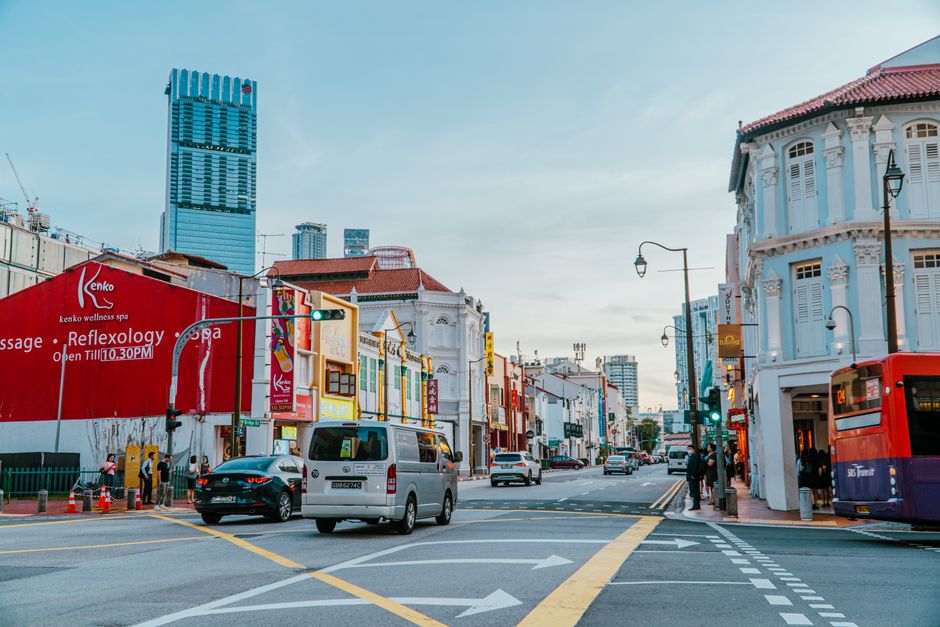
Singapore's property market has a visual clutter problem, and the people responsible for fixing it are under growing pressure to move faster. Duplicate images — the same photograph recycled across multiple listings, sometimes for units that no longer exist or were never available — have become a persistent feature of HDB resale and private condominium portals. The Council for Estate Agencies, the statutory board that licenses property agents, has made image authenticity part of its ongoing compliance push this year, with enhanced guidelines that took effect in January 2026.
The timing matters. With HDB resale flat prices still elevated after several years of strong gains, and cost-of-living anxiety running high across the island, buyers and renters scrolling through PropertyGuru or 99.co cannot afford to waste time chasing listings dressed up with photographs from a different unit, a different floor, or a different decade. A single duplicated hero image on a Bishan four-room flat or a Tanjong Pagar studio can generate dozens of wasted enquiries, distort perceived supply, and quietly erode trust in a market that depends heavily on digital-first search.
How Singapore Compares to London, Tokyo and New York
Other major cities have been slower to formalise the problem. In London, Rightmove and Zoopla rely largely on agent self-regulation and user-flagging to catch repeated or misleading photographs, with no equivalent of Singapore's CEA licensing framework explicitly addressing image misuse. Tokyo's Real Estate Information Network System, known as REINS, mandates listing registration but does not currently include image-hash verification at the point of upload. New York's Real Estate Board has discussed the issue internally but has not published enforceable standards around photographic duplication as of mid-2026.
Singapore, by contrast, has pushed platform-level accountability. PropertyGuru Group, which is headquartered at 1 Fusionopolis Place in one-north, began piloting an automated image-fingerprinting tool in the fourth quarter of 2025. The system flags uploads where the pixel signature matches an image already attached to a different listing address. The company has not published detection-rate figures publicly, but the approach mirrors technology already deployed by Zillow in the United States, where the platform removes or quarantines suspected duplicate listings before they go live. Hong Kong's Midland Realty introduced a comparable internal audit process in 2024, making it one of the few Asia-Pacific peers to act around the same time as Singapore's platforms.
The Urban Redevelopment Authority's real estate statistics portal already requires that new private residential listings include accurate floor plans tied to the specific unit strata lot number — a rule that functions as an indirect brake on image recycling, because a mismatched photograph becomes harder to sustain when the floor plan is unit-specific. That requirement has been in place since 2023. The CEA's January 2026 guidelines go further by making it a conduct matter: an agent found to have deliberately uploaded misleading images in a listing can face a warning, a fine, or referral to a disciplinary committee.
What Buyers and Renters Should Do Now
For consumers navigating Clementi or Queenstown HDB listings, or scanning new launch condominiums along the Greater Southern Waterfront, the practical advice from housing advocates is straightforward: do a reverse image search on any listing photograph before scheduling a viewing. Google Lens and TinEye can surface whether an image has appeared elsewhere online. Ask the agent to provide a timestamp-stamped video walkthrough or a live virtual tour before committing to an in-person visit.
The CEA's Public Register, accessible at the agency's website, allows anyone to verify that an agent holds a valid licence and check whether any disciplinary records exist. Complaints about misleading listings can be filed directly through the register portal.
Regulators in Singapore appear to understand that the credibility of the property market, particularly the HDB resale segment which saw more than 27,000 transactions recorded in 2025, depends on information quality as much as price stability. Getting photographic integrity right — at the platform and the licensing level simultaneously — puts Singapore measurably ahead of most comparable cities. The harder test is whether enforcement keeps pace with the technology that makes duplication easier every year.