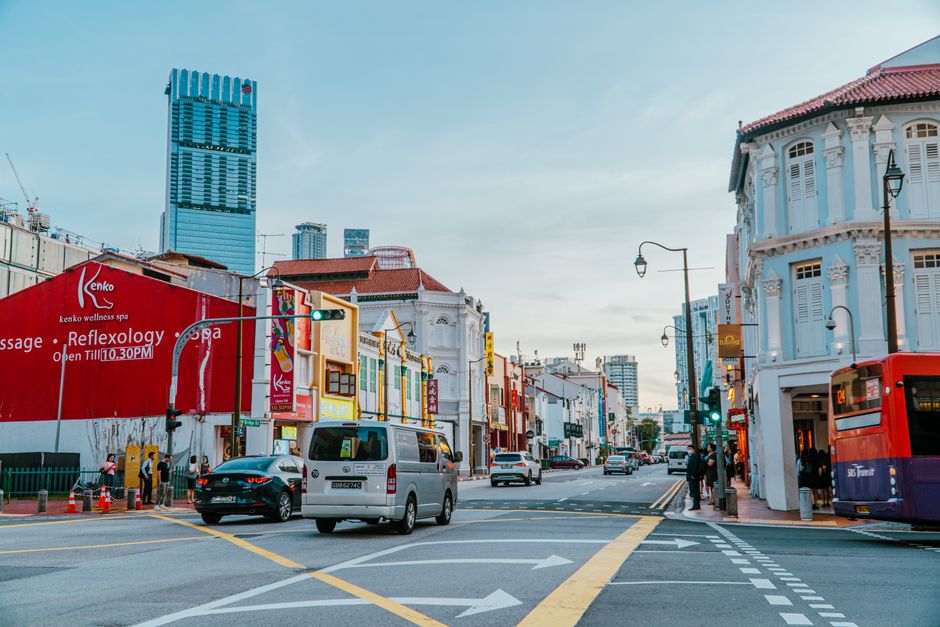
Singapore's property rental market has a dirty secret buried in plain sight. Thousands of listings on major portals carry duplicate, recycled, or digitally altered photographs — the same Toa Payoh three-room flat photographed in 2019 resurfacing in 2026 with a fresh asking rent of S$2,800 a month, or a Jurong East HDB unit dressed up with AI-generated furniture that bears no resemblance to the actual space. The practice is widespread enough that consumer advocacy groups have flagged it repeatedly to the Council for Estate Agencies (CEA), Singapore's property industry regulator.
The timing matters. With median rents for a four-room HDB flat hovering around S$2,600 monthly as of the first quarter of 2026, according to HDB's public data dashboard, prospective tenants are making significant financial commitments based on what they see online. Misleading images do not just waste a Saturday of viewings — they contribute to a trust deficit that regulators across Asia are now scrambling to address. The global surge in AI image generation tools has made the problem dramatically worse since 2024, giving even small-time landlords access to sophisticated room-staging software that can transform a dingy Clementi bedsit into something resembling a Scandinavian showroom.
What Singapore Is Actually Doing About It
The CEA updated its Estate Agents Act guidelines in late 2024 to require that listing photographs accurately represent the property's current condition. Agents found flouting the rule face fines and, in repeat cases, licence suspension. The CEA's Public Register, accessible online, logs disciplinary outcomes — a transparency mechanism that equivalents in cities like Jakarta and Kuala Lumpur have not yet deployed at the same scale.
PropertyGuru, which dominates Singapore's online listings market, introduced an internal duplicate-image detection tool in early 2025 that cross-references new uploads against its existing database using perceptual hashing — a technique that catches near-identical images even when they have been slightly cropped or colour-adjusted. The company has not published a public figure on how many listings were removed as a result, but the tool represents the kind of platform-level intervention that rivals in Ho Chi Minh City and Manila have not matched. 99.co, the second-largest portal, runs a similar automated flagging system and routes suspicious listings to a human review team based at its Robinson Road office.
HDB itself takes a more direct line for public housing transactions. Every HDB resale listing submitted through the official HDB Flat Portal requires the seller or agent to declare that images are current and accurate, with the submission timestamped and tied to the seller's SingPass identity. That linkage to a verified national identity system gives Singapore an enforcement backbone that cities operating without equivalent digital ID infrastructure simply cannot replicate. In Taipei, where a comparable e-government identity layer exists, authorities have begun exploring a similar image-verification mandate, but no formal rule is yet in place.
The Gap Between Private and Public Markets
The private condominium market is less tidy. Listings for units in developments along the Orchard Road corridor or in the Tanjong Pagar district — where monthly rents for a two-bedroom apartment can exceed S$5,000 — are largely regulated by the same CEA rules, but enforcement depends heavily on complaint volume. The CEA received complaints about misleading property advertisements in each of the past three years, though the agency has not published a breakdown specifically isolating image-related grievances from broader advertising disputes.
London, for comparison, has no single statutory body with equivalent jurisdiction over listing image accuracy. The UK's National Trading Standards Estate and Letting Agency Team handles broader misrepresentation, but portal-level enforcement is voluntary. Hong Kong's Estate Agents Authority maintains conduct codes but does not mandate image authentication. By those standards, Singapore's layered approach — regulator, portal, and national ID verification working in concert — is ahead of the curve among cities of comparable size and rental market intensity.
Tenants who encounter suspected duplicate or misleading images can file a complaint directly with the CEA through its online portal at cea.gov.sg, referencing the listing URL and agent's registration number. The CEA recommends requesting a video walkthrough before signing any Letter of Intent, a practical step that costs nothing and sidesteps the problem entirely. For landlords, the risk calculus is shifting: with AI-detection tools improving quarterly, the days of recycling a 2018 interior shot without consequence are numbered.