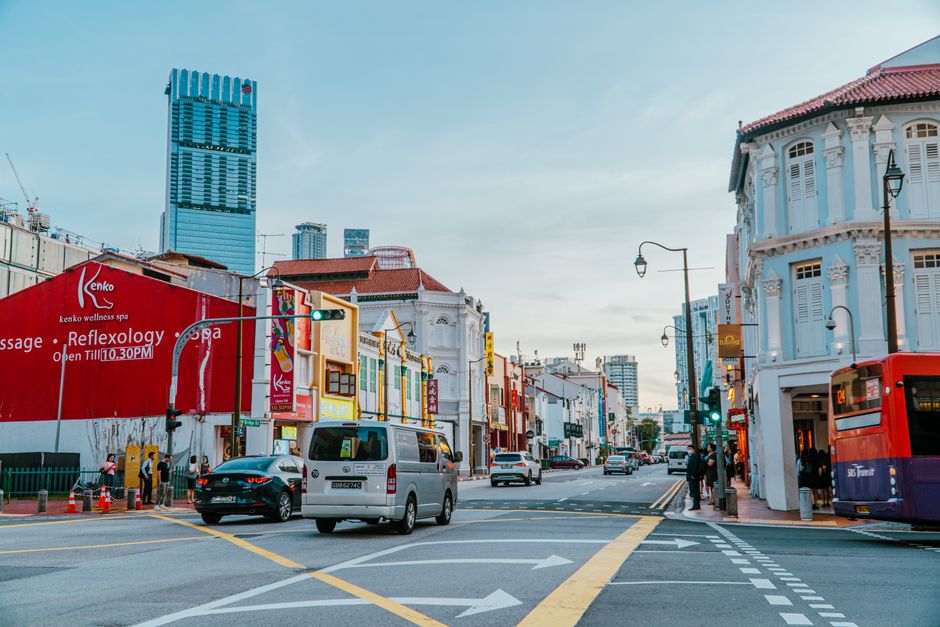
Singapore's Infocomm Media Development Authority launched a coordinated duplicate image replacement initiative in early 2026, targeting the thousands of redundant and low-resolution photographs embedded across government digital services, HDB estate portals, and OneService municipal platforms. The problem, while unglamorous, has real consequences: outdated imagery of demolished blocks in Toa Payoh and Queenstown has been confusing residents filing maintenance requests, and stale streetview-style photos on municipal dashboards have fed incorrect data into planning tools used by agencies from URA to LTA.
The push comes at a particular moment. Singapore is aggressively positioning itself as a regional AI and smart city hub, and the integrity of civic data — including visual data — underpins much of that pitch. When the National Library Board digitised roughly 1.4 million archival images between 2022 and 2025, duplicate and mislabelled files surfaced as a persistent quality problem. Image deduplication, once considered a backend housekeeping task, is now treated as infrastructure.
What Singapore Is Actually Doing
The IMDA initiative runs in parallel with GovTech's efforts under the Singapore Government Tech Stack, the unified framework that standardises how agencies build and maintain digital services. GovTech has deployed automated hash-matching tools across several agency content management systems, identifying duplicate image assets that differ only in compression level or metadata tag. Once flagged, the images go into a human-reviewed replacement queue — not simply deleted — because planners determined that some duplicates carry different geotagging or timestamp data that might still hold archival value.
At street level, the effects are visible in updated neighbourhood pages for estates including Bishan and Punggol, where images of construction-era common corridors have been swapped out for current photographs taken after estate upgrading under the Home Improvement Programme. HDB confirmed the Punggol estate image refresh covered more than 200 digital touchpoints across its portal, completed in the first quarter of 2026.
The National Heritage Board has taken a different tack. For the digitised collection housed at the former Hill Street Police Station — now home to NHB's conservation offices — duplicate resolution is handled by a specialist team that cross-references the NAS (National Archives of Singapore) catalogue before any file is altered or retired. That slower, scholarship-first approach reflects the Board's concern that automated deduplication could inadvertently erase contextual variation between what look like identical images.
Tokyo and London Are Wrestling With the Same Problem
Comparative context matters here. Tokyo's Digital Agency, stood up in September 2021, spent much of 2024 and 2025 auditing the image libraries of 49 municipal and prefectural government websites and found that duplicate and near-duplicate photographs accounted for roughly 18 percent of all stored visual assets, according to a report the agency published in March 2025. The Japanese approach leaned heavily on AI-assisted perceptual hashing but ran into friction from ministries reluctant to cede control of their own content pipelines.
London's Government Digital Service has faced a structurally different challenge: hundreds of borough-level councils maintain separate content management systems with almost no centralised image governance. A 2024 review by the Local Government Association found that image duplication across London borough websites was contributing to measurable page-load degradation on mobile connections — a finding that finally pushed several councils toward shared asset libraries. But uptake has been voluntary, and progress uneven.
Singapore's advantage is architectural. Single-agency oversight through GovTech means a directive can cascade across most government digital properties within a defined timeline, rather than requiring negotiation with dozens of semi-autonomous bodies. Whether that translates into genuinely better civic experience — or simply faster compliance metrics — is what urban digital governance researchers at the Singapore Management University's Sim Kee Boon Institute for Financial Economics are beginning to study, with preliminary findings expected by the end of 2026.
For residents and businesses, the practical upshot is straightforward: if you are using HDB's e-services or the OneService app to report estate issues, the imagery you see should now more reliably reflect current site conditions. For planners in other compact, highly digitalised cities watching Singapore's model, the lesson being drawn is less about the technology and more about governance structure — centralised coordination produces faster, more consistent results than federated goodwill.