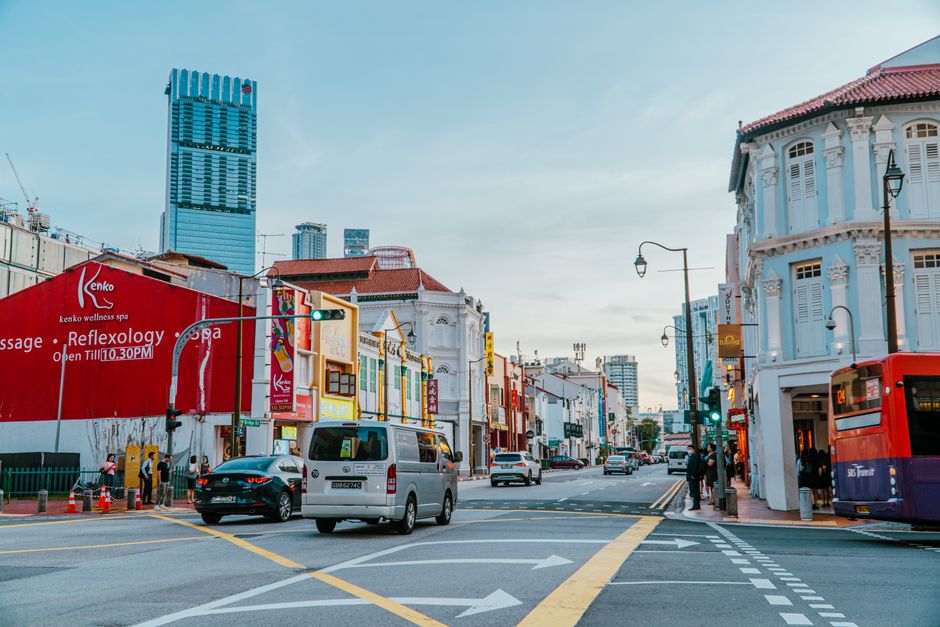
Singapore's Housing and Development Board flagged more than 4,200 suspected duplicate property listing images on its portal in the first half of 2026 — a figure that prompted the Infocomm Media Development Authority to expand its digital content verification framework beyond social media into real estate and e-commerce platforms. The crackdown marks a significant escalation in how the city-state is treating visual misinformation as an infrastructure problem, not just a consumer nuisance.
The timing matters. Generative AI tools capable of producing near-identical or slightly altered images at scale became widely accessible in 2024, and regulators globally are only now catching up. In Singapore, the issue cuts across two pressure points that already dominate public anxiety: housing affordability and digital trust. When duplicate or recycled photographs appear in HDB resale listings on platforms like PropertyGuru, buyers in Tampines or Bukit Batok can waste weeks chasing flats that look identical but are priced at wildly different levels — or that no longer exist.
What Singapore Is Actually Doing
The IMDA's Content Provenance Initiative, launched formally in March 2026, requires major platforms operating in Singapore to embed C2PA-standard metadata — a technical specification developed by the Coalition for Content Provenance and Authenticity — into images before they are published. PropertyGuru confirmed participation in the pilot phase. The National Library Board's digital literacy programme, run out of its Orchard Road headquarters, added a module in April specifically teaching users to identify recycled and AI-altered images using reverse-image tools and metadata inspection.
The HDB's own portal now runs a hash-matching algorithm that compares each uploaded photograph against a rolling database of previously submitted images. Listings flagged as duplicates are quarantined for manual review within 48 hours. The system, built in partnership with the Government Technology Agency — known as GovTech — at its Mapletree Business City offices in Pasir Panjang, has been operational since January 2026.
The practical effect is already visible in the resale market. Agents operating out of Jurong East and Clementi have reported that listings now require noticeably more original photography, which has slightly increased upfront costs for sellers — estimated by some in the industry at between S$150 and S$400 per listing for professional shoots — but has reduced the volume of complaint referrals to the Council for Estate Agencies by a measurable margin in Q1 2026.
How Singapore Compares Globally
No equivalent mandatory provenance framework has been enacted in Japan, where the country's Digital Agency is still consulting on voluntary guidelines. The United Kingdom's Online Safety Act, which came into force in stages from 2024, addresses harmful content but does not specifically mandate image provenance tagging for commercial platforms. In the United States, the Federal Trade Commission has issued guidance on AI-generated deceptive imagery but has not required platform-level hash-matching for property or retail sectors.
South Korea, often cited alongside Singapore as a regional digital governance benchmark, rolled out a national AI image labelling standard in late 2025 — but enforcement remains concentrated on news media rather than the property and e-commerce sectors where duplicate images cause the most direct consumer harm. Hong Kong's Communications Authority has no comparable initiative as of July 2026.
That gap gives Singapore a genuine first-mover position, though it also means the city is absorbing the cost of building frameworks that international platforms have no obligation to replicate. GovTech's approach — building domestic technical standards and then pressuring global platforms to comply as a condition of local market access — follows the same logic applied to data localisation and platform accountability rules under the Personal Data Protection Act.
For residents, the immediate practical advice is straightforward. When browsing HDB resale or private property listings, look for the C2PA verification badge that participating platforms are required to display on compliant images from August 2026 onwards. Report suspicious duplicate imagery directly to the CEA via its online complaints portal. And for anyone selling a flat in neighbourhoods like Toa Payoh or Ang Mo Kio, original photography is no longer optional — it is fast becoming the baseline the market expects.