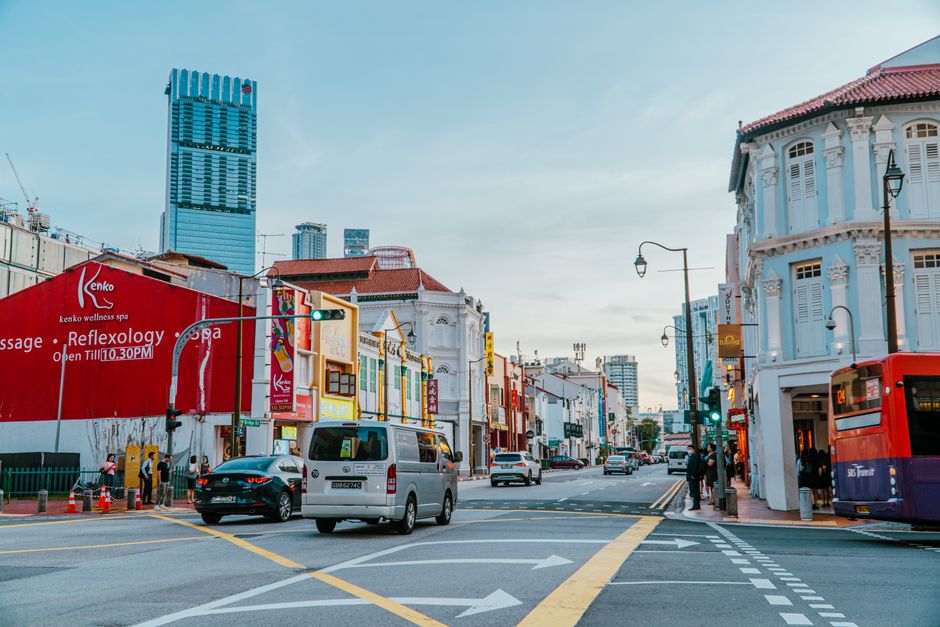
Singapore's Urban Redevelopment Authority confirmed earlier this year that its OneMap platform — the government's authoritative national map and geospatial data service — had completed a structured audit to remove and replace thousands of duplicate or outdated images embedded in its public-facing directories. The cleanup, concluded by March 2026, affected listings across districts from Toa Payoh to Tampines, where years of user-submitted photographs had created redundant visual records that degraded search accuracy and slowed load times for the platform's estimated 1.2 million monthly users.
The timing matters. Across global cities, the explosion of AI-generated images and low-effort content duplication has made visual data hygiene a genuine governance problem. London's Ordnance Survey flagged the issue in a 2025 internal review. Tokyo's Digital Agency launched a parallel initiative last October targeting municipal web portals carrying duplicate stock photography. Singapore, by contrast, had been quietly building deduplication protocols into its Smart Nation infrastructure since 2023, putting it ahead of most comparable cities when the problem scaled up globally this year.
What Deduplication Actually Looks Like on the Ground
At the practical level, the work involves more than deleting a few repeated JPEGs. The Government Technology Agency of Singapore, better known as GovTech, has been running automated image-hash comparison tools across multiple government portals, including the Business Grants Portal and the SingPass-linked Myinfo services. When the system flags a duplicate — an image appearing more than once with identical or near-identical pixel signatures — a replacement workflow triggers, pulling verified, rights-cleared imagery from a centralised asset library maintained at GovTech's headquarters at Sandcrawler Building in One-North, Buona Vista.
The Housing and Development Board's resale flat listings on the HDB Resale Portal faced a similar problem. Sellers uploading photographs of units in estates like Bishan and Bedok frequently submitted the same stock interior shots recycled across dozens of listings, making it harder for buyers to assess individual units accurately. HDB introduced mandatory photo-verification steps for new listings in January 2026, requiring sellers to submit images with embedded metadata matching the flat's registered address — a technical fix that has materially reduced duplicate submissions, according to the board's published digital roadmap update from February.
How Singapore Compares to London and Tokyo
London's approach has been more fragmented. Transport for London's digital team and the Greater London Authority operate separate image libraries with no shared deduplication standard as of mid-2026, according to publicly available documentation from the GLA's Digital Services review published last November. The result is visible to anyone using the London Data Store, where photographs of the same streets and landmarks appear under multiple dataset entries.
Tokyo's Digital Agency move last October was faster in ambition but narrower in scope, targeting only municipal web portals rather than the full stack of public-facing services. Singapore's integration across GovTech, URA, and HDB — three distinct agencies coordinating under the Smart Nation and Digital Government Office — gives it structural reach that Tokyo's more siloed effort currently lacks.
Seoul offers a partial comparison. The city's Smart Seoul Data of Things initiative has incorporated image-validation layers for its public CCTV and environmental monitoring feeds, but its approach to civic-facing content platforms like property listings or community portals remains largely unaddressed, based on the Seoul Metropolitan Government's 2025 digital infrastructure report.
For Singaporeans navigating daily digital interactions with government services, the most immediate payoff is speed and accuracy. Listings load faster. Search results surface relevant, current images rather than recycled stand-ins. For businesses using GovTech APIs to build consumer applications, the cleaner image database reduces the manual verification work developers previously built into their own pipelines. GovTech has indicated it plans to publish an open-source version of its image-hashing tool by the fourth quarter of 2026, which would allow private-sector developers and regional governments to adapt the framework for their own platforms — a step that, if it lands on schedule, would shift Singapore from quiet leader to active exporter of the standard.