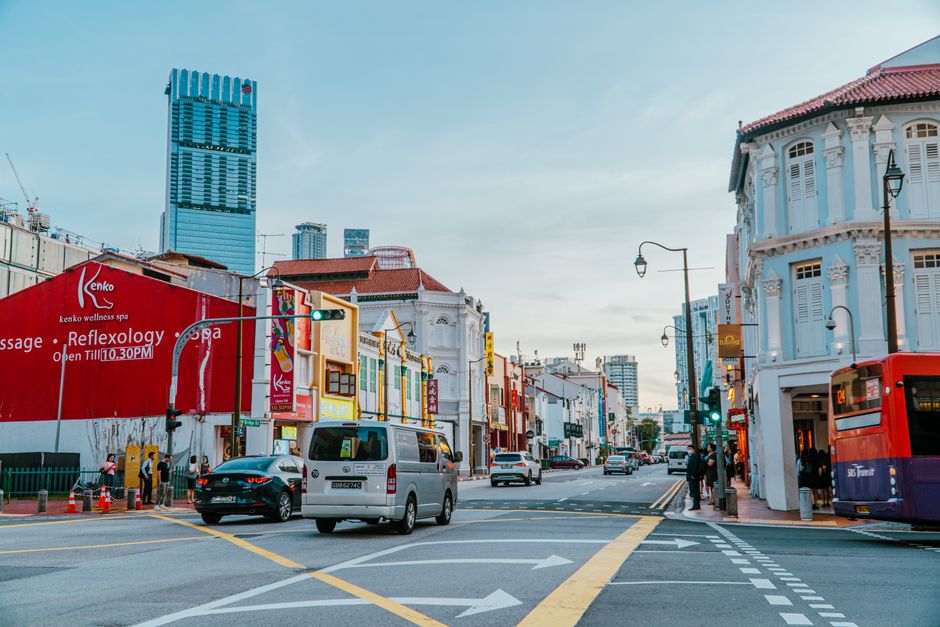
Singapore's Infocomm Media Development Authority flagged duplicate image replacement as a priority maintenance task this week, as several public-facing digital repositories run by national institutions quietly pushed through updates aimed at removing redundant visual assets that have accumulated over years of content migration. The cleanup, which touched databases managed by the National Library Board and the National Archives of Singapore at the Crick Road facility in Buona Vista, signals a broader reckoning with data hygiene across the city-state's sprawling digital infrastructure.
The timing matters. Singapore is mid-way through its Smart Nation 2.0 agenda, and agencies across the public sector are under pressure to demonstrate that their data holdings are not just large but usable. Duplicate image files — the same photograph or graphic stored multiple times under different filenames or metadata tags — slow down search retrieval, inflate cloud storage costs and, in worst cases, cause versioning errors where an outdated image is served in place of a corrected one. For a government that has staked its regional reputation on being a clean, efficient data hub, the problem is more than cosmetic.
What Happened This Week
The National Library Board's digital portal, which serves researchers at branches including the Lee Kong Chian Reference Library at Victoria Street and the library@harbourfront, ran a backend deduplication pass between Monday and Wednesday. Users who pulled archival images through the NewspaperSG or ArchivesSG interfaces may have noticed temporary broken thumbnail links on Tuesday afternoon — a visible side effect of the process. The NLB confirmed the maintenance window in a brief advisory posted to its website, noting that the work was part of routine data stewardship rather than any emergency fix.
Separately, the Singapore Tourism Board updated its publicly accessible image library — widely used by travel editors and event planners across the region — removing what it described as legacy duplicates carried over from a 2021 content management system migration. The STB library, hosted at a subdomain of stb.gov.sg, had accumulated multiple versions of popular landmark shots, including several near-identical frames of Gardens by the Bay's Supertree Grove taken during different lighting conditions but uploaded with identical metadata strings. Without clean metadata, automated systems cannot distinguish them, and both copies get served or stored indefinitely.
Cloud storage is not cheap at enterprise scale. Amazon Web Services S3 storage, the backbone for many Singapore government cloud deployments since the Government Commercial Cloud framework went live in 2018, bills by the gigabyte. While agencies do not publish granular storage cost breakdowns, industry benchmarks suggest that image-heavy public sector repositories can carry ten to thirty percent of their stored volume as duplicates following major CMS migrations — a non-trivial cost line when multiplied across dozens of agencies.
Why It Matters Beyond Government Servers
The ripple effect reaches into the private sector. News outlets, PR agencies working out of offices along Robinson Road and Shenton Way, and corporate communications teams all pull from public image repositories when deadlines are tight. A deduplication run that mislabels or temporarily deletes a canonical image — the authoritative, correctly captioned original — can create downstream errors that persist for months in third-party content systems. Archivists at the National Archives have historically flagged this as a risk in digital preservation guidance documents published on nas.gov.sg.
For individuals, the practical advice is straightforward. Anyone who has bookmarked direct image URLs from ArchivesSG or the STB media library should check those links this week. If thumbnails are broken or downloads return a file-not-found error, the correct step is to re-search the repository by title or accession number rather than URL, since the underlying asset likely still exists under a refreshed path. The NLB's digital help desk, reachable through the main library portal, is handling queries related to this week's maintenance on an extended-hours basis through Friday, July 5.
Longer term, the IMDA has signalled that deduplication standards will be folded into the next revision of the Singapore Government Data Architecture guidelines, expected before the end of 2026. Agencies that adopt automated image hashing — a process that assigns each unique image a fingerprint regardless of filename — will be better placed to avoid accumulating the kind of redundant clutter that triggered this week's cleanup in the first place.