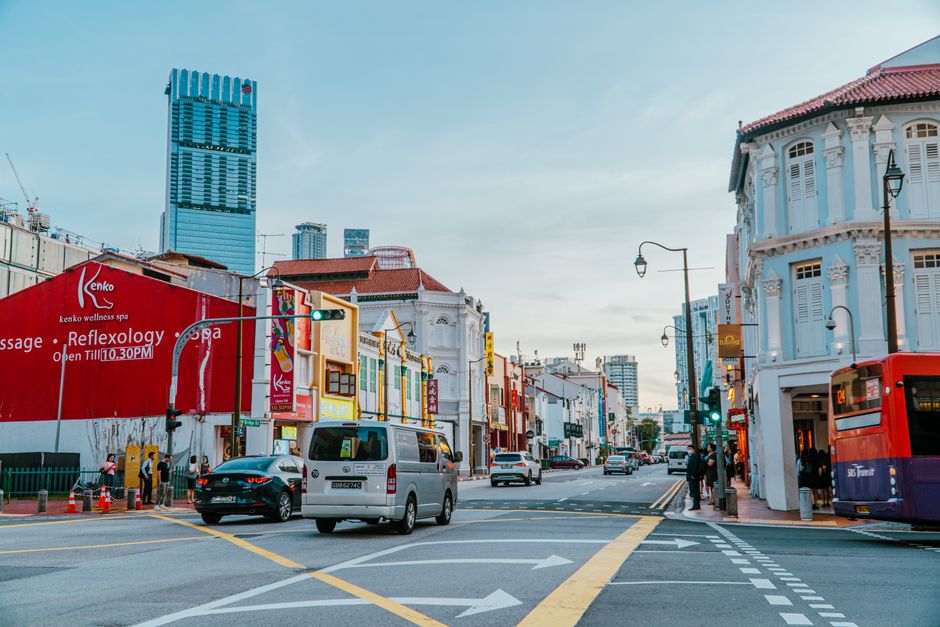
Singapore's Infocomm Media Development Authority flagged a significant operational gap in mid-2025: a growing volume of duplicate and near-duplicate images — some AI-generated, some recycled from unrelated events — was circulating across government digital services, HDB portal listings, and media platforms, eroding public trust in official visual content. The problem is no longer theoretical. By early 2026, estate agents and government housing portals were reporting that identical or near-identical flat photographs were appearing across dozens of unrelated listings in areas from Tampines to Queenstown, making it harder for buyers to verify what they were actually looking at.
The timing matters. Singapore is pushing hard to consolidate its position as Southeast Asia's primary AI and data hub, with the National AI Strategy 2.0 framework explicitly naming data integrity as a foundational requirement. If the city's public-facing digital infrastructure cannot distinguish an authentic image from a recycled or synthetically altered one, the credibility of that broader positioning takes a hit — particularly as international partners, from Tokyo to Frankfurt, watch how the city manages the verification challenge at scale.
What Singapore Is Actually Doing
The Housing and Development Board began piloting a duplicate-image detection layer within its resale flat listing portal in the third quarter of 2025. The system uses perceptual hashing — a method that generates a fingerprint from image pixel patterns — to flag listings where photographs match those uploaded previously for a different unit or address. GovTech, the agency that builds and maintains Singapore's digital government stack, has been involved in the technical rollout. The portal covers the bulk of Singapore's public housing resale market, which handled more than 27,000 transactions in 2024 according to HDB's published data.
Beyond housing, the Government Technology Agency's Whole-of-Government platform has incorporated image provenance checking into the content management workflows used by several public agencies. The National Library Board's digital collections team at the Victoria Street headquarters has separately implemented reverse-image screening for newly digitised archival submissions, after discovering in late 2024 that a batch of contributed photographs included duplicates sourced from unrelated overseas archives.
Private sector adoption is patchier. Major property platforms operating here have their own moderation teams, but the methods vary and are not publicly disclosed. The Consumers Association of Singapore received complaints in the first half of 2025 relating to misleading property photographs, though the organisation has not published a specific tally for that category.
How Singapore Compares to London and Tokyo
London's approach has been fragmented. The UK's National Trading Standards estate agency team has flagged misleading property images as a compliance concern under the Consumer Protection from Unfair Trading Regulations, but there is no centralised technical system for duplicate detection across property portals. Rightmove and Zoopla rely primarily on user reports and manual review teams. The absence of a single government-backed property portal makes coordination structurally harder than in Singapore, where HDB's dominant market share gives the authority real leverage to enforce standards.
Tokyo presents a different comparison. Japan's Ministry of Land, Infrastructure, Transport and Tourism introduced digitised property listing standards in 2022, and the Real Estate Information Network System — known as REINS — has image upload controls. But duplicate detection at the algorithmic level remains limited, and the system's closed, agent-only access structure means public-facing verification is minimal. Singapore's move to make some detection outcomes visible to buyers on the portal itself puts it ahead of Tokyo's current public-facing standard.
Seoul, often cited alongside Singapore in smart-city comparisons, embedded image authenticity checks into its public housing platform operated by the Korea Land and Housing Corporation in 2023. That rollout covered rental listings specifically, not resale. Singapore's scope is broader.
The practical stakes are immediate. Buyers searching for a four-room flat in Bishan or a resale unit along Clementi Avenue 4 need to trust that the photographs in a listing reflect the actual property. Agents and sellers who recycle images — whether deliberately or carelessly — impose real costs on buyers who travel to viewings based on inaccurate visual information. GovTech's roadmap, as published in its 2025 annual report, identifies image integrity as a continuing development priority through at least 2027, suggesting the current pilot systems are only the first layer of a longer build.