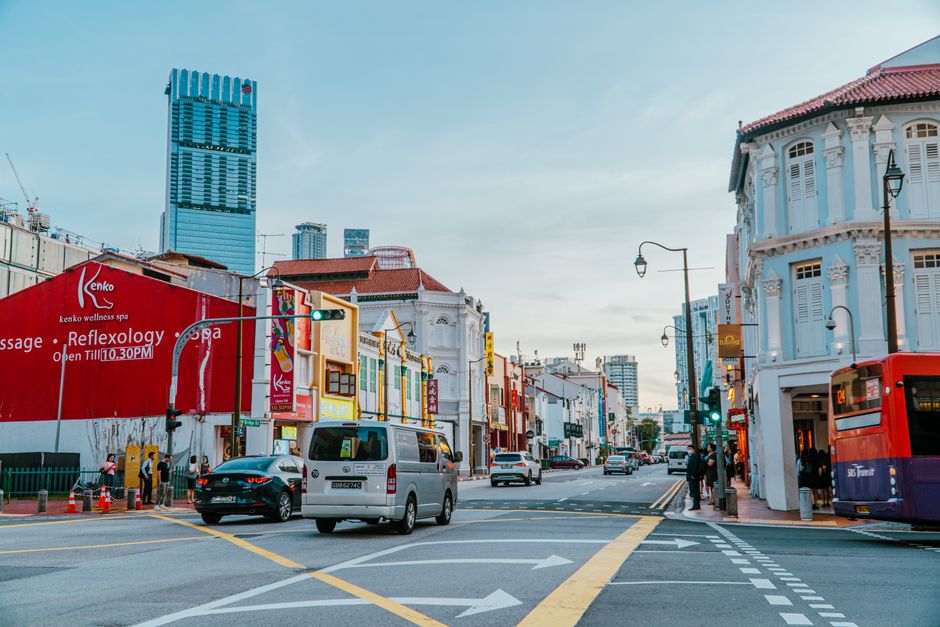
Singapore's housing agencies began quietly auditing their online property databases in early 2025, and what they found was unglamorous: thousands of duplicate images cycling through listings on the HDB Flat Portal and the Urban Redevelopment Authority's property search tools. The same stock photograph of a Tampines four-room flat appearing under a Woodlands address. The same corridor shot tagged to three different developments in Punggol. It was a record-keeping headache that had accumulated across more than a decade of rushed digitisation, and the agencies have spent the better part of eighteen months trying to untangle it.
The timing matters because Singapore is in the middle of a politically sensitive period for housing. BTO flat prices have drawn sustained public attention since the introduction of the new classification system — Standard, Plus, and Prime — that took effect in late 2023. When buyers are committing to six-figure purchases, sometimes north of S$700,000 for a Prime-category flat in Queenstown or Toa Payoh, the accuracy of every piece of information attached to a listing carries real weight. A duplicated image is not merely an aesthetic problem. It erodes confidence in the very platforms the government has invested heavily in building.
A Problem Decades in the Making
The roots go back to the early 2010s, when HDB and private-sector portals like PropertyGuru accelerated their shift to photo-heavy digital listings. Developers and agents uploaded images in bulk, often without standardised file-naming conventions or deduplication checks. The URA's REALIS transaction database, which tracks private property sales and is used by thousands of agents and researchers each month, drew on image repositories maintained by multiple third-party vendors, compounding the inconsistency. Over time, images migrated between systems during platform upgrades — most significantly during a major overhaul of the HDB Flat Portal in 2022 — without being scrubbed for duplicates first.
The problem is not unique to Singapore. Property platforms in cities like London and Tokyo have faced similar data-hygiene issues as analogue records moved online. But Singapore's situation is sharpened by the fact that the government itself operates or accredits the dominant housing channels. There is less of a market-corrects-itself buffer here. When the official portal shows misleading imagery, the feedback loop runs straight back to public trust in the Housing and Development Board as an institution.
The 2025 internal audit, conducted jointly by HDB's digital services division and the Government Technology Agency — better known as GovTech — identified image duplication as one of three priority data-quality issues, alongside outdated floor-plan files and mismatched amenity tags. GovTech has been deploying perceptual hashing algorithms, a technique that assigns a fingerprint to each image and flags near-identical copies, across the HDB Flat Portal's backend since the third quarter of 2025.
What the Fix Actually Involves
Perceptual hashing alone does not solve everything. A photograph of a kitchen in Bishan that has been slightly cropped or had its brightness adjusted will generate a different hash from the original, slipping past automated filters. Human review remains part of the pipeline. GovTech has contracted that review work through its established panel of technology vendors, a process governed by the Government Procurement Act and the bulk tender frameworks administered by the Ministry of Finance.
PropertyGuru, which operates the most widely used private-sector listings platform in Singapore, announced its own deduplication initiative in February 2026, citing growing agent complaints about mismatched imagery undermining buyer confidence. The company did not publish specific figures on the scale of the problem in its public announcement.
For prospective buyers, the practical advice from housing advisers at HDB branches — including the Toa Payoh HDB Hub on Lorong 4, which handles some of the highest footfall of any branch in the country — has been consistent: cross-reference any listing image against the developer's or HDB's official flat details page before making an appointment to view, and flag discrepancies directly to the portal's customer service team. The audit process is ongoing. Listings flagged by users are being prioritised in the review queue, which means that buyer vigilance, unglamorous as it sounds, is currently part of how the system cleans itself up.