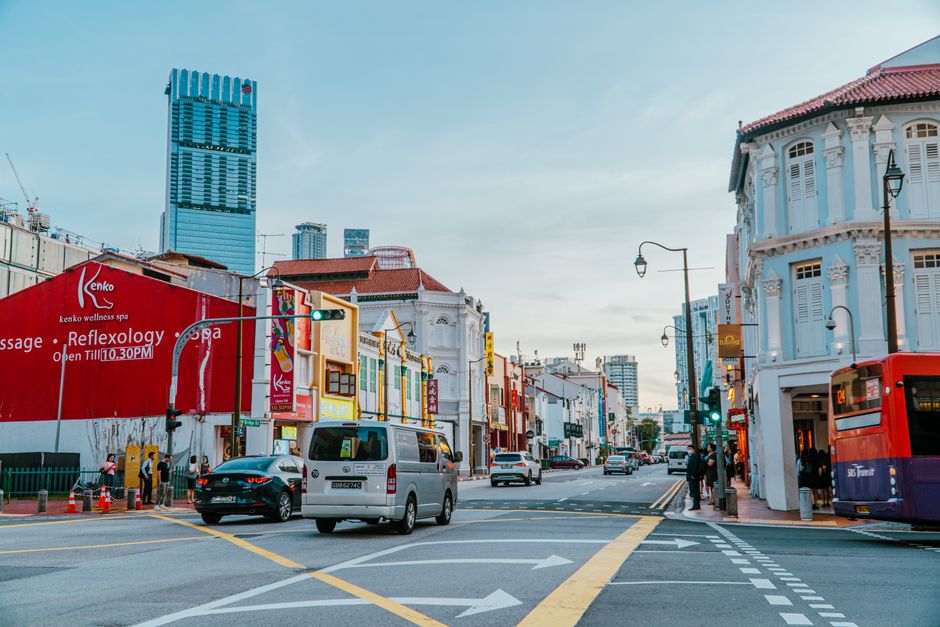
Singapore's Government Technology Agency, GovTech, has been quietly accelerating a push to eliminate duplicate images from national digital infrastructure — a problem that sounds mundane until you consider that redundant image data inflates storage costs, degrades AI model accuracy, and creates legal liability under the Personal Data Protection Act 2012. The agency confirmed earlier this year that it is expanding automated deduplication pipelines across multiple ministries, with the Housing and Development Board and the Urban Redevelopment Authority among the first agencies to implement system-wide sweeps of their image repositories.
The timing matters. Singapore has staked significant political and economic capital on becoming a regional AI hub, with the National AI Strategy 2.0 committing to deploying AI across public sector workflows. Dirty data — including vast libraries of duplicate images accumulated over decades of digitisation — is one of the less glamorous obstacles to that ambition. GovTech's data quality teams have been working since early 2025 to benchmark the scale of the problem across agencies, and the findings, while not yet fully public, have shaped procurement decisions for deduplication software tools across at least six statutory boards.
How Singapore Compares to London, Tokyo and Seoul
London's Government Digital Service tackled a comparable challenge starting in 2022, when an internal audit of the NHS Digital image archive found that roughly 30 percent of stored patient-facing visual assets were duplicates, according to published NHS Digital transparency reports. The UK response was largely decentralised — individual NHS trusts contracted their own deduplication vendors, producing inconsistent results. Tokyo's Digital Agency, established in September 2021, has taken a more centralised approach closer to Singapore's model, mandating common data standards across prefectural governments, though implementation timelines have slipped repeatedly. Seoul's Smart City Division embedded image deduplication into its broader urban data lake project centred on the Mapo and Gangnam districts, treating it as infrastructure rather than a one-off clean-up exercise.
Singapore's advantage is scale — or rather, the lack of it. With a single-tier government structure and a relatively compact land area of roughly 730 square kilometres, GovTech can enforce standards that federated systems in larger countries cannot. The URA's OneMap platform, which underpins location data for everything from HDB flat resale price queries to park connector routing along the Rail Corridor, relies on clean, non-redundant imagery to keep its AI-assisted planning tools accurate. When duplicate aerial images enter that system, address-matching errors follow.
The Cost of Getting It Wrong
Storage alone is not trivial. Commercial cloud storage rates on AWS Singapore Region run at roughly S$0.025 per gigabyte per month for standard tiers, and government agencies operating on hybrid cloud architectures accumulate image data at rates that can push annual storage bills into the millions before deduplication. Beyond cost, Singapore's Personal Data Protection Commission has signalled in recent advisories that retaining redundant copies of images containing identifiable individuals — faces captured in CCTV stills used for urban analytics, for instance — raises compliance questions under PDPA obligations to minimise unnecessary data retention.
The practical implications extend to private sector players operating in the city. PropTech companies listing HDB resale flats on platforms like Ohmyhome and 99.co have faced recurring problems with duplicate listing photographs degrading search algorithm performance, an issue several platform operators have acknowledged in developer blog posts without attaching specific figures. Industry groups including the Singapore Computer Society have hosted working sessions in 2025 at their Shenton Way office to discuss shared tooling for image hash-based deduplication across real estate data consortia.
What comes next is a phased rollout. GovTech's published roadmap for the Singapore Government Tech Stack indicates that data quality tooling — including deduplication capabilities — is due for broader agency adoption through the second half of 2026. Private sector firms handling government contracts should expect new data hygiene clauses in procurement tenders from Q3 2026 onward. For individuals, the practical advice is straightforward: if you are submitting images to any government portal, from the HDB portal at www.hdb.gov.sg to SingPass-linked applications, uploading fresh, clearly labelled files rather than resubmitting old attachments will reduce processing delays caused by automated deduplication flags that pause review queues pending human verification.