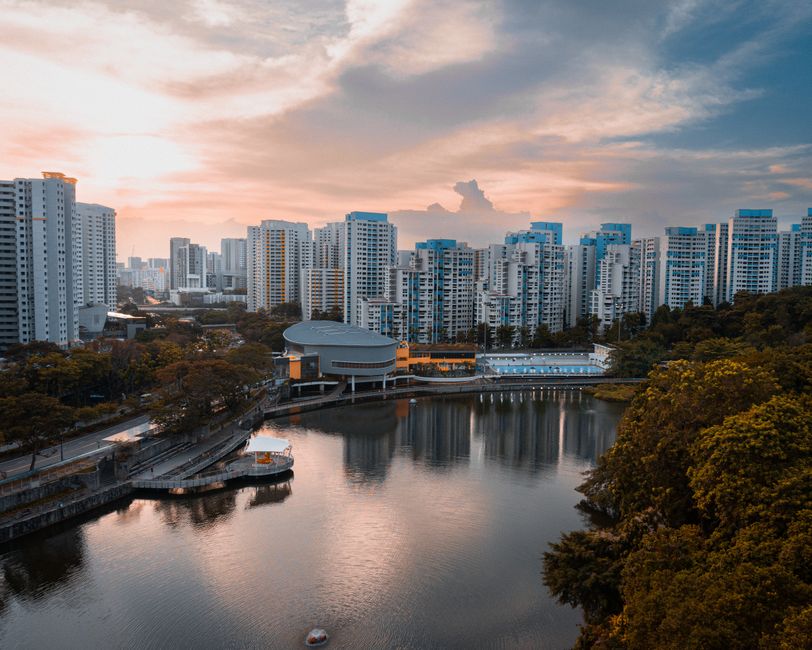
For years, Jurong has been viewed as a utilitarian expanse of industrial estates and ageing public housing. But the landscape is shifting dramatically. The Jurong Lake District—spanning Boon Lay, Lakeside and the newly rechristened Tengah precinct—is rapidly emerging as Singapore's most compelling suburban investment story, buoyed by billions in approved developments and long-overdue connectivity improvements.
The catalyst is clear: major approvals clustering around the lakefront. The Urban Redevelopment Authority has greenlit several high-density residential and mixed-use schemes within a 2-kilometre radius of Jurong Lake itself. These aren't modest infill projects. We're talking about integrated townships with retail, office, hospitality and residential components designed to rival established corridors like the Marina Bay fringe.
What's driving investor interest? Price arbitrage remains compelling. Resale HDB flats in Boon Lay and Lakeside currently trade at median prices significantly below the island-wide average—roughly SGD 550,000 to SGD 700,000 for four-room units—while new Executive Condominiums (ECs) in adjacent zones command premiums of SGD 750,000 to SGD 950,000. For upgraders priced out of District 9 or 10 territories, this represents genuine value.
Infrastructure is the second lever. The Cross Island Line's western alignment will pivot through Jurong, with stations at Lakeside and Boon Lay due by 2030. Simultaneously, the Government has committed to transforming Jurong Lake itself into a recreation and employment hub, mirroring successful models seen in comparable Asian metros. Ancillary projects—the expanded Jurong Innovation District, educational facilities, and enhanced cycling infrastructure—suggest coordinated master-planning rather than ad-hoc development.
Property consultancies tracking the precinct report heightened agent activity and growing foreign interest, particularly from Malaysian and Indonesian investors seeking long-term rental yields. Average rental returns in the area hover around 3 to 3.5 per cent—respectable for suburban Singapore—though newer EC units command slightly better metrics due to scarcity premiums.
The wildcard remains execution. Approval pipelines don't guarantee timely completion. Weather disruptions, labour constraints and material costs have plagued other major projects. Yet the sheer volume and staggered timelines of Jurong's approvals suggest momentum is genuine.
For investors with medium-term horizons and tolerance for some construction-phase noise, Jurong Lake District offers something increasingly rare in Singapore's matured market: real growth narrative paired with accessible entry pricing. Whether it sustains as a hotspot depends on delivery. But for now, attention is warranted.
This article was compiled by AI from the sources linked above and screened before publishing. See our editorial standards.