property
Explore Singapore's Chinatown: Historic Temples, Markets, Hawker Centers
Visitors can explore a range of established attractions including temples, food centres and street markets in the area.
How we reported this
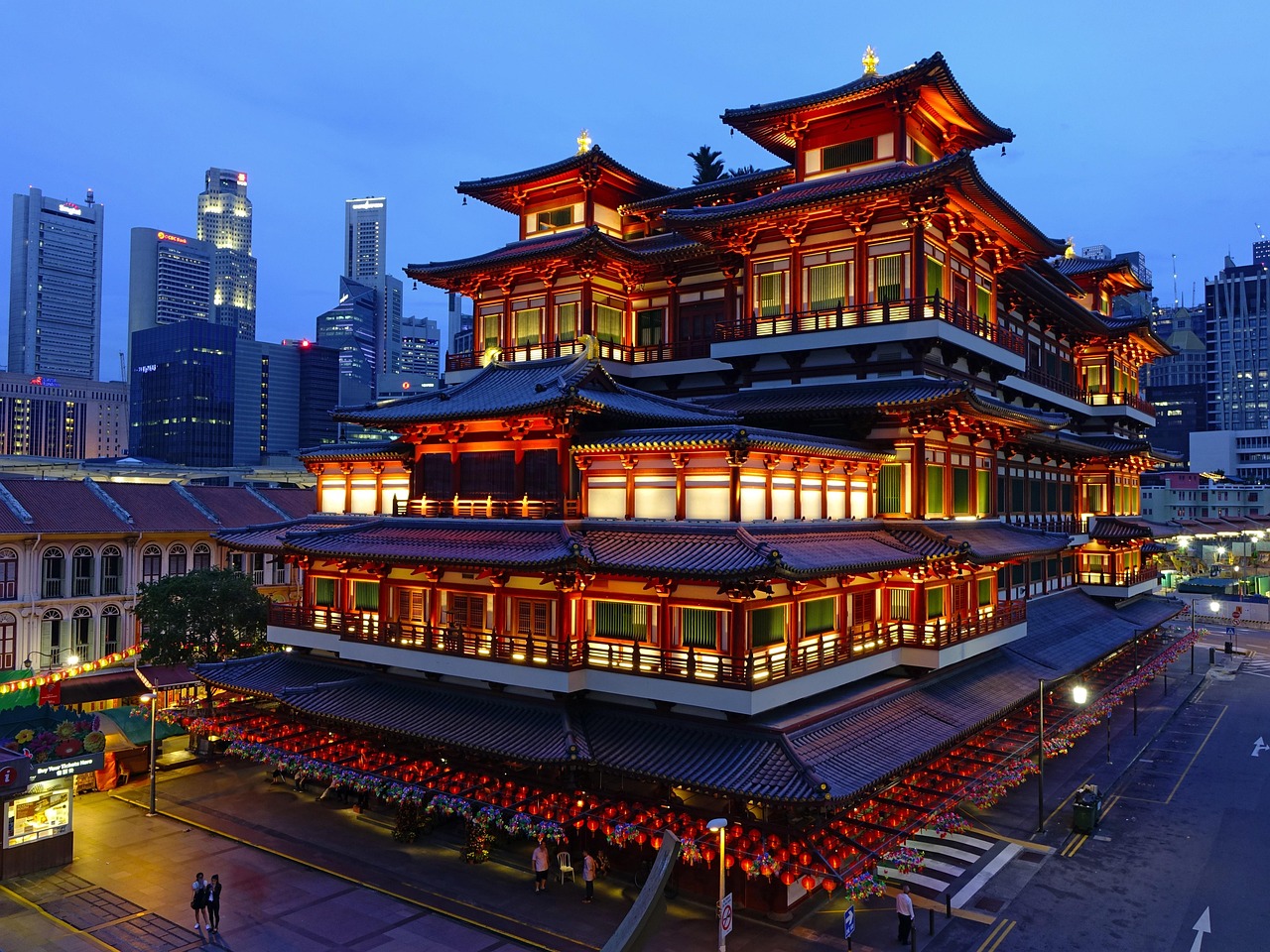
Chinatown Singapore continues to draw people to its mix of religious sites, food outlets and shopping lanes. The verified attractions centre on specific temples, food centres and markets that appear consistently across local guides.
Buddha Tooth Relic Temple
The Buddha Tooth Relic Temple is a 4-storey Buddhist temple and museum located near Kreta Ayer Square. It is open daily from 9 am to 5 pm and serves as a focal point for those interested in Buddhist heritage and museum displays. The site is listed among recommended stops in multiple visitor resources covering the neighbourhood.
Maxwell Food Centre and Chinatown Complex Food Centre
Maxwell Food Centre and Chinatown Complex Food Centre are the main hawker locations highlighted for meals. These centres include Hawker Chan, noted as the world’s cheapest Michelin-starred restaurant and known for its chicken rice. The centres provide a range of affordable local dishes in a traditional hawker setting.
Sri Mariamman Temple and Thian Hock Keng Temple
Sri Mariamman Temple, Singapore’s oldest Hindu temple dating to 1827, and Thian Hock Keng Temple, one of the oldest Chinese temples, are the primary religious sites listed for exploration. Both appear in visitor itineraries as established places to view architecture and cultural practices within Chinatown.
Additional activities supported by the same sources include shopping at the Chinatown Street Market on Smith Street for souvenirs, clothing, antiques and calligraphy art. Other options mentioned are street art murals in laneways, trishaw rides, fish massage on Pagoda Street and cultural cooking classes at Food Playground. These recommendations are drawn directly from the verified details in the source material without additional claims on pricing or market movements.
Practical planning involves checking opening hours for temples and visiting the food centres during standard meal times. Links to further details appear in the listed sources such as https://chinatown.sg/walking-trail/ and https://www.viator.com/en-SG/Chinatown/d52155.
This article is general information only and is not personal financial or investment advice. Consider your own circumstances and seek licensed professional advice before making financial decisions.
References Sourced but Not Limited to:
- rucksack.se · Chinatown i singapore myller manniskor och mat
- aglobewelltravelled.com · Best things to do in chinatown singapore
- rachelirl.com · Chinatown singapore
- districtsixtyfive.com · Best things to do at chinatown guide
- homeiswhereyourbagis.com · Chinatown singapore
- viator.com · Chinatown
- chinatown.sg · Walking trail
- chinatown.sg · Things to do in chinatown singapore
- traveloka.com · Chinatown 107509