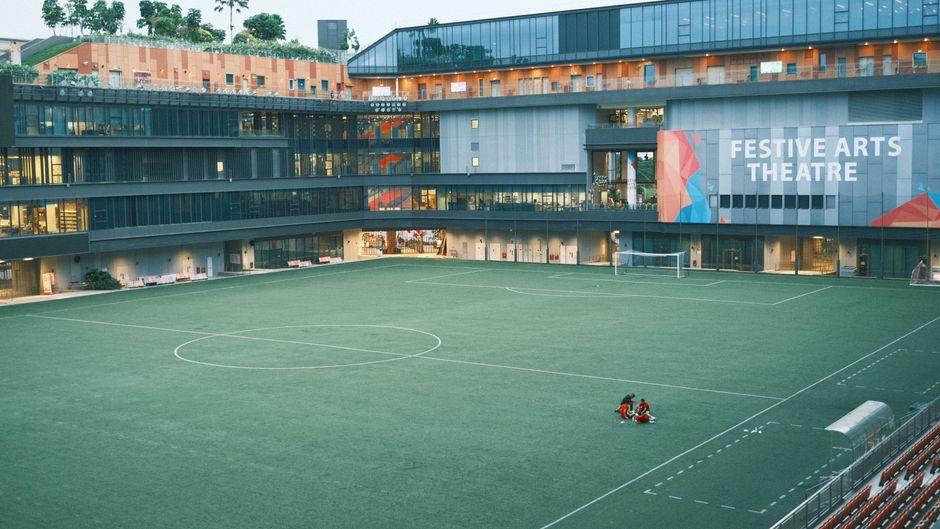
Walk past the National Stadium on Kallang Avenue on any given evening, and you'll spot runners circling the track, footballers practising set pieces, and spectators filtering through gates that have welcomed millions since its 2023 reopening. Yet few realise the scale of infrastructure investment underpinning Singapore's ambitions as a global sporting hub.
The redeveloped National Stadium stands as the most visible symbol of this commitment. Completed at $1.3 billion, the 55,000-capacity venue now features solar panels generating 1.4 megawatts of power annually, retractable roof panels, and facilities designed to international standards for athletics, football, and rugby sevens. It represents Singapore's determination to host major events—from the SEA Games to international football tournaments—while maintaining year-round training capabilities for local athletes navigating the island's tropical climate.
But the National Stadium tells only part of the story. Across Singapore's 730 square kilometres, a network of specialised venues supports diverse sporting disciplines. The Singapore Sports Hub precinct in Kallang encompasses not just the main stadium but also the OCBC Aquatic Centre—featuring Olympic-standard swimming and diving pools—alongside the Singapore Indoor Stadium, where badminton, volleyball, and basketball dominate the calendar. The aquatic centre alone cost $226 million and attracts elite swimmers preparing for regional championships.
Beyond Kallang, the infrastructure map reveals intriguing specialisation. The Changi Hockey Stadium in eastern Singapore provides the only dedicated artificial turf facility of international standards on the island, while the Clementi Swimming Complex and Jurong East Sports Centre distribute facilities across the heartland, ensuring residents from Bedok to Bukit Timah have accessible training grounds.
The Singapore Badminton Hall in Kallang has hosted World Championships qualifiers, while newer facilities like the Integrated Sports Hub at Woodlands—developed with emphasis on community access—signal an evolving philosophy: premium facilities needn't concentrate solely in central areas. These venues feature climate-controlled halls essential for sports requiring precision and consistency amid Singapore's humidity.
What distinguishes Singapore's approach is integration. The SportSG portfolio, managed centrally, ensures equipment standards, maintenance schedules, and coaching pathways align across venues. A junior swimmer training at Clementi follows protocols identical to those at OCBC Aquatic Centre, creating seamless athlete development pipelines.
As Singapore hosts increasingly complex international competitions—and local athletes target Olympic podiums—these venues function as more than buildings. They represent infrastructure-as-strategy: enabling world-class competition while embedding sport into everyday island life. The question now isn't whether Singapore has adequate facilities, but whether they can keep pace with regional demand.
This article was compiled by AI from the sources linked above and screened before publishing. See our editorial standards.