The Cape Verde national football team's stunning run to the World Cup quarter-finals has captivated diaspora communities across the globe, including here in Singapore, where growing pockets of West African residents have turned venues across the island into impromptu celebration grounds. Yet their remarkable achievement underscores a broader conversation: what infrastructure do emerging nations need to compete on the world stage, and how does Singapore's modern sporting ecosystem compare?
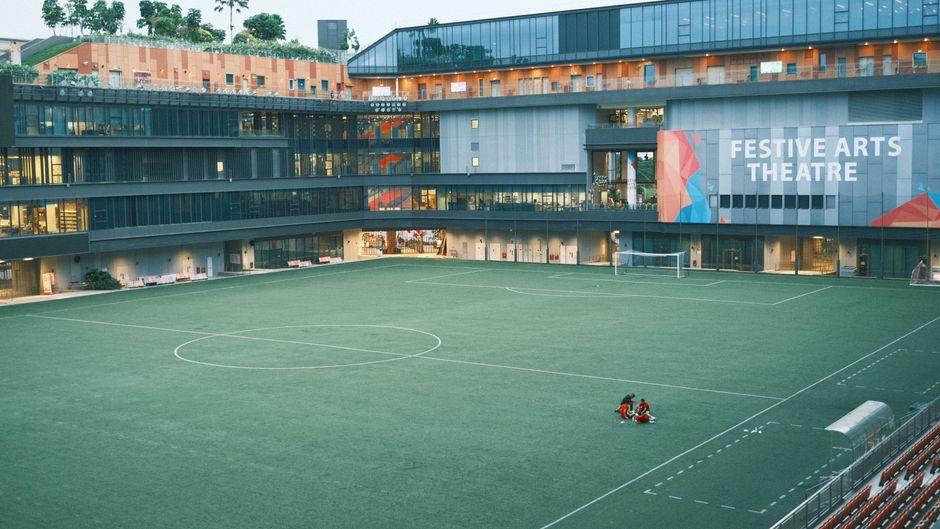
The National Stadium at Kallang, with its 55,000-seat capacity and FIFA-standard pitch, remains Singapore's flagship venue for international fixtures. Since its $226 million redevelopment completion in 2014, the stadium has hosted Asian Cup qualifiers, continental championship matches, and major club competitions. Its proximity to the Kallang neighbourhood's transport hub via the Circle Line makes it accessible for the estimated 2,000 to 3,000 West African residents scattered across Geylang, Joo Chiat, and other eastern districts who gathered to watch Cape Verde's matches.
Beyond Kallang, the Singapore Sports Hub ecosystem—encompassing the OCBC Aquatic Centre, Singapore Indoor Stadium (capacity 10,000), and Jalan Besar Stadium—demonstrates how a compact city-state can punch above its weight in hosting elite sporting events. These venues have collectively attracted regional and international tournaments worth millions in economic impact.
Cape Verde's World Cup qualification represents something more than sports pageantry. An archipelago of just 550,000 people, the nation lacked the stadium infrastructure many took for granted. When preparing for qualifying campaigns, the team trained in Portugal, Morocco, and other African nations with superior facilities. This logistical reality highlights why Singapore's investment in modern venues matters regionally.
The Amateur Football Association of Singapore and Sports Singapore have been quietly deepening partnerships with African football federations, viewing the region as an emerging market for tournament hosting and training camps. Several African national teams have used the National Stadium and Jalan Besar facilities for pre-tournament preparations, drawn by the climate control, drainage systems, and world-class medical facilities available.
For Singapore's diaspora communities, Cape Verde's success represents more than athletic achievement—it's validation that smaller, determined nations can compete globally. The celebrations witnessed at food courts in Geylang and impromptu gatherings near Katong have reflected this sense of possibility.
As the 2026 World Cup approaches and Asian confederations explore co-hosting opportunities, Singapore's infrastructure—and its position as a cosmopolitan hub—positions it advantageously for hosting nations seeking preparation venues or tournament infrastructure. The Cape Verde moment reminds us that world-class stadiums are more than concrete and grass; they're catalysts for dreams.
This article was compiled by AI from the sources linked above and screened before publishing. See our editorial standards.