Why Singapore's AI Boom Stands Apart: A Melting Pot of Talent, Capital and Pragmatism
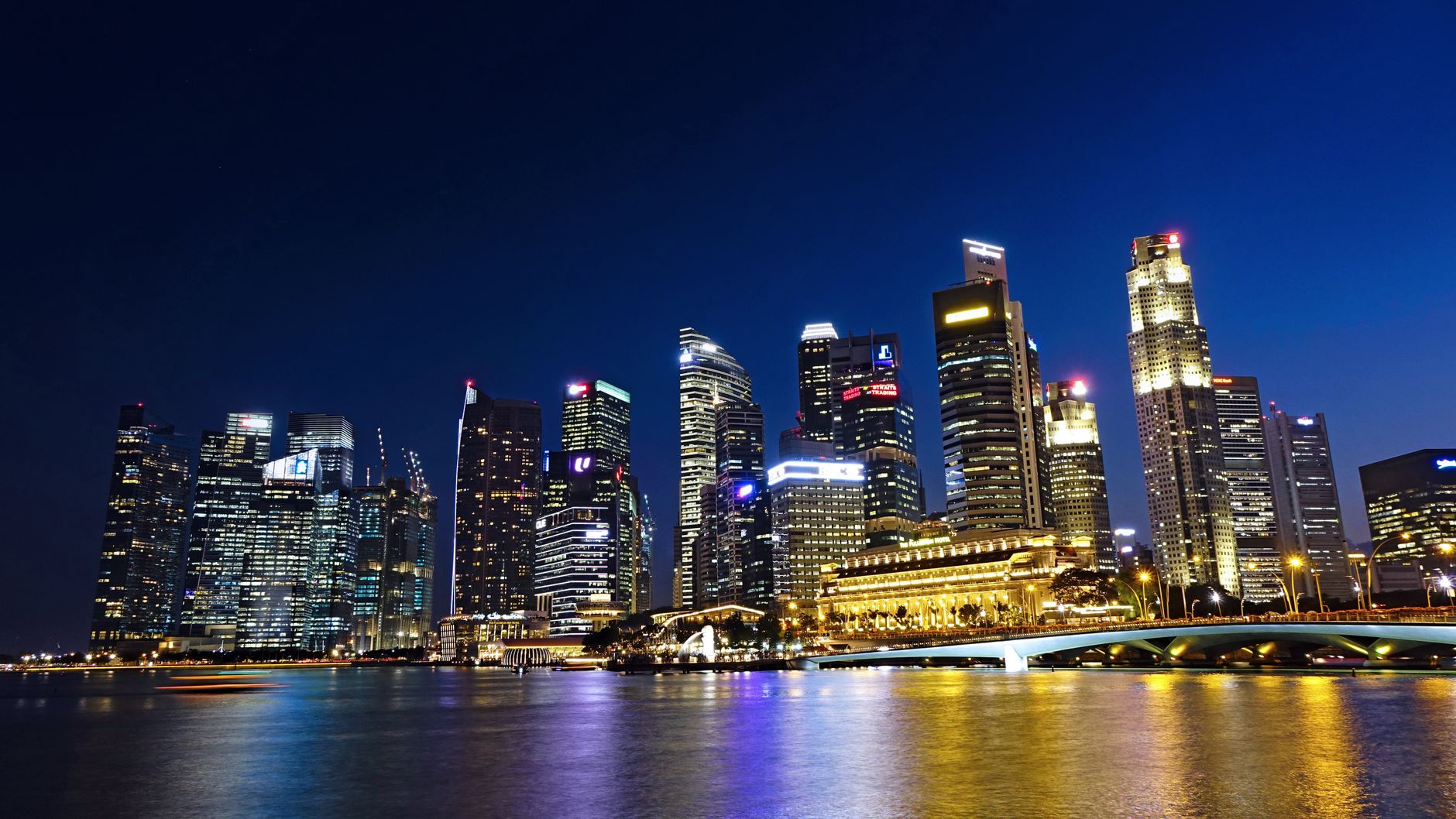
As artificial intelligence reshapes global business, Singapore's unique position as a regulatory-friendly hub with deep Southeast Asian ties is attracting tech leaders who see the city-state as fundamentally different from Silicon Valley or Shenzhen.
This article was generated by AI from the linked public sources. The Daily Singapore is independently owned and covers Singapore news free from advertiser or sponsor influence. Read our editorial standards →
Walk through the converted warehouses and glass towers of Block 71 in Ayer Rajah, and you'll see the hallmarks of every tech cluster worldwide: young engineers hunched over laptops, venture capitalists in casual shirts, the hum of startup ambition. But Singapore's AI revolution carries a distinctive fingerprint that sets it apart from San Francisco, Beijing, or London.
The numbers tell part of the story. Singapore attracted US$1.8 billion in AI and deep tech funding in 2025, according to the Economic Development Board. Yet what matters more than the volume is the composition: nearly 60% of that capital comes from firms investing across Asia-Pacific, not just betting on a single geography. Companies like Sea Limited, which operates Shopee from its headquarters here, are embedding AI into e-commerce platforms serving 600 million people across the region—a market dynamic that New York or London cannot replicate.
"Singapore's advantage isn't being the biggest AI lab," says the tech community here, speaking broadly about what sets the city apart. "It's being the bridge." The Singapore Science Park in Clementi hosts research centres from Microsoft, IBM, and Google—but their work flows outward to Vietnam, Indonesia, and Thailand in ways that Silicon Valley operations rarely do. The National AI Strategy, launched in 2019, explicitly positioned the nation as a testbed for AI applications in finance, urban management, and healthcare across Southeast Asia's diverse markets.
Regulatory pragmatism completes the picture. The Monetary Authority of Singapore and the Infocomm Media Development Authority have built frameworks that allow fintech and AI firms to experiment at speed. A startup testing algorithmic trading or AI-powered fraud detection can move faster here than navigating European GDPR bureaucracy or Chinese oversight. Yet Singapore isn't a regulatory Wild West—compliance expectations are clear and enforced, which attracts institutional capital wary of jurisdictional risk.
Geography matters too. Changi Airport connects Singapore to 400 cities; the Port of Singapore handles 37 million container units annually. These physical assets sound unglamorous beside talk of neural networks, but they mean that hardware makers, supply chain optimisers, and logistics firms building AI-driven operations choose Singapore as their regional nerve centre. A company automating port operations or optimising semiconductor distribution across Asia needs to be here.
As global AI competition intensifies, Singapore's formula—regulatory clarity, regional reach, institutional depth, and pragmatic innovation policy—creates something neither Silicon Valley's dominance nor China's scale can easily replicate. For international tech leaders watching the geopolitical divides widen, that makes Singapore increasingly indispensable.
This article was compiled by AI and screened before publishing. See our editorial standards.
Covering tech in Singapore. This article was generated by AI from the linked sources and was not reviewed by a human editor before publishing. See our editorial standards.