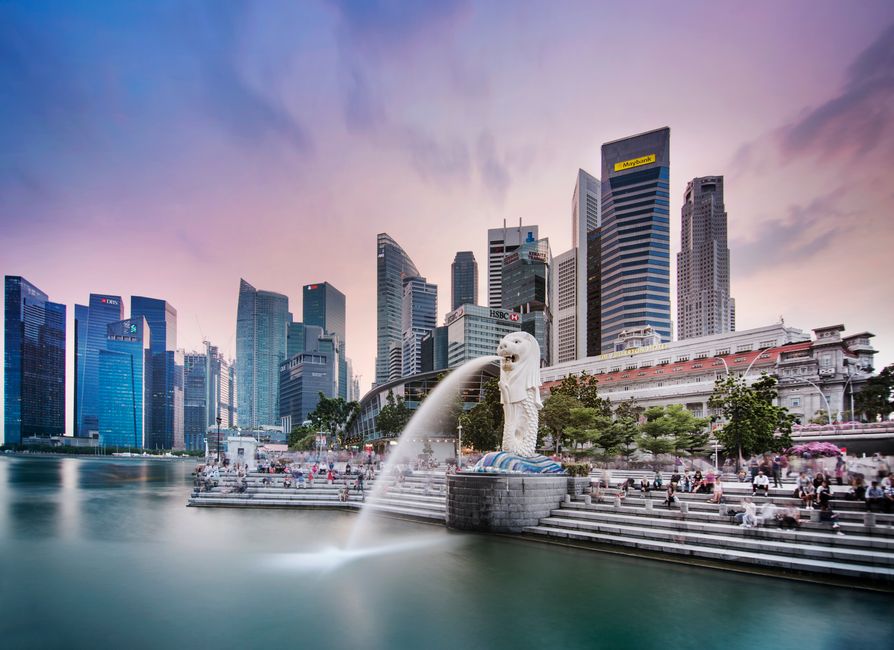
Singapore's tourism sector is sending unmistakable bullish signals. Year-to-date visitor arrivals have reached 9.2 million as of May 2026, tracking ahead of last year's 14.7 million annual total—a trajectory that has caught the attention of property investors, hospitality operators, and capital allocators across Asia.
The numbers matter because they translate directly into cash flow. Average hotel occupancy rates across the island sit at 87 per cent, with room rates in Marina Bay properties commanding upwards of S$450 per night. This pricing power, combined with high utilisation, creates the margin profile that justifies infrastructure investment. That's why major institutional capital has been flowing into Singapore's hospitality sector with renewed intensity.
Consider the data points: RevPAR (revenue per available room) across Singapore's 430-plus hotels has expanded roughly 12 per cent year-on-year through Q2. The Orchard Road corridor, traditionally Singapore's premium retail anchor, is seeing footfall recovery accelerate, with shopping mall traffic up 18 per cent compared to the same period last year. That translates to higher rents for retailers and stronger cashflows for property owners—a virtuous cycle that attracts capital.
What's driving this? Regional travel dynamics matter enormously. China-origin visitors are rebounding sharply, accounting for roughly 17 per cent of total arrivals—a demographic shift that signals confidence in regional consumption patterns. Concurrently, Indian visitors have grown 22 per cent year-on-year, reflecting both middle-class expansion in South Asia and Singapore's positioning as a preferred hub for business travel and MICE (meetings, incentives, conferences, exhibitions) events.
The Economic Development Board has signalled this momentum in its recent sectoral guidance, explicitly highlighting tourism as a high-value opportunity zone. That official positioning matters: it shapes where foreign direct investment flows, particularly from hospitality REITs and international hotel operators considering expansion across Southeast Asia.
Small metrics reveal larger truths. Average length of stay has crept upward to 3.8 days, suggesting visitors are spending more per capita—the kind of qualitative improvement that matters to luxury retail operators along Raffles Boulevard and Sentosa's resort operators. Transport infrastructure investments, from the Thomson-East Coast Line to expanded Changi Airport capacity, have been calibrated partly on these visitor flow projections.
Ultimately, tourism's economic health functions as a barometer for Singapore's broader service-economy appeal. Strong visitor numbers justify capital expenditure, sustain property values, and validate the city-state's positioning as Southeast Asia's preferred business and leisure gateway. The trend lines, for now, are pointing upward.
This article was compiled by AI from the sources linked above and screened before publishing. See our editorial standards.