Gold at $4,030: Why the Currency Beneath the Price Matters More Than the Metal
As gold clears $4,000 an ounce and crude holds near $70, Singapore's commodity investors are learning that exchange-rate arithmetic can quietly erase gains or amplify them.
This article was generated by AI from the linked public sources. The Daily Singapore is independently owned and covers Singapore news free from advertiser or sponsor influence. Read our editorial standards →
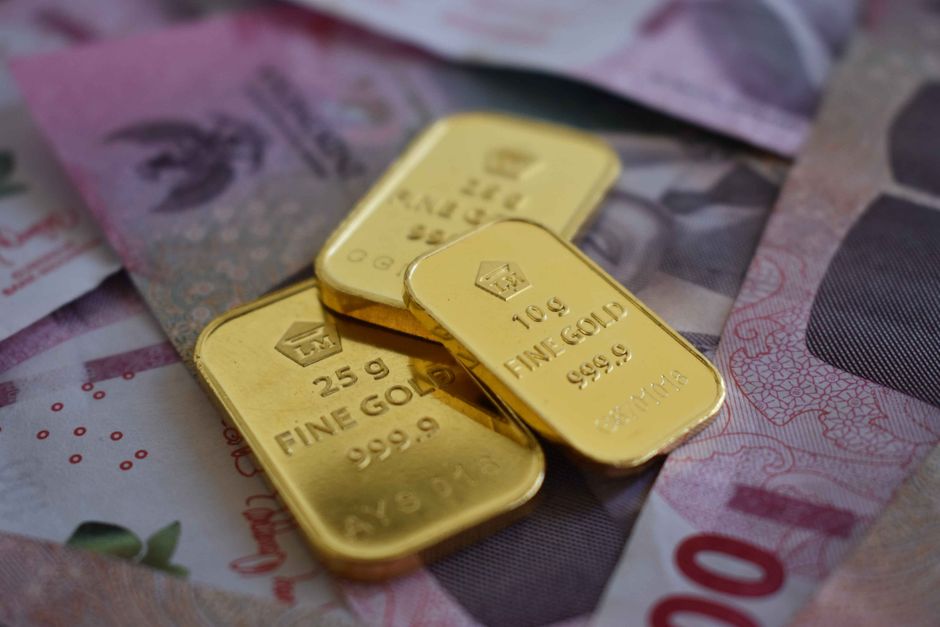
Gold pushed above $4,030 an ounce on Monday, adding nearly 1 per cent in a session where Wall Street slipped and the Nasdaq shed more than 1.3 per cent, a combination that would ordinarily be read as a straightforward flight-to-safety trade. But for Singapore-based investors, wealth managers and the REITs that carry indirect commodity exposure through industrial property and logistics tenants, the more consequential question is rarely the metal's dollar price. It is the exchange rate sitting underneath it.
Commodities are priced in US dollars, and when the greenback moves, the real return for any non-US investor shifts in ways the headline number conceals. A Singapore dollar that has strengthened against the US dollar compresses the local-currency gain from rising gold even as the chart looks encouraging. Conversely, a weaker Singapore dollar flatters the return, sometimes substantially. Traders and private-banking clients in Singapore, one of Asia's principal wealth-management centres, watch this two-variable equation constantly, and the current environment has made it unusually live.
The Crude Calculation Is No Different
WTI crude held essentially flat near $70.39 a barrel, edging up fractionally. That steadiness masks genuine complexity for regional buyers. Asia remains the world's largest crude-importing bloc, and Singapore sits at its logistical heart. When oil is invoiced in US dollars and settled by corporates or sovereigns holding Singapore dollars or regional currencies, even a small currency shift alters the effective energy bill, feeding through to operating costs for manufacturers, shipping companies and, by extension, to the industrial REITs listed on the Straits Times Index, which itself traded near 5,209 on Monday, barely changed.
The index's resilience, up just 0.09 per cent against a softer Wall Street session, suggests local institutional positioning remains defensive but not panicked. REITs with commodity-linked tenants, such as those serving petrochemical facilities or logistics hubs tied to resource trade flows, tend to feel currency and commodity moves with a lag. That lag is currently narrowing as lease structures reprice.
Bitcoin's 1 per cent rise to $60,327 added an additional data point to the session's risk narrative. The cryptocurrency's partial correlation with gold in periods of US dollar softness has become a recurring theme in Singapore's private-banking community, where digital-asset allocations now sit alongside traditional commodity exposure in multi-asset portfolios.
The practical lesson for Singapore investors is arithmetical and worth stating plainly. A commodity rally denominated in US dollars is a partial rally until the exchange rate is applied. Hedging currency exposure through forwards or currency-overlay strategies has moved from institutional best practice to something approaching a basic requirement in an environment where gold can gain $40 in a session while the dollar simultaneously gives ground. Those who read only the commodity screen and ignore the currency screen are, in effect, doing half the maths.
This article was compiled by AI from the sources linked above and screened before publishing. See our editorial standards.
Covering finance in Singapore. This article was generated by AI from the linked sources and was not reviewed by a human editor before publishing. See our editorial standards.