Nasdaq Slides 1.34% as Mega-Cap Technology Stocks Face a Reality Check
A sharp pullback in the world's most closely watched technology index is forcing investors from Singapore to San Francisco to reassess how much they are willing to pay for artificial intelligence-driven growth.
This article was generated by AI from the linked public sources. The Daily Singapore is independently owned and covers Singapore news free from advertiser or sponsor influence. Read our editorial standards →
Wall Street's technology-heavy Nasdaq Composite fell 1.34% on Monday, dropping to 25,815, in the sharpest single-session decline among the major indices tracked today and a reminder that the spectacular rally in mega-cap technology stocks remains vulnerable to sudden reversals of sentiment. The broader S&P 500 slipped 0.45% to 7,439, while gold surged 0.99% to US$4,030 an ounce, a flight-to-safety signal that seasoned traders are unlikely to dismiss.
The divergence between the Nasdaq and the S&P 500 tells a pointed story. When the gap between the two indices widens on a down day, it almost invariably reflects selling concentrated in the handful of companies, principally the artificial intelligence beneficiaries such as the large semiconductor designers, cloud platforms and consumer internet giants, that have come to account for a disproportionate share of both indices' market capitalisation. These names have driven the Nasdaq's extraordinary gains over recent years, but their very dominance means any rotation out of the trade amplifies index-level moves well beyond what fundamentals alone might justify.
Why the Mega-Cap Trade Matters Beyond America
For Singapore-based investors, the Nasdaq's gyrations are far from a distant curiosity. Unit trusts and exchange-traded funds tracking United States technology benchmarks have become a staple of retail portfolios here, and the city-state's position as a regional wealth-management hub means private bank clients are substantially exposed to the same concentrated handful of names. A sustained de-rating of mega-cap technology would ripple through managed account returns and fee income at the financial institutions listed on the Straits Times Index, which itself edged fractionally higher today, adding 0.09% to close at 5,209.
The STI's relative calm against Wall Street's turbulence underscores a structural reality: Singapore's index is anchored by banks, real estate investment trusts and industrial groups whose earnings are more directly tied to Asian credit conditions and regional trade flows than to Nasdaq valuations. That insulation can be reassuring, though it also means local investors seeking exposure to global technology growth have had to look offshore, accepting the volatility that now appears to be reasserting itself.
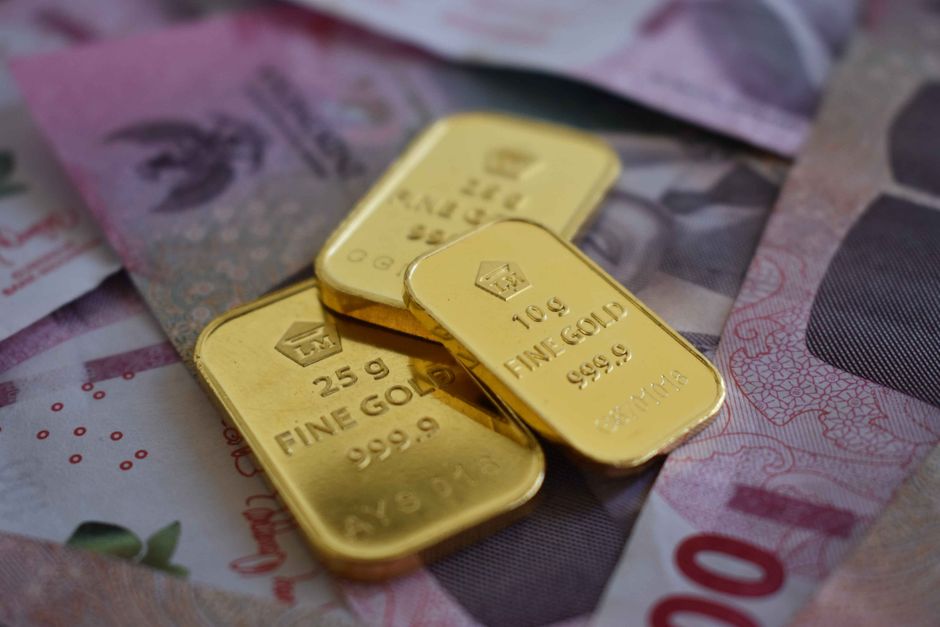
Gold's climb to US$4,030 is instructive context. Bullion tends to attract capital when investors grow uncertain about the sustainability of growth-asset valuations, and the metal's continued advance alongside a weaker Nasdaq suggests positioning is shifting, at least at the margin, away from high-multiple technology and towards stores of value. Bitcoin edged higher to US$60,327, a more ambiguous signal given the asset's idiosyncratic behaviour, while WTI crude held essentially steady at US$70.39 a barrel, offering no particular read on global demand expectations.
The practical implication for Singapore investors is not panic but calibration. Portfolios built around the assumption that mega-cap technology earnings growth would remain immune to valuation gravity may need rebalancing. Local REITs and bank stocks, already trading at more modest multiples, could attract renewed attention as the risk-reward arithmetic on Nasdaq heavyweights becomes less straightforward to defend.
This article was compiled by AI from the sources linked above and screened before publishing. See our editorial standards.
Covering finance in Singapore. This article was generated by AI from the linked sources and was not reviewed by a human editor before publishing. See our editorial standards.