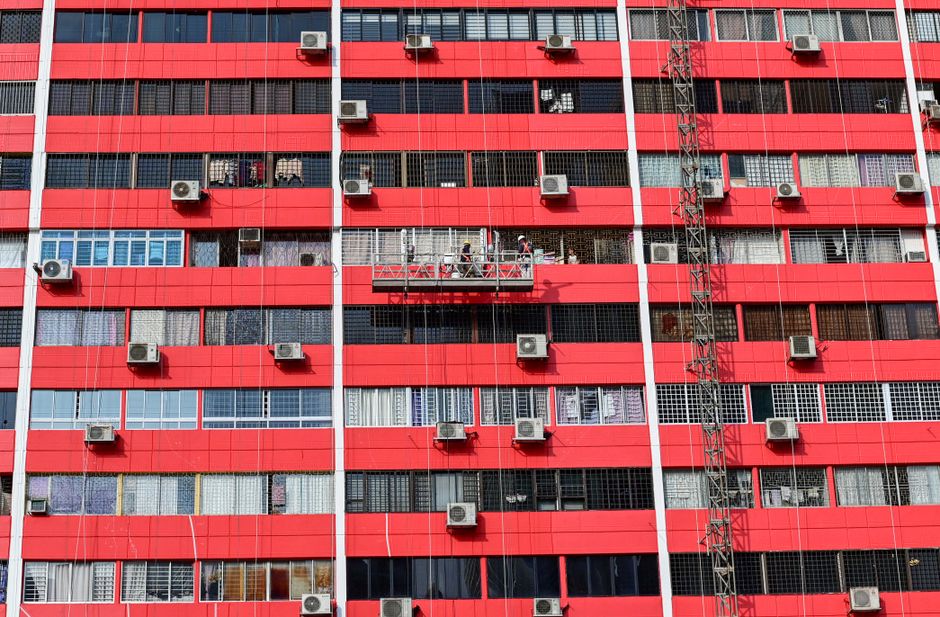
Walk through Tampines or Jurong East today, and you'll see the physical legacy of Singapore's housing ambitions: rows of high-rise public apartments, carefully planned neighbourhoods, shopping centres anchoring bustling communities. But beneath this orderly urban landscape lies a complex story of how policy choices made over fifty years have shaped—and constrained—housing options for millions.
Singapore's public housing model, pioneered under the Housing and Development Board from the 1960s onwards, was revolutionary. By the 1990s, over 80 per cent of Singaporeans lived in HDB flats, a remarkable achievement in homeownership. The system worked because land was abundant relative to population, construction costs were manageable, and young families could afford to buy their first home in new towns like Bukit Merah or Woodlands.
But the ground has shifted. Singapore's population has grown to 5.9 million, constrained within just 730 square kilometres. The average resale price of a four-room HDB flat in established estates now hovers around $500,000—a figure that would have seemed unimaginable two decades ago. First-time buyers in their late twenties increasingly face a sobering reality: the entry-level market has essentially disappeared.
Several converging pressures created this moment. The government's decision to limit HDB construction in recent years, prioritising land for economic zones and green spaces, reduced the supply of new public units. Simultaneously, Singapore's ageing population meant fewer elderly residents were downsizing or leaving the market. Meanwhile, the private residential market—concentrated in districts like District 9 and 10, spanning from Orchard to the East Coast—remained largely inaccessible to middle-income families.
Perhaps most significantly, policy-makers in the early 2000s treated housing as primarily an asset accumulation vehicle. Couples were encouraged to leverage their Central Provident Fund savings, mortgage limits were gradually relaxed, and the narrative shifted: your HDB flat wasn't just shelter, but your retirement nest egg. This created a self-reinforcing cycle where prices climbed, and younger Singaporeans found themselves priced out before they'd even begun.
Recent policy recalibrations—from the Build-To-Order programme in areas like Tengah to the Fresh Start Housing Scheme—represent acknowledgement that the old model can't simply be scaled. Officials have recognised that supply constraints, demographic shifts, and affordability are not separate problems but interconnected challenges.
Understanding how we arrived here isn't about assigning blame. It's about recognising that housing policy reflects choices about what kind of city we want to be—and whether the solutions of the past can address the needs of the future.
This article was compiled by AI from the sources linked above and screened before publishing. See our editorial standards.