Singapore's commitment to becoming a regional aquatic powerhouse is written across its sprawling network of swimming and water sports facilities. With over 60 public swimming complexes operated by Sport Singapore across the island, the infrastructure backbone supporting everything from competitive swimming to dragon boat racing has never been more robust.
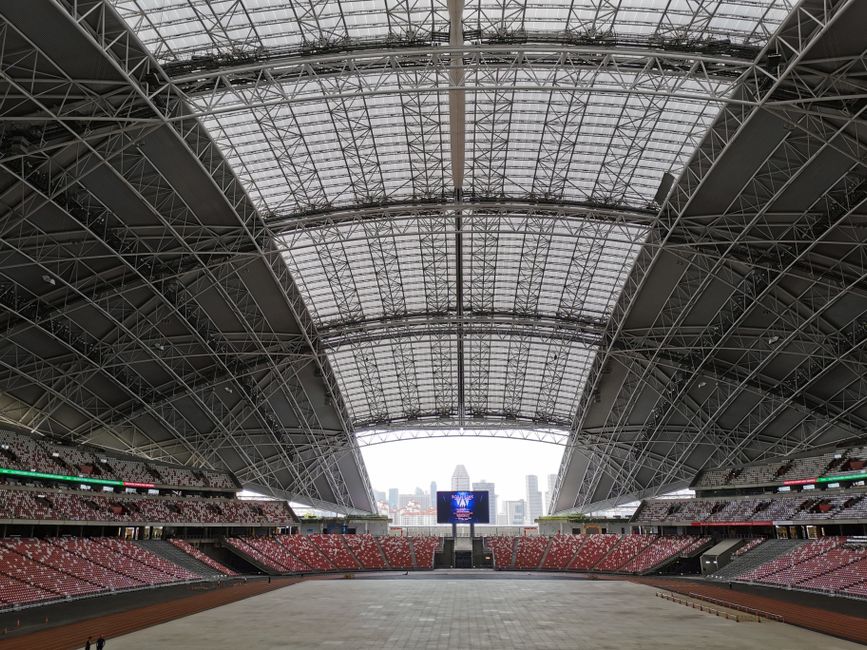
The Sports Hub in Kallang stands as the centrepiece of this ecosystem. Its Aquatic Centre, which hosted the 2015 Southeast Asian Games, features two Olympic-sized pools, a diving pool, and a warm-water facility specifically designed for training and rehabilitation. These venues regularly host National Swimming League competitions and attract elite athletes preparing for regional and international championships. Monthly membership at public pools ranges from $28 to $58, making access relatively affordable for residents across income levels.
Beyond the heartland pools, specialised facilities cater to diverse aquatic pursuits. At East Coast Parkway, the water sports precinct encompasses facilities for kayaking, canoeing, and sailing, drawing both recreational enthusiasts and competitive athletes. Marina Barrage has emerged as a hub for stand-up paddleboarding and dragon boat training, with multiple clubs now basing their operations there. The venue's calm waters and accessibility make it ideal for beginners, while its proximity to Kallang and Bedok ensures excellent infrastructure connectivity.
Private training academies supplement public infrastructure. Facilities like those at Mountbatten and Tanjong Rhu offer dedicated coaching programmes and competition-grade pools, though membership fees range significantly higher at $150 to $400 monthly depending on programme intensity.
The infrastructure push reflects tangible results. Singapore's national swimming contingent has shown measurable improvement at Southeast Asian Games, while participation in grassroots water sports programmes has surged. Sport Singapore's annual participation surveys indicate roughly 28 per cent of residents engage in some form of water-based activity annually, up from 22 per cent in 2020.
However, capacity challenges persist during peak hours. Evening and weekend slots at popular heartland complexes frequently reach full occupancy, prompting calls for expanded facilities in growth zones like Punggol and Sengkang. Water quality maintenance and energy efficiency have also become focal points as Singapore pursues its 2030 sustainability targets.
Recent investment announcements suggest expansion momentum will continue. Plans for upgraded facilities in northern Singapore are underway, while renovations at several aging Bedok and Tiong Bahru complexes have modernised changing facilities and safety infrastructure. For aspiring swimmers and casual paddleboarders alike, Singapore's aquatic landscape increasingly offers world-class options within reach.
This article was compiled by AI from the sources linked above and screened before publishing. See our editorial standards.