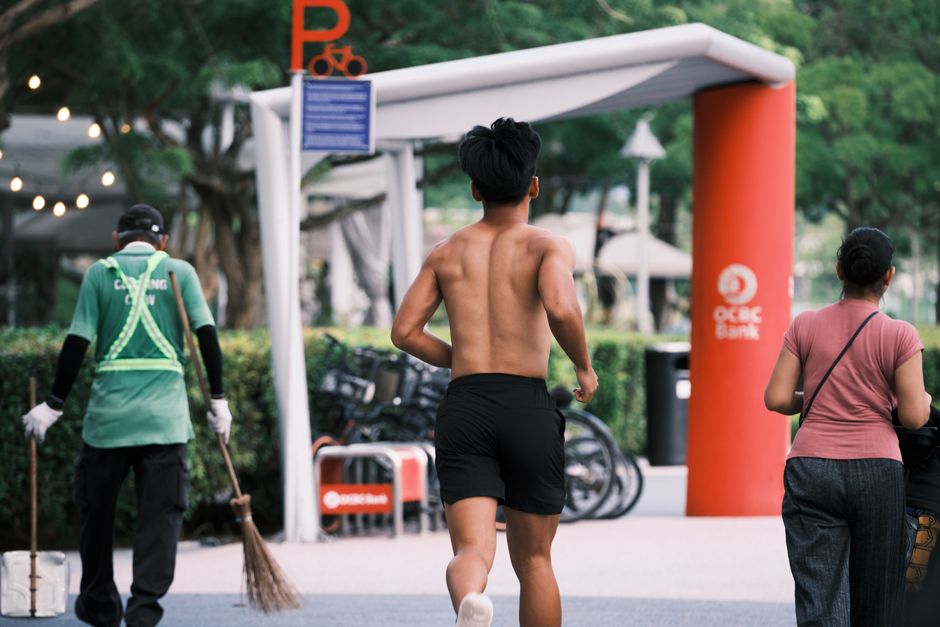
The treadmill sits gathering dust in many Singaporean homes. Meanwhile, runners are pounding pavements from the East Coast Park reservoir loop to the Bukit Timah Nature Reserve trails—and neuroscience suggests they're onto something real.
Studies published in environmental psychology journals consistently show that outdoor running produces distinct advantages over indoor exercise. A 2024 analysis in the Journal of Environmental Psychology found that trail runners reported 25 per cent lower perceived exertion levels and significantly improved mood markers compared to treadmill users, despite comparable cardiovascular effort. The mechanism? Natural light exposure triggers serotonin production, while navigating varied terrain activates additional stabiliser muscles and proprioceptive systems—your body's spatial awareness network.
Singapore's geography offers an unexpected advantage. The 15-kilometre East Coast Park connector, stretching from Marina Barrage to Changi, provides consistent, relatively flat coastal running with documented air quality standards. Meanwhile, forested routes like the Macritchie Reservoir Trail (around 11 kilometres) and paths through the Singapore Botanic Gardens expose runners to phytoncides—airborne compounds released by trees—which research suggests enhance immune function and lower cortisol, the stress hormone.
Accessibility matters. The Parks Board reports that over 400 kilometres of park connector networks crisscross the island, with HDB neighbourhoods like Tanjong Rhu, Ang Mo Kio, and Clementi featuring free gym facilities and adjacent green spaces. Entry to the Botanic Gardens costs just $1 for Singapore residents on weekdays, making regular outdoor training genuinely affordable.
Local running communities have grown accordingly. Clubs organising group runs through Bukit Timah and along the Southern Ridges cite improved adherence rates—runners completing outdoor group sessions show 40 per cent higher consistency than gym-based peers, according to fitness behaviour research. The social element, combined with environmental novelty, appears to sustain motivation longer.
Injury patterns also diverge. While treadmill running concentrates impact loading, outdoor trails distribute force across varied surfaces. Physiotherapy data from local sports medicine clinics indicates slightly lower overuse injury rates among trail-focused runners, though proper footwear and progressive training remain essential.
The emerging picture is clear: outdoor running in Singapore activates multiple wellness pathways simultaneously—metabolic, neurological, and psychological. Whether you're navigating the undulating MacRitchie paths or the meditative straightaway along East Coast Park, the science validates what many runners already know: our island's natural spaces aren't just scenery. They're active medicine.
For personalised training advice or if you have existing health conditions, consult your GP or a sports medicine specialist at your nearest polyclinic.
This article was compiled by AI from the sources linked above and screened before publishing. See our editorial standards.