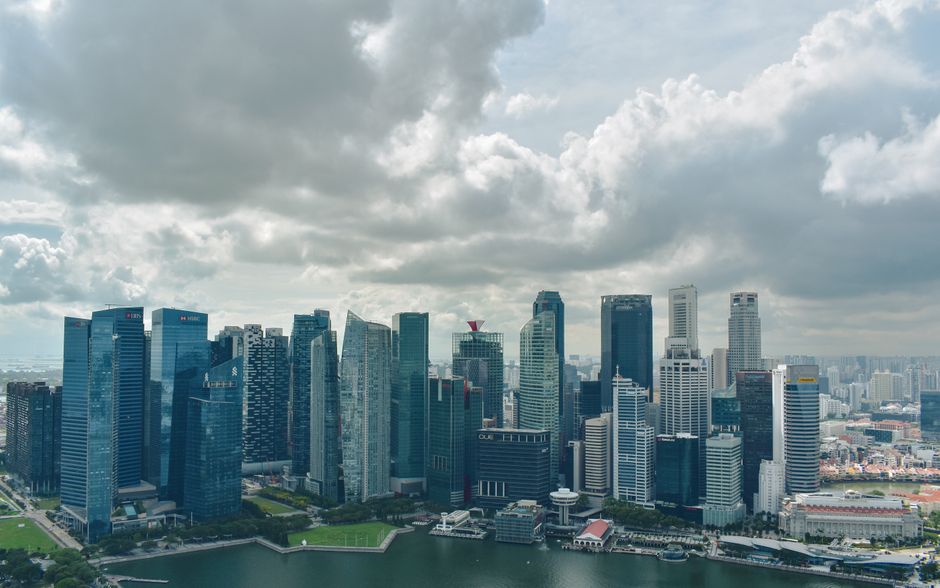
Singapore's gleaming central business district has long thrived on predictability and interconnectedness. But in mid-2026, that certainty is fracturing. Rising geopolitical tensions—from Middle Eastern instability to escalating regional conflicts—are fundamentally altering how multinational corporations approach their office footprint in the Lion City, with profound implications for landlords, tenants, and the broader economy.
The numbers tell a sobering story. Grade-A office rents in the Marina Bay financial district, which command upwards of S$12 to S$14 per square foot monthly, are facing unprecedented pressure as global banks and trading firms reassess their Asia-Pacific headcount. Several multinational financial institutions have quietly reduced their Singapore operations by 15-20% over the past nine months, according to commercial agents tracking the market. This translates directly into vacant suites across iconic addresses like One Raffles Quay and the financial towers scattered around Shenton Way.
The ripple effects extend beyond Marina Bay. Co-working operators and smaller professional services firms that typically occupy secondary office spaces in areas like Tanjong Pagar and Outram Park are experiencing higher tenant churn. Companies operating in sectors sensitive to geopolitical risk—shipping, insurance, commodities trading—are consolidating operations or relocating key functions to perceived safer jurisdictions, creating headwinds for landlords who banked on steady rental growth.
Yet not all commercial property is created equal. Flight-to-quality dynamics are intensifying. Premium, newly-built offices with advanced sustainability credentials and flexible lease terms are holding their ground far better than ageing stock. The JTC Corporation's industrial estates remain resilient, buoyed by businesses seeking operational resilience through supply chain diversification—a direct consequence of global trade tensions.
Real Estate Investment Trust managers and institutional investors are recalibrating their risk assessments. Where Singapore was once viewed as a low-risk, high-stability play, the current environment demands greater due diligence. Valuations are softening across older buildings, whilst modern, adaptive-use spaces command premiums. The spread between prime and secondary office yields has widened to levels not seen since 2020.
For Singapore's business community, the message is clear: global headwinds are no longer abstract concepts discussed in economic forums. They are materialising in lease negotiations, occupancy rates, and balance sheets across the Central Business District and beyond. Companies that anticipated remote-work flexibility and operational redundancy are better positioned; those operating on legacy real estate strategies face difficult decisions ahead.
The city's commercial property market remains fundamentally sound. But the insulation from global volatility that characterised the previous decade is eroding. Singapore's business leaders must now actively manage their physical real estate as a dynamic strategic asset, not a static line item.
This article was compiled by AI from the sources linked above and screened before publishing. See our editorial standards.