News
Singapore Green Plan 2030: Bold Climate Action Needed
Officials and experts warn Singapore must accelerate Green Plan 2030 implementation to meet net-zero 2050 goals. Learn what's required across sectors.
3 min read
News
Officials and experts warn Singapore must accelerate Green Plan 2030 implementation to meet net-zero 2050 goals. Learn what's required across sectors.
3 min read
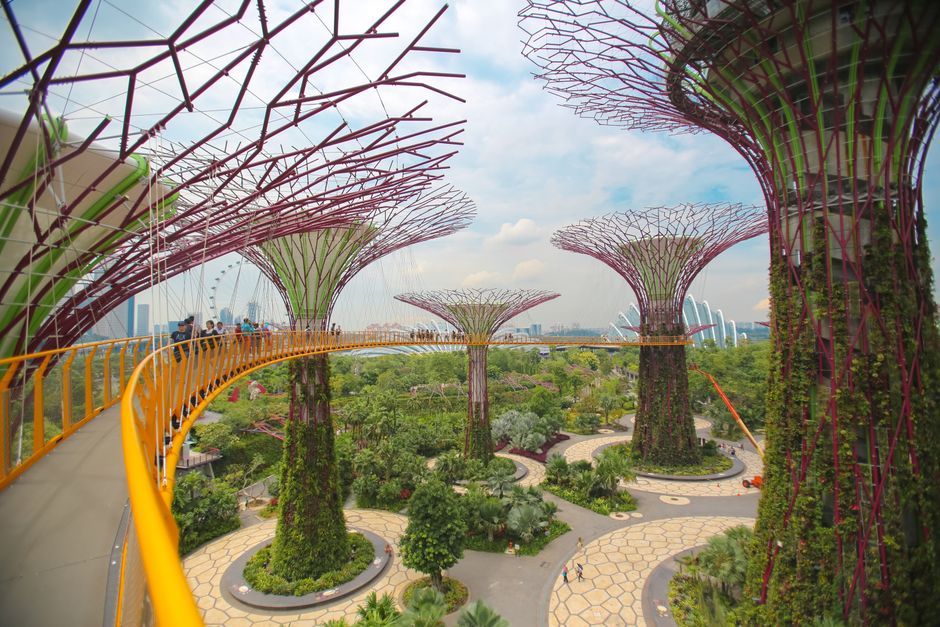
Singapore's environmental leaders are sounding a note of urgency as the nation marks its mid-year checkpoint on climate commitments. With the country's Green Plan 2030 now in full swing, government officials and sustainability experts are emphasising that ambitious targets alone will not suffice—execution and investment must accelerate across all sectors.
The consensus among key voices reflects a critical juncture. The National Climate Change Secretariat has outlined plans to reduce emissions by 60 per cent by 2050, but industry observers note that progress requires unprecedented coordination between the public and private sectors. Officials at the Building and Construction Authority have pointed to the retrofitting of existing structures across districts like Jurong East and Tampines as essential, with energy-efficient upgrades now mandatory for many commercial properties.
Sustainability experts speaking on recent panels have flagged the role of solar deployment as pivotal. Singapore aims to generate 1.5 gigawatts of peak solar capacity by 2030, compared to around 1 gigawatt currently, yet the land constraints typical of a densely populated city-state demand creative solutions. Experts highlight that rooftop installations on Housing and Development Board blocks and industrial facilities remain underutilised.
On the transport front, officials from the Land Transport Authority have reaffirmed commitments to phase out internal combustion engine vehicles, noting that charging infrastructure expansion along corridors such as the Bukit Timah Expressway and towards Changi represents a significant investment. Current charging point density, while growing, still lags demand from the estimated 20,000 electric vehicles registered island-wide.
Water sustainability has also garnered fresh emphasis. Officials managing the Public Utilities Board's recycled water operations stress that expanding the Newater network—which currently supplies about 40 per cent of Singapore's water needs—remains critical amid climate volatility. Recent droughts across Southeast Asia have underscored the strategic importance of local water resilience.
Yet experts caution against complacency. A recent roundtable discussion involving representatives from the Economic Development Board and environmental think-tanks highlighted gaps in biodiversity protection, particularly in green spaces like the Central Catchment Nature Reserve and Singapore's extensive park system. Stakeholders emphasised that nature-based solutions must be integrated into urban planning, not treated as an afterthought.
As Singapore enters the second half of 2026, the consistency of messaging from government agencies and the private sector suggests genuine alignment on sustainability imperatives. However, officials acknowledge that meeting 2030 milestones requires sustained public engagement and investment discipline. The pathway forward is clear; the race is on to ensure it is walked swiftly.
This article was compiled by AI and screened before publishing. See our editorial standards.
About this article
Published by The Daily Singapore
Spread the word
Daily brief
Free, in your inbox before 7am. Weekdays.
Before you go
The day's Singapore news in a 2-minute read. Free, weekday mornings.