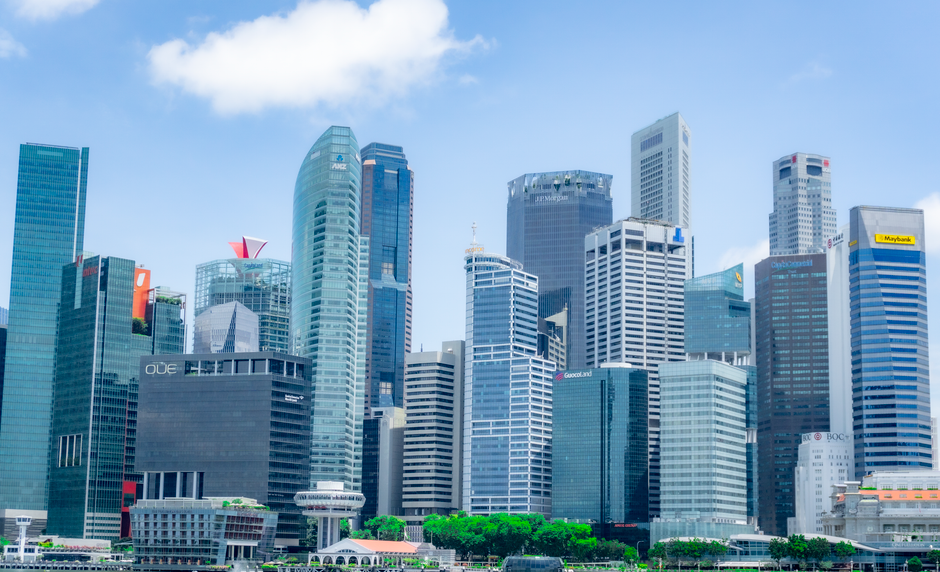
The venture capital landscape in Singapore is entering a new phase. After a period of consolidation following 2024's funding slowdown, venture firms clustered around Block 71 in Ayer Rajah and the growing hubs near Marina Bay Financial Centre are charting an ambitious roadmap for the next 18 months—one that prioritises sustainable returns over growth-at-all-costs narratives.
Industry insiders point to three critical developments shaping the near future. First, deep-tech infrastructure. Several tier-one firms managing assets of $500 million to $2 billion are establishing dedicated verticals for quantum computing, advanced semiconductor packaging, and biotech platforms. These longer-duration plays, typically requiring 10-year time horizons, represent a recalibration after the consumer-tech rush of the early 2020s.
Second, cross-border expansion engines are being engineered. Rather than backing individual companies, a emerging cohort of venture studios—think venture firms with operating arms—are building "go-to-market platforms" that help Southeast Asian startups scale simultaneously into India, Japan, and ASEAN markets. Singapore, with its neutral geography and trusted regulatory framework, is positioned as the natural launchpad for these multi-market plays.
Third is the rise of sector-specific funds. Impact investing has matured from buzzword to operational reality. Dedicated vehicles focused on climate tech, fintech infrastructure, and enterprise AI—each with $50 million to $200 million under management—are being announced quarterly. This represents a fundamental shift in how capital allocates within the region's venture ecosystem.
Data supports the transition. According to venture tracking platforms, median Series A rounds in Singapore rose from S$3.2 million in 2023 to S$5.1 million in 2025, signalling investors' appetite for later-stage, more mature businesses. Simultaneously, the number of pre-seed and seed rounds has flattened, suggesting a "barbell" strategy: fewer, larger bets on proven teams.
The physical infrastructure is evolving too. Beyond the traditional strongholds of Blk 71 and one-north, emerging venture nodes near Outram and along the East Coast corridor are hosting collaborative laboratories where portfolio companies share technical talent and customer networks. These are not merely office spaces; they represent deliberate ecosystem architecture.
For founders, the message is clear: the era of "spray and pray" pitching is over. Venture firms are now evaluating long-term product roadmaps, unit economics, and regulatory readiness with renewed rigour. Those backed by capital today should expect partners deeply engaged in their operational trajectory—not just quarterly board observers.
The next wave of Singapore's venture maturity is underway. It will be defined not by headline-grabbing rounds but by sustainable businesses and the infrastructure enabling regional scale.
This article was compiled by AI from the sources linked above and screened before publishing. See our editorial standards.