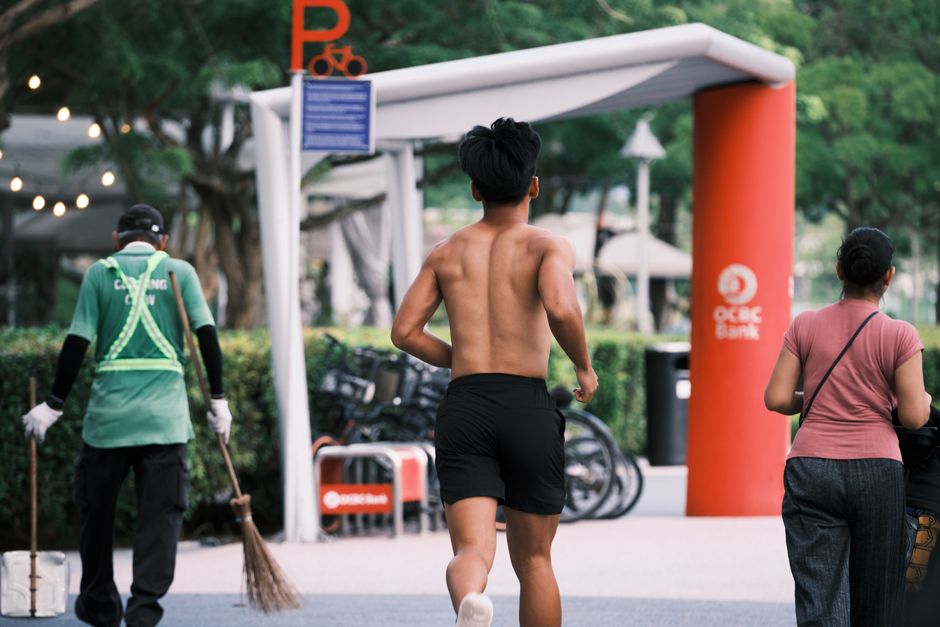
On any given Saturday morning, the carpark at East Coast Park fills up by 7am. Runners of all ages stretch against railings, comparing Strava stats and route notes before heading out along the 15-kilometre coastal stretch. Five years ago, this scene would have been unremarkable. Today, it signals a quiet but unmistakable shift in how Singapore's fitness enthusiasts are choosing to train.
The outdoor running boom isn't confined to the ECP. Botanic Gardens has become a sanctuary for early risers seeking soft grass underfoot and natural shade—the 52-hectare estate now registers thousands of weekly visits from recreational runners. Meanwhile, estate gyms and polyclinics increasingly host running groups as part of integrated wellness programmes, democratising access across neighbourhoods from Bukit Merah to Tampines.
Local running clubs report membership surges. Community-organised park runs, which charge minimal fees, have become social anchors rather than mere training sessions. The trend reflects a broader shift: Singaporeans are rediscovering that effective fitness doesn't require expensive memberships or air-conditioned studios.
Part of this momentum stems from accessibility. HDB estate gyms remain free or nominally priced, removing financial barriers. But outdoor running offers something gyms cannot—varied terrain, natural light, and the psychological boost of exercising within city landscapes. A runner tackling the Park Connector Network linking Kranji to Marina Barrage experiences constantly changing scenery; the monotony of treadmill running cannot compete.
There are practical advantages too. Training on natural surfaces like the Botanic Gardens' pathways builds different stabiliser muscles than paved roads, reducing injury risk. The growing number of running groups also addresses another wellness challenge: consistency. Social accountability transforms solo joggers into community participants.
The trend intersects with Singapore's broader wellness infrastructure. Hawker centres increasingly highlight healthier options; polyclinics now integrate running clubs with physiotherapy services. Active transport advocacy has simultaneously improved Park Connector signage and lighting, making evening runs safer across estates.
Challenges remain. Heat and humidity limit midday training; pollution spikes occasionally affect air quality. Yet runners have adapted, clustering around cooler dawn hours or tree-dense routes. The trend's resilience suggests it reflects genuine behaviour change rather than passing fad.
What's emerging is a distinctly Singaporean fitness culture—resourceful, community-driven, and rooted in the spaces we already occupy. From coastal paths to manicured gardens, our city is becoming a sprawling outdoor gym, one park run at a time.
This article was compiled by AI from the sources linked above and screened before publishing. See our editorial standards.