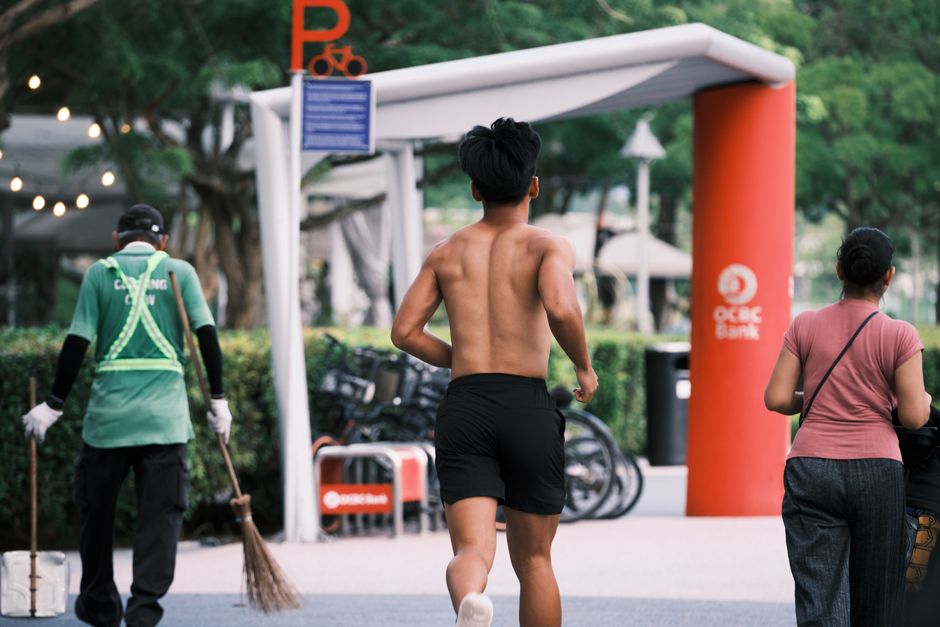
On a humid Saturday morning at East Coast Park, dozens of residents gather at the Bedok promenade for the monthly 'ECP Community Chase'—a informal 5km run-walk event that costs nothing to join. What started three years ago as a handful of friends meeting by the carpark has grown into a standing fixture drawing 40 to 60 participants each month, many of them discovering fitness for the first time alongside colleagues from their own HDB blocks.
This pattern is repeating across Singapore's residential heartland. Community fitness challenges—whether park runs, estate-based step competitions, or neighbourhood badminton leagues—are reshaping how locals approach exercise. Unlike expensive gym memberships or boutique fitness classes, these initiatives leverage free or near-free spaces like HDB void decks, community centres, and nature reserves that Singaporeans already know and trust.
The appeal is straightforward. A 2024 Health Promotion Board survey found that 62 per cent of Singaporeans cited 'lack of motivation' as their primary barrier to regular exercise. Group challenges remove that friction. When your Clementi estate organises a step-counting competition across 10 blocks, the shared target—and the friendly rivalry between neighbours—becomes a powerful incentive. Participation rates in organised community events typically reach 35 to 40 per cent of residents in participating estates, according to ActiveSG records.
What makes these challenges work is their accessibility. Most are free or cost between $5 and $15 per person, far below the $80 to $200 monthly gym fees. They require no special equipment: park running groups meet at Botanic Gardens or Bukit Timah Nature Reserve; badminton groups use HDB facility halls available at $4 per hour. Some challenges are deliberately non-competitive—Yishun's 'Walk Wednesday' simply tracks collective distance covered, with no winners or prizes, yet attracts 30 to 50 walkers weekly.
The social infrastructure matters too. Organising committees—often led by grassroots organisations or RC volunteers—handle logistics, timing, and communication via WhatsApp groups and posters at lift lobbies. This reduces the organisational burden on participants and embeds fitness into the fabric of estate life.
For Singaporeans who find traditional gyms intimidating or isolating, these challenges offer something irreplaceable: the normalisation of fitness as a social, community activity rather than a solitary pursuit. As one regular at a Tanjong Pagar estate volleyball league noted, the real win isn't the trophy—it's the standing Tuesday night plans with people you've come to know.
If your estate or neighbourhood lacks a fitness challenge, consider starting one. Local ActiveSG coordinators and community centre staff can provide free advice on logistics and promotion. The barrier to entry has never been lower.
This article was compiled by AI from the sources linked above and screened before publishing. See our editorial standards.