Singapore's 2025 National Population Health Survey found that one in four residents aged 18 to 74 reported high levels of psychological distress — up from one in five just three years earlier. That number is not abstract. It translates to roughly 1.5 million people commuting, working, and eating at hawker centres while carrying a mental load that most would not name out loud.
July marks the midpoint of the school year and the peak of mid-year performance review cycles across the city's finance and tech sectors. Anecdotal reports from GPs at polyclinics in Tampines and Queenstown suggest appointment demand for stress-related complaints typically spikes between June and August, when professional deadlines converge with school holiday logistics. The context, in other words, is not abstract either.
Start With the Body, Because the Science Says So
The evidence for physical activity as a first-line stress intervention is now robust enough that the Institute of Mental Health (IMH) at Buangkok Green Medical Park explicitly recommends 150 minutes of moderate aerobic exercise per week as part of its mental wellness guidelines. The mechanism is straightforward: sustained movement lowers cortisol and triggers BDNF, a protein that supports neuroplasticity. You do not need a gym membership priced at $120 a month to get there.
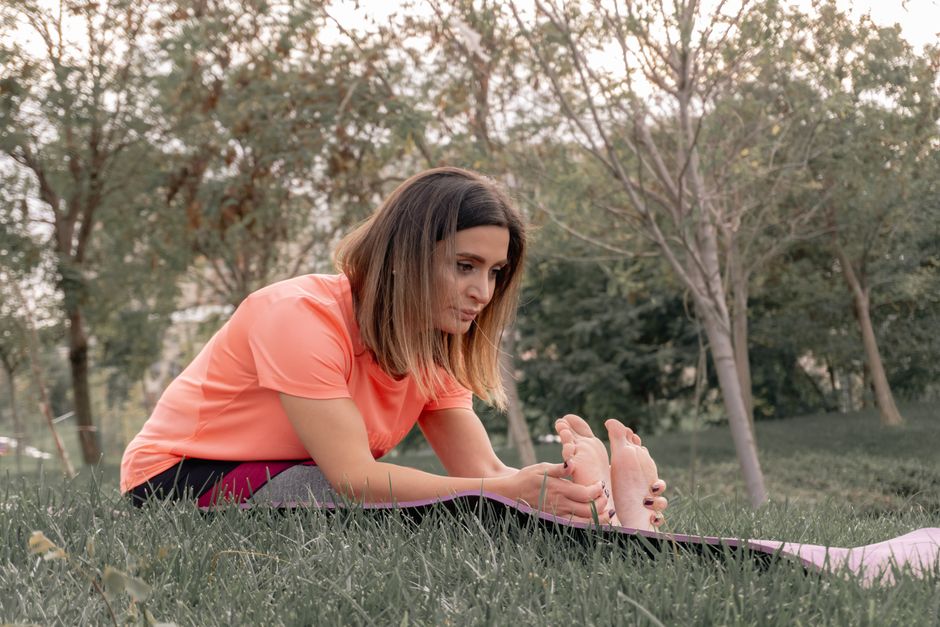
The HDB Heartbeat@Bedok sports complex and the East Coast Park connector trail are both free to use. The Botanic Gardens at Cluny Road offers a 3.5-kilometre loop that researchers from the National University of Singapore's Saw Swee Hock School of Public Health have pointed to in urban green-space studies as a measurable mood-recovery environment. Walking in greenery for as little as 20 minutes has been shown in peer-reviewed trials to reduce activity in the prefrontal cortex region linked to rumination — the mental replay loop that most stressed-out workers recognise immediately.
If you live in a HDB estate, check your town council's upgraded fitness corner. Under the ActiveSG HDB precinct programme, more than 600 estates now have free outdoor gym equipment. The resistance machines at the Bishan Street 22 precinct, for instance, were upgraded in early 2025 under a $4.5 million Sport Singapore initiative.
Mindfulness That Fits a 35-Minute Lunch Break
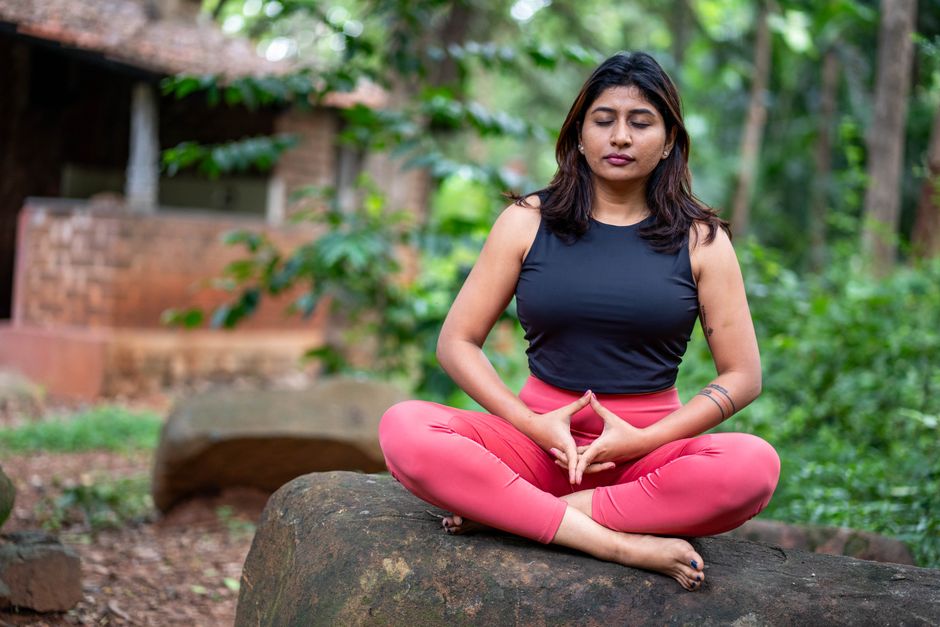
Formal mindfulness-based stress reduction (MBSR) programmes — the gold standard, originally developed at the University of Massachusetts in 1979 — run eight weeks and require roughly two hours a week of practice. That is a significant commitment. But the condensed evidence now supports something more realistic: five to ten minutes of focused breathing daily produces measurable reductions in self-reported anxiety within three weeks, according to a 2024 meta-analysis published in JAMA Internal Medicine.
The National Mental Health Office, under the Ministry of Health, launched its Beyond the Label campaign workplace toolkit in 2023, which includes a free downloadable guided breathing module specifically designed for short desk breaks. It is free, requires no app subscription, and takes up exactly the time between finishing your chicken rice and heading back to the office.
Community-level options are growing. Brahm Centre, which operates out of Toa Payoh and Bukit Timah, runs eight-week mindfulness programmes for $250 — subsidised further for seniors and lower-income participants. Limitless, a mental wellness social enterprise based in Bras Basah, runs drop-in sessions for young adults at $15 per session.
The practical takeaway is not complicated. Anchor a 20-minute walk in green space three times a week. Add five minutes of diaphragmatic breathing on weekday mornings before checking your phone. If symptoms persist beyond two weeks — disrupted sleep, persistent low mood, difficulty concentrating — book a polyclinic appointment. Subsidised rates start from $10.50 for Singapore Citizens. The evidence base is solid. The infrastructure is here. The only variable is starting.