Singapore's Mindfulness Moment: How the City-State Is Catching Up With — and Diverging From — Global Stress Trends
From Bishan to Bras Basah, a quiet but measurable shift in how Singaporeans approach mental health is underway, even as the global wellness industry chases fads the Republic has largely sidestepped.
This article was generated by AI from the linked public sources. The Daily Singapore is independently owned and covers Singapore news free from advertiser or sponsor influence. Read our editorial standards →
More Singaporeans sought help for stress, anxiety and burnout in 2025 than in any year since the Institute of Mental Health began tracking outpatient referrals. IMH recorded a 14 percent rise in first-time outpatient attendances last year, with workplace stress cited as the primary trigger in nearly four in ten cases. That number lands at a moment when global wellness markets are saturated with $6,000 silent retreats and wearable cortisol monitors — products that have found limited traction in a city where the average HDB household spends closer to $38 a month on health and wellness, according to the Singapore Department of Statistics' 2025 household expenditure survey.
The gap between what the global wellness industry is selling and what residents here are actually buying says something pointed about Singapore's relationship with mental health. Globally, the wellness economy hit an estimated USD 6.3 trillion in 2025, according to the Global Wellness Institute. The fastest-growing segment is not gym memberships or supplements — it is mental wellness, driven by app-based meditation platforms, corporate mindfulness programmes and therapy-adjacent coaching. In London and New York, the conversation has shifted from whether to seek help to which premium format suits your schedule. Singapore is moving in a similar direction, but through a different infrastructure: public, subsidised, and embedded in everyday geography.
Where Singaporeans Are Actually Going
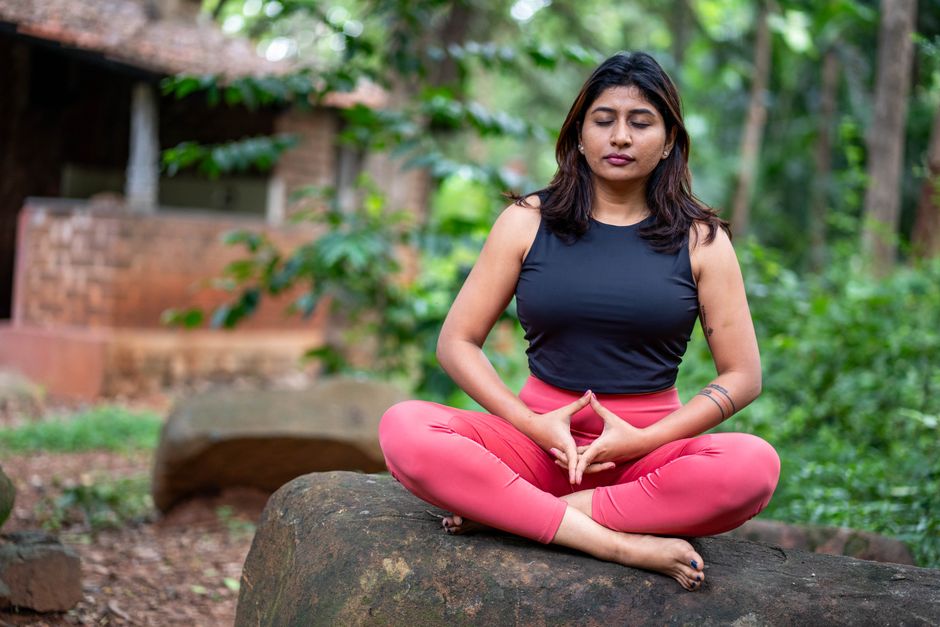
The National Parks Board's network of green corridors has become an unlikely front line in stress management. The Eastern Coastal Park Connector, which runs along the shoreline from Pasir Ris through to East Coast Park, logged record daily footfall of around 28,000 users on weekend mornings in the first quarter of 2026, according to NParks data. The Singapore Botanic Gardens, which draws roughly four million visitors a year, introduced structured mindful walking routes through the Rainforest section in March 2026 — free, self-guided, and mapped via QR codes at each trail entry. Neither initiative was marketed as mental health intervention, but both were designed with the research consensus on nature exposure and cortisol reduction firmly in view.
Community-level programming has expanded too. The Health Promotion Board's Mindset programme, which runs stress literacy workshops through polyclinics from Tampines to Queenstown, served more than 45,000 participants between January and May 2026 — up from 31,000 across all of 2024. Subsidised sessions cost as little as $5 at community health centres under the Community Health Assist Scheme, a price point that puts structured mindfulness support within reach of residents who will never pay for a Calm subscription or a Headspace corporate licence.
The Global Trend Gap
What Singapore has not imported wholesale is the aestheticisation of anxiety. The viral rebranding of stress as a lifestyle identity — documented through everything from "cortisol face" skincare trends to $180 adaptogen tonic menus at Shoreditch cafés — has found limited commercial appetite here. Retailers at Raffles City and VivoCity report modest sales of functional wellness drinks compared to their counterparts in Tokyo and Seoul, where the format has become mainstream. Local nutritionists at Khoo Teck Puat Hospital have begun fielding patient questions about ashwagandha and magnesium glycinate supplements, but clinical guidance remains cautious: the evidence base is thin and interactions with existing medications are real.
The more durable shift may be happening at the workplace level. Under the Tripartite Advisory on Mental Health and Wellbeing at Workplaces, updated in late 2024, employers with more than 25 staff are strongly encouraged to implement structured mental health support programmes by the end of 2026. Major employers including DBS Bank and Singapore Airlines have already published their Employee Assistance Programme uptake rates publicly — a transparency norm that was rare three years ago.
For residents looking to act rather than read, the entry points are practical and close. The Samaritans of Singapore runs 24-hour support at 1767. The IMH mental health helpline operates daily from 6 am to midnight. And on most weekday mornings, a 20-minute walk through the Queenstown Park Connector costs precisely nothing and delivers, researchers would argue, more measurable stress relief than most products in the global wellness catalogue. That might be the most Singaporean answer to the global mindfulness moment: useful, proximate, and free.
Covering wellness in Singapore. This article was generated by AI from the linked sources and was not reviewed by a human editor before publishing. See our editorial standards.